
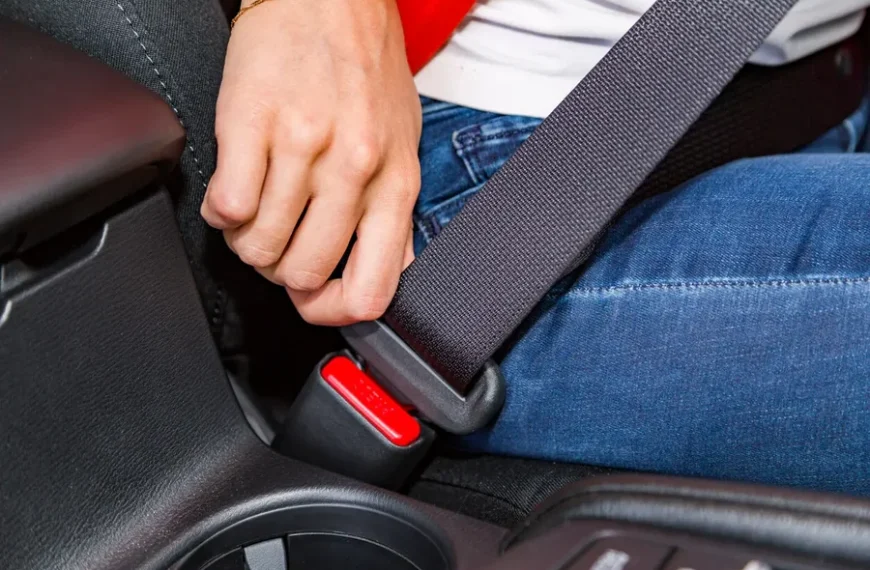
Most drivers buckle up before hitting the road, but plenty of people still choose not to. That choice can affect more than just safety. Not wearing a seatbelt can also change how much compensation you receive after a crash.
The good news is that state law does not prevent injury victims from filing a claim just because they weren’t restrained. It does, however, factor in the risk that an unrestrained occupant chooses to accept.
Filing a Claim Is Still Possible
Skipping a seatbelt does not erase your right to pursue compensation. Your injuries would never have happened if a negligent driver hadn’t caused the crash in the first place.
Filing a claim gives you a path to recover losses that the at-fault driver caused. That right does not disappear simply because you weren’t buckled in.
That said, insurance companies pay close attention to the use of restraint. When a victim was not wearing a seatbelt at the time of impact, opposing lawyers often argue that the lack of a seatbelt contributed to the severity of the injuries.
Seatbelt Laws and Why They Matter to Your Claim
Most states require anyone riding in a moving vehicle to wear a seatbelt. Fines and penalties for violations vary by passenger age, and stricter penalties often apply when children are not properly restrained.
Beyond the ticket itself, a seatbelt violation is typically treated as a moving offense. That classification alone can raise insurance premiums, and a history of citations for not wearing a seatbelt can make it harder to find affordable coverage down the line.
How This Plays Into Injury Cases
None of this changes who caused the crash. But it does give the defense an opening to argue that some of your injuries were preventable.
The Seatbelt Defense Explained
Insurance companies frequently rely on what’s known as the seatbelt defense. This defense argues that some or all of the harm suffered could have been avoided if the victim had simply buckled up.
To use this defense successfully, the defense typically has to show three things. First, that a seatbelt was available and simply not used. Second, that a reasonable person in the same situation would have worn one. Third, wearing a seatbelt would have reduced or prevented the injuries.
This is considered an affirmative defense. That means even if the at-fault driver is clearly responsible for causing the crash, their liability for damages can still be reduced if the seatbelt defense holds up.
Why Insurers Lean on It So Often
Not wearing a seatbelt gives insurers a built-in argument to shrink a settlement. It shifts part of the blame onto the injured party rather than the driver who caused the wreck.
Comparative Negligence and Your Settlement
Many states follow a comparative negligence model, which means your compensation can be reduced by the percentage of fault assigned to you. If not wearing a seatbelt is found to have contributed to your injuries, your settlement gets reduced by that same percentage.
For example, if a court determines that failing to buckle up caused 20 percent of your injuries, you would only recover 80 percent of the total settlement. In rare cases, insurers even argue that not wearing a seatbelt accounts for the entirety of a victim’s injuries.
Every Percentage Point Counts
This is exactly why the seatbelt defense is taken so seriously by insurance adjusters. Even a small shift in assigned fault can mean thousands of dollars in reduced compensation.
Why You Need an Attorney If You Weren’t Buckled Up
If you were hurt in a crash and were not wearing a seatbelt at the time, having legal representation becomes even more important. These claims are more complicated, and insurance companies know it.
Adjusters are trained to look for any reason to reduce a payout. Not wearing a seatbelt hands them a convenient argument, and they will use it whenever possible.
Building a Strong Counterargument
An experienced attorney knows how to push back against the seatbelt defense. In many cases, it’s possible to show that the defense doesn’t actually apply to the facts of the crash.
Medical records, crash data, and expert testimony can all be used to challenge the claim that a seatbelt would have prevented the injuries. Crash test data, for instance, is often introduced to clarify exactly how restraints function in a real collision.
How an Experienced Attorney Can Help
Navigating a claim after a seatbelt-related accident takes more than basic negotiation skills. It requires someone who understands how insurance companies build these defenses and how to dismantle them.
An experienced car accident attorney can gather the evidence needed to support your case, from medical documentation to accident reconstruction. They can also bring in expert witnesses when necessary to counter claims that a seatbelt would have prevented your injuries.
Just as importantly, a skilled attorney knows how to negotiate directly with insurance adjusters who are looking for any reason to minimize your payout. Rather than accepting a reduced settlement based on an aggressive seatbelt defense, an attorney can push for the full compensation you’re entitled to.
If you were injured in a crash and were not wearing a seatbelt, don’t assume your claim is weaker because of it. Speaking with an experienced attorney early on can make a significant difference in the outcome of your case.


