
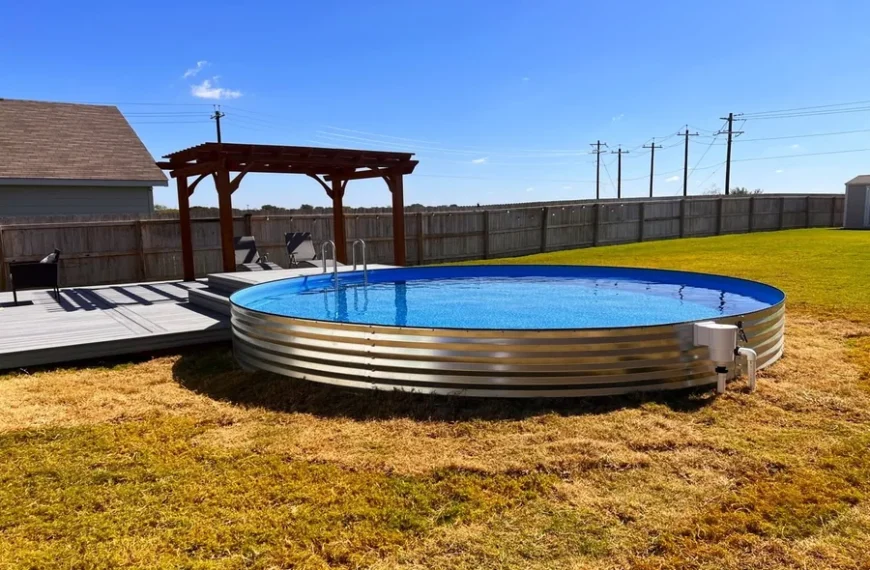
Depth decides how much water sits under every square foot of surface, and that ratio controls how quickly a pool warms up, how long it holds heat, and how it feels once you are in. A shallow pool can feel like a warm bath by mid-afternoon and turn chilly by morning. A deeper one heats slowly but stays steadier from day to night. Here is what really changes with depth, so you can choose a number that fits how your household swims.
Why Pool Depth Affects Water Temperature
Sun and air only touch the surface, so the more water lies below it, the more energy it takes to shift the whole pool by a single degree. Compare a shallow pan and a deep pot on the same burner: the pan gets hot fast, the pot takes its time. A pool behaves the same way, with the sun as the burner and the night air as an open window. Depth also decides how much the surroundings matter. On a cold, windy evening, a 3-foot pool loses its warmth quickly, while a 5-foot pool barely notices.
StainlessSwim builds steel tank pools with a standard depth of 46 inches, a sensible middle ground between quick warming and steady heat. For those who want more volume, there are deeper pool options up to 60 inches. The company also runs the whole project itself, from excavation and leveling to installation, plumbing, and a custom deck, so you are not coordinating several contractors.
How Shallow Pools Heat Up and Cool Down
Shallow pools are the sprinters. With less water to warm, sunshine lifts the temperature within a few hours, which suits early-season swims and small children who get cold fast. The price comes after sunset: a 3-foot pool gives up heat to the night air much faster and can lose several degrees by morning, particularly in spring and autumn.
Exposure makes it worse. Walls standing fully in the open take on the air temperature, and wind across the surface speeds up evaporation, which pulls heat out of the water. Partial burial helps because soil insulates. StainlessSwim tank pools can be placed above ground, partly buried, or fully recessed, and the walls come with foam insulation, so placement deserves as much thought as depth.
How Deeper Pools Maintain More Stable Temperatures
A deeper pool has thermal inertia. It takes longer to warm in spring, so the first weeks can feel cool, but once it reaches a pleasant temperature it holds there through cold nights and cloudy spells. What owners usually notice is that the water feels much the same at 7 p.m. as it did at noon. The flip side is that a heater has more water to bring up to temperature at the start of the season.
Temperature Differences Between the Surface and Bottom
Warm water is lighter, so in still conditions the sun-heated layer floats on top while cooler water settles beneath. In a 3-foot pool the gap is negligible. At 5 feet you may feel it when you dive down to retrieve a toy or let your legs hang: the bottom can be a few degrees cooler on a hot afternoon. It is mild, but worth knowing if you plan to spend time in deeper water.
The Role of Sunlight and Water Circulation
Most sunlight is absorbed in the top foot or so of water, and the deeper layers get very little of it, which is why extra depth does not add heat; it only spreads the same amount of heat through a larger volume. A 5-foot pool receives about as much solar energy per square foot of surface as a 3-foot one, but each gallon ends up with a smaller share. Shade from trees or a house wall can keep even a shallow pool cooler than you would expect, while a sunny, sheltered spot helps the surface warm faster. Circulation is what narrows the gap between the warm top and the cooler bottom. The pump draws water in through the skimmer and returns it lower down, which constantly mixes the layers, and on hot, calm days running it a few hours longer makes the water feel noticeably more even. Return jets aimed slightly downward improve the effect, since they push warmer water toward the floor instead of only stirring the surface. Without any circulation, a deep pool can develop a clear temperature layer that lasts for days.
How Pool Depth Affects Swimming Comfort
Temperature is only part of the picture, because depth also changes how the water feels on your body and what you can actually do in it. In 3 feet of water most adults stand waist-deep, which is fine for lounging, cooling off, and playing with kids, but it leaves little room for real strokes, and swimmers often find themselves scraping their hands on the bottom. At around 46 inches the water reaches chest height, so you can float, walk, and do water aerobics while still touching the floor, and the pool feels secure for mixed groups of adults and older children. At 5 feet, shorter swimmers will be treading water, though it is the better choice for lap swimming, vertical workouts, and anyone who likes to dive down and move freely. Depth also affects how the water feels against the body: in deeper pools, more of you is submerged, so buoyancy takes weight off the joints and the water pressure feels more even, which many people find relaxing after a long day. Some buyers also worry that a steel shell gets hot in summer, but with proper insulation and a lined interior the walls stay comfortable to the touch, even on the hottest days.
Conclusion: What Pool Depth Is Best for Temperature and Comfort
There is no single winner. Shallow water warms fast and cools fast, while deeper water stays steady but takes longer to heat and can feel cooler near the floor. Families with young children who mostly splash and sunbathe will be happy at 3 to 4 feet, while adults who swim or exercise will get more from 4 to 5 feet. For most backyards, 46 inches is a solid middle ground.
If you want the depth tailored to your household, StainlessSwim offers a custom tank pool with full project management, from excavation and plumbing to the deck. Their pools can go up to 60 inches deep and be built above ground, partly buried, or fully recessed, so depth and placement can be matched to your yard and your climate.


