
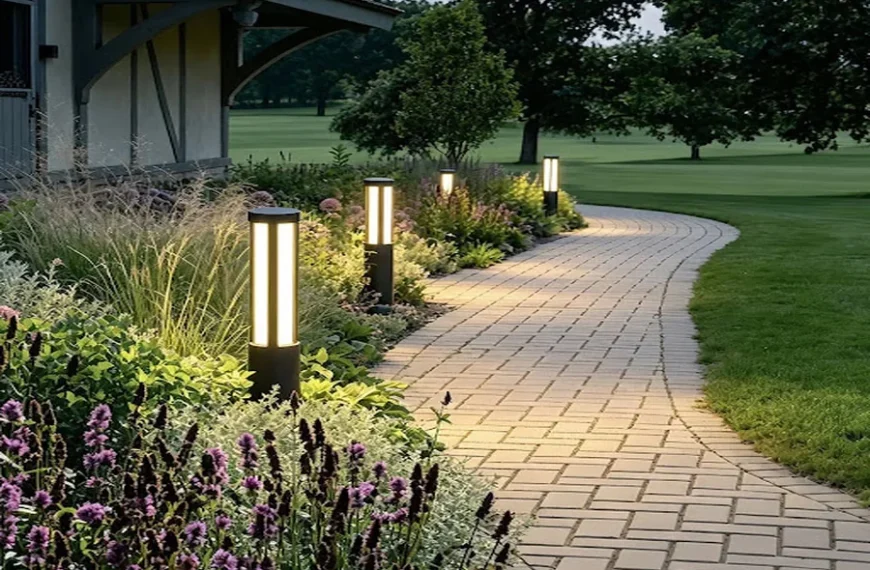
The porch light is on, the patio looks inviting, and somebody still has to use a phone flashlight to find the gate. It is a familiar problem: enough light near the house, followed by an awkward dark stretch where people actually walk.
Two fixture types can help, depending on the layout. Bollards stand independently beside paths or planting beds. Post cap lights use existing posts or pillars as their mounting point. Choosing between them starts with a fairly ordinary question: where does the light need to land?
Check how much room a standing fixture will occupy beside a path, including the space needed for plants and maintenance.
Give the Walking Route Its Own Lighting
A garden path has different needs from a dining area. Someone carrying plates back to the kitchen needs to see the paving, the bend around a flower bed, and the step up to the door. A decorative glow at the far end of the yard cannot necessarily do that job.
Freestanding bollard lights are useful where there are no walls or posts close enough to light the route. The fixture can sit beside the walking surface, with its position chosen around the path rather than the structure of a fence.
Pay attention to the light distribution. A hooded fixture can direct light toward the ground, while a glowing column becomes a more visible feature in the landscape. Either may suit the setting, but look beyond the daytime photograph and consider what will be illuminated after dark.
Keep the base outside the usable walkway. On a narrow path, even a modest fixture can catch a bag or make passing another person awkward. Leave enough clearance for a mower, too.
Use Existing Posts Where They Make Sense
A deck with a railing already has a framework for lighting. So does a gate between masonry pillars. These are natural places to consider post cap lights, especially when adding more objects at ground level would make the space feel crowded.
Measure before ordering. The important dimensions are the actual post top and the fixture’s mounting arrangement. Some lights fit over a post; others attach to a flat surface. A lantern intended for a broad gate pillar may look oversized on a slim railing post, even if an adapter makes installation possible.
There is also no automatic reason to illuminate every post. Begin with a possible arrangement at the entrance, corners, and other useful points, then assess the coverage. A long railing filled with bright fixtures can dominate the view from the dining table.
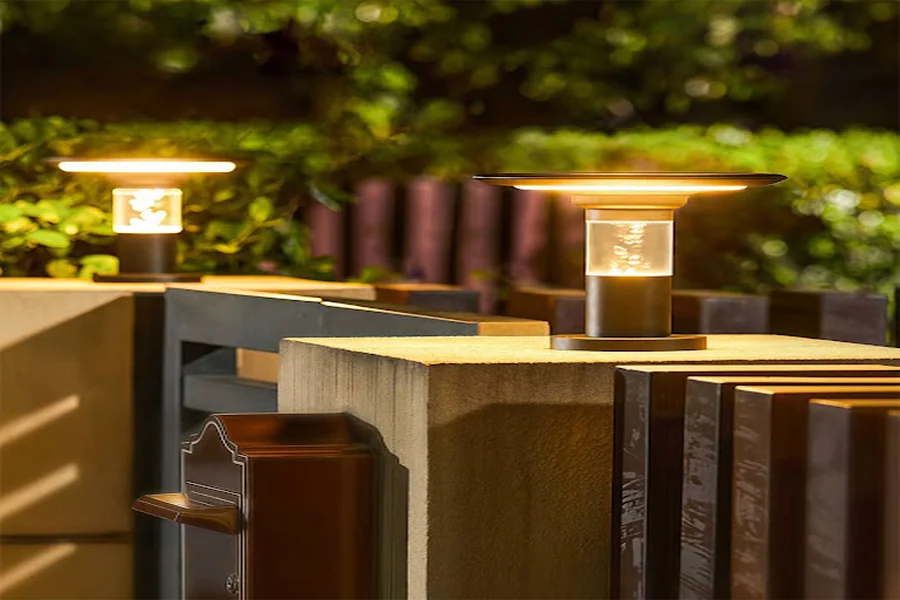
Post-mounted lighting can mark a boundary while keeping the ground around it clear.
Match the Glow Before Matching the Shape
Buying everything in black does not guarantee that the finished scheme will feel coordinated. One fixture might emit a soft amber glow while another produces a crisp white light. Once they are switched on, that difference can be more noticeable than the shape of the housing.
Warm white is a sensible starting point around patios and gardens. If the existing porch light already feels comfortable, use it as a reference when comparing the new fixtures. Check the stated color temperature, and view a sample outdoors if possible.
Brightness needs similar attention. Sit in the chair you normally use on the deck. A post light that looks pleasant from the lawn may sit directly in your line of sight from that chair. A shield, a lower output setting, or a different position may solve the problem more effectively than changing the entire style.
Let the Location Decide the Power Supply
Solar lighting is appealing when a finished deck or paved garden makes cable installation inconvenient. Its suitability depends on the sunlight reaching the panel. A sunny patio does not guarantee that the fence beside it receives the same exposure; a roof overhang or neighboring tree may shade the exact mounting point.
Check that location through the day and follow the model’s charging guidance. For a route used regularly late at night, consider how changing weather and daylight hours could affect the available illumination.
A wired system may suit places where predictable operating hours matter most. Allow for the installation before landscaping is complete, and have a qualified electrician handle household electrical connections. Confirm each fixture’s voltage requirements rather than assuming that all outdoor lights use the same supply.
Try a Simple Layout Before Buying a Full Set
Imagine a short path running from the back door to a raised deck. The path bends around a border, then reaches two steps between railing posts. Here, bollards might serve the bend and approach, while post-mounted lights mark the deck entrance. The steps still need their own visibility check; light on a railing does not guarantee light on each tread.
On a smaller patio, the existing posts may provide enough useful positions without any bollards at all. In an open garden, the opposite may be true. Let the space determine the combination.
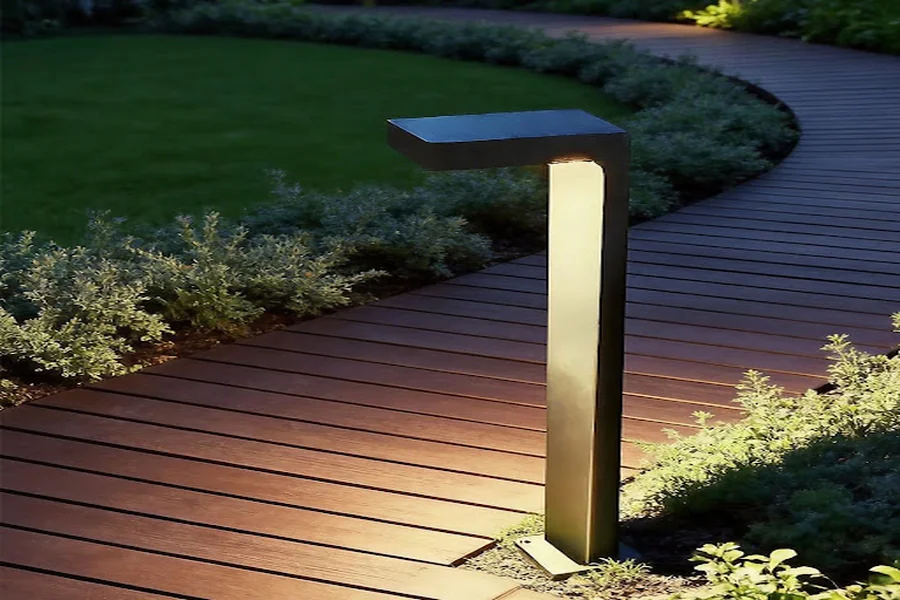
Consider both the beam direction and the fixture’s position when planning a curved route.
Mark proposed locations with small stakes, then walk the route while carrying something you would normally take outside. Open the gate fully. Pull out the chairs. Check the view from the kitchen window. These small checks can reveal a fixture position that looked perfectly reasonable on paper but interferes with daily use.
After installation, spend an evening outside before deciding whether to add more. You should be able to follow the path, recognize the deck entrance, and sit comfortably without a bright lamp demanding attention. If those everyday moments work, the lighting has earned its place.


