
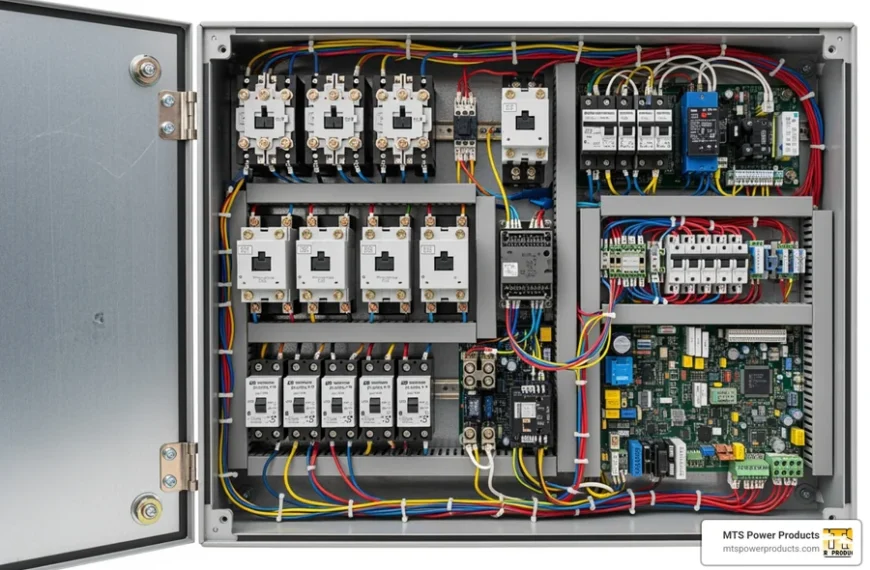
Backup power infrastructure is designed around a simple objective: critical electrical loads should remain supported when the normal power source becomes unavailable. Achieving that objective, however, requires more than installing a standby generator or an additional power source. The transition between sources must also happen in a controlled and dependable manner.
If you’re wondering how an automatic transfer switch works, the answer is very straightforward. It performs this changeover by monitoring available power sources and transferring connected loads when predefined source conditions are met. Let’s learn more about how this switching layer supports the wider power architecture and helps operations teams plan more resilient backup systems.
How Automatic Transfer Switches Support Backup Power Resilience
The following five functions show why automatic source transfer has become an important part of backup power planning across critical facilities.
- Maintaining Power Continuity During Source Failure
A backup source provides limited operational value if critical loads cannot be moved to it when the normal supply fails. This is where automatic source changeover becomes important.
An automatic transfer switch monitors the normal power source and can transfer connected electrical loads to an alternate source when the preferred supply becomes unacceptable or unavailable.
For facilities supporting essential equipment, this reduces the time spent waiting for a manual changeover and helps the backup power architecture respond systematically to an interruption.
- Coordinating the Transition to Generator Power
Many backup systems rely on standby generators that are not continuously running. During an outage, the electrical system therefore needs to coordinate source failure detection, generator start-up, source availability, and load transfer.
Automatic transfer switching equipment can initiate the operation of longer-duration backup sources such as local diesel generators and subsequently connect electrical equipment once the alternate source is available.
This creates a clearer connection between standby generation and the loads it is intended to support, rather than treating the generator as an independent piece of infrastructure.
- Reducing Dependence on Manual Changeover
Manual source switching requires authorized personnel to recognize the outage, assess source availability, and perform the required changeover. The response may therefore depend on staffing, accessibility, operating procedures, and the conditions at the time of failure.
Automatic switching removes several of these intervention steps from the initial source-transfer process. Once configured for the application, the system can respond according to predetermined transfer logic.
This becomes especially relevant for facilities where backup infrastructure must remain operational outside normal working hours or where several electrical systems need coordinated recovery.
- Supporting Controlled Transfer Between Power Sources
Power restoration involves more than moving a load away from a failed source. The system must also determine when an alternate source is acceptable and when conditions are suitable for returning to the preferred supply.
Different transfer-switch configurations and transition modes can support different operating sequences depending on the needs of downstream equipment and the overall backup architecture.
This controlled approach helps engineering teams consider the complete source-transfer cycle, including normal supply failure, alternate-source operation, restoration, and return to normal power.
- Strengthening Backup Power Testing and Preparedness
Backup infrastructure cannot be evaluated only when an actual outage occurs. Regular testing and maintenance are important for confirming that generators, transfer equipment, and associated electrical systems can operate as expected.
Transfer time, generator run time, and related backup-power parameters can form part of structured testing and reporting programs. Routine monitoring of transfer equipment is also important in environments where continuity of power is critical.
Including the automatic transfer switch within maintenance and testing plans therefore helps teams evaluate the complete backup pathway rather than checking the standby power source in isolation.
Building a More Coordinated Backup Power Strategy
Reliable backup power depends on how effectively generation, switching, distribution, and critical loads work together. Automatic transfer switches strengthen this infrastructure by connecting normal and alternate supplies through a defined source-changeover process.
Before selecting equipment, teams should evaluate load requirements, normal and alternate source characteristics, transfer sequence, rated current and voltage, transition requirements, installation environment, applicable standards, and maintenance needs.
Working with reputable electrical firms can help organizations assess these factors together and identify transfer-switching equipment suited to the wider backup power architecture. A properly planned automatic transfer switch therefore becomes more than a changeover device. It forms an important link between available backup capacity and the electrical loads that depend on it.


