
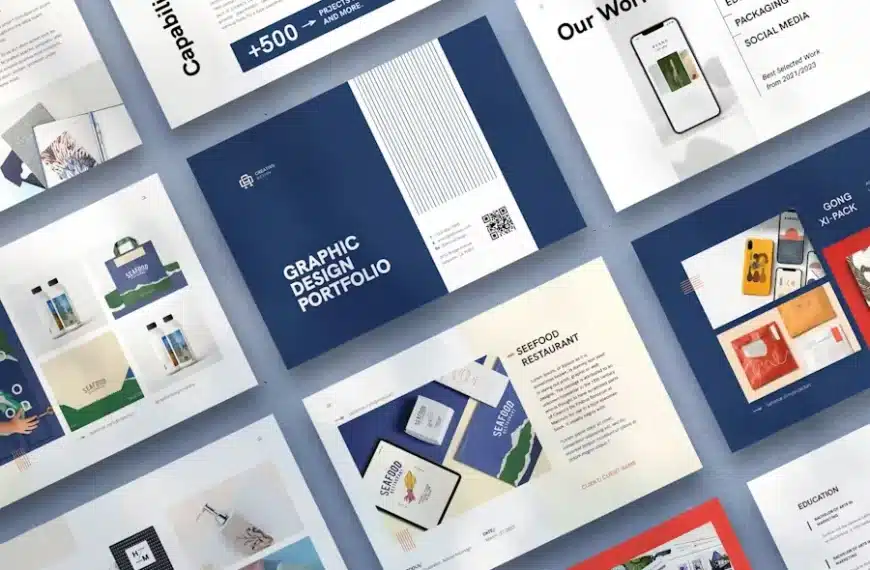
A design portfolio is not only a testament to your creative abilities and body of work but also acts as an informative calling card to potential employers and clients. As such, it should be configured in a way that is not only attractive but also strategic.
Given today’s tech-saturated professional landscape, a successful portfolio should also integrate digital technologies seamlessly in order to demonstrate your comprehensive expertise.
Below, we’ll unpack some of the best methods for preparing a design portfolio that helps not only showcase your eye, but also your technical capabilities.
Formatting is key
Firstly, professionals must always keep in mind that job portals often request supporting documents in a variety of file formats. Whilst some portals may request .docx files, the majority of these platforms actually request .pdf formatting to support universal accessibility and easy sharing of uploaded files.
If you’ve compiled your portfolio by copy-pasting .jpgs into a Word Doc, for instance, it may be worth converting that file into a PDF before you share it to prospective employers. The PDF formatting will also keep doc formatting consistent, which can help avoid risks of your portfolio looking completely different when it’s opened on another device.
Similarly, if your portfolio is formatted as a .jpg file, you can use a photo to PDF converter to easily convert your portfolio into a .pdf to make sure it’s application-ready. Remember, even if your portfolio is stunning and designed to impress, your application can be easily jeopardized by files simply refusing to behave. PDF formatting helps avoid all the unexpected surprises caused by other file types across different devices and operating systems.
Curate strategically for your career goals
A design portfolio performs best when you present your best work, so it’s well worth focusing on quality over quantity. A general rule is to aim for 3-5 projects that display your creative aptitude, your ability to hone in on a brief, and ideally the results that the design achieved for your client—more on that soon.
The goal is to wow your audience with each successive project. So skip the less professional examples and highlight only your most eye-catching and lauded designs—any award-winning pieces are prime. Ensure you select designs that are vibrant and well-lit to increase their overall impact, attract attention, and set the right mood. Prioritize the inclusion of designs that are user-friendly and have been highly customised to meet specific client needs.
Also, think about the type of work you want to take on in the future and market yourself with that in mind, choosing to add projects that lean closest to your aspirations. For instance, if branding is your primary area of interest, you should try to include at least one of your finished designs that demonstrates a transferable talent or has some branding relevance. If you see yourself as more a proud member of the gig economy, then focus on all the advantages you’ve been able to offer your clients as a freelance specialist.
You might also like to make the remainder of the designs you insert a bit of a sprinkle across various subsets. For example, print projects, web design and project designs. This allows you to show a high level of versatility. Although, be sure to tailor these to your intended audience in terms of the type of design-related employment you are trying to attract.
Display both your designs and their data
Every project you include could also function as a case study that tells an engaging story that extends beyond the finished item, showing how you solve problems in the most innovative fashion. Make sure your projects are organised logically and aim to give a narrative structure overall.
The strongest portfolios don’t just share the end results – they also detail the strategy work supporting those results. Be sure to incorporate text that shows how you approached the brief, how you overcame any challenges and how you resolved feedback in the revision stage. Some graphs, tables, and other analytics features (even screenshots from data discovery platforms) can also help prospective employers see the dynamic value of your work.
Tell stories from start to finish
Numbers speak volumes. But so does your own personal story. So if you really want to present everything that makes you unique as a professional, you can also include a succinct professional bio that highlights your background, abilities, and areas of interest. Including human interest components shows you as a complete package, creating even more of a point of connection with potential clients or employers.
The same goes for the stories behind your ideas. Where they fit the structure of your overall portfolio, you can also add iterations, wireframes, mock-ups, and sketches that show your work from conceptualization to realization. This demonstrates your ability to work from concept to finished product. It also shows your design process, giving insight into how you think.
Note that you have an opportunity here to indicate your ability to function well as a team player too. Make sure to note your specific contributions to group projects and how components from your team members came together.
Make digital a focus
Finally, whilst downloadable portfolios can definitely be great for cold emailing and applying to job openings via web portals, it still helps to invest in your digital footprint with a portfolio website. It’s always a smart move to lead with a web-based presentation to expand accessibility and reach. A digital portfolio easily becomes the cornerstone of your online presence as a professional, and one cannot deny the sweeping orbit of effective web and social media marketing.
An online design portfolio is also often the first thing a potential employer or client will see. This is in terms of what you can provide them and why they should hire you. Make sure your website or digital platform offers great user experience (UX), i.e., is clean and easy to navigate, ranks highly on Google, and, of course, looks visually unique and engaging as a whole. It’s also critical that you are mobile responsive, ensuring your web portfolio fits all devices with regard to appearance and functionality.
Don’t miss one of the crucial parts of portfolio creation, and by the way, this goes for traditional formats as well as digital. Clearly provide your contact information and stay easily reachable at all times. Provide your name, email address, and phone number and a link to any other relevant job platforms, such as LinkedIn.
With web-based portfolios, make sure you come back to update not only your contact details should they change but also to keep the site running optimally. You might like to hire a professional to pass on the obligation or simply take the time to DIY.
Putting it all together
Emphasising a carefully chosen selection of your best design samples presented as captivating case studies alongside harnessing the viral power of web-based platforms and digital technologies is an effective method to create a stunning design portfolio. This approach shows your strategic thinking, problem-solving skills, and a distinct creative voice.
This is also achieved by clearly delineating your process. It should tell the story behind your designs, including the difficulties you faced, the decisions you made, and the outcomes you achieved. In this way, your portfolio becomes a potent tool that not only gets you noticed but also demonstrates your professional worth, which may ultimately help you land your ideal clients or your dream design position.


