
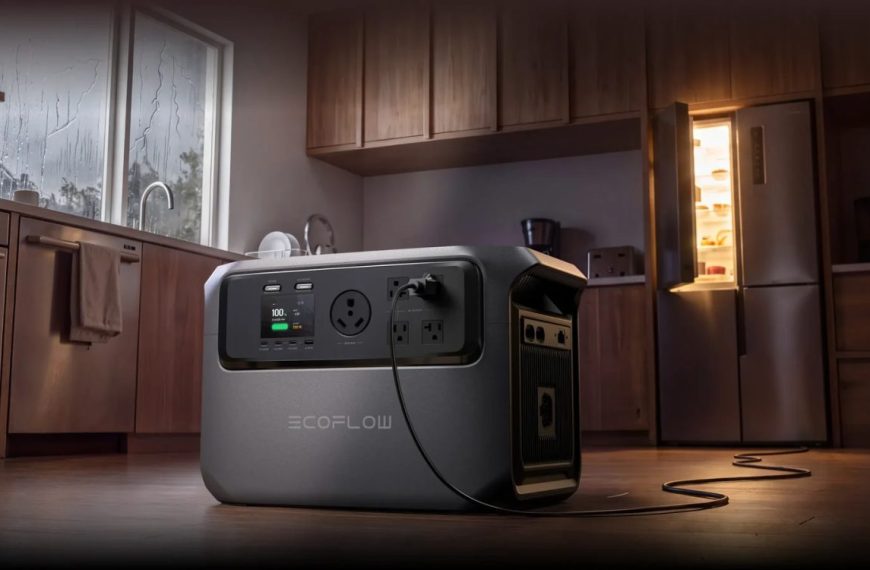
You can charge a battery power station from a gas generator through its AC charging input. Start the generator outdoors, let its output stabilize, and connect the station using its approved charging equipment. Set the charging rate below the generator’s available continuous output, including any other appliances sharing that supply.
This pairing is useful during a long outage. The engine supplies energy during a planned charging session, while the battery handles selected loads later, including overnight when you would prefer the generator switched off.
Set the Charging Rate Before Connecting
The generator’s running-watt rating is the starting point. Its larger starting or surge figure describes a brief demand, not the power available for a charging session lasting an hour or more.
Suppose a generator provides 1,800W continuously and other connected equipment uses 300W. That leaves 1,500W before allowing for changing loads. Setting the battery charger to 1,000W would bring the planned total to 1,300W and leave 500W of headroom. This is an illustrative power budget, not a universal charging setting.
On an adjustable power station, reduce the AC charging setting before connecting it. You can increase the rate after confirming steady operation. If the charger is fixed at a higher input than the generator can support, a different charging source or approved lower-power charger is needed.
Also match the supply voltage and frequency. For a US unit with a 120V AC charging input, use the generator’s compatible 120V outlet. A plug adapter does not convert a 240V supply into 120V.
Arrange the Equipment Around the Exhaust
Operate the fuel generator outside, at least 20 feet from the home, with exhaust directed away from windows, doors, and vents. A garage with the door open is not a suitable operating location. Keep the battery unit dry and ventilated, away from engine exhaust and hot surfaces.
Where distance requires an extension cord, use an outdoor-rated cord sized for the load and length. Inspect the plugs and insulation first. Avoid routing a cable through a closing door or placing a connection where water collects.
A generator charging a battery still produces carbon monoxide. The benefit of the battery is that the engine can be shut down later, not that the engine becomes safe to operate near people.
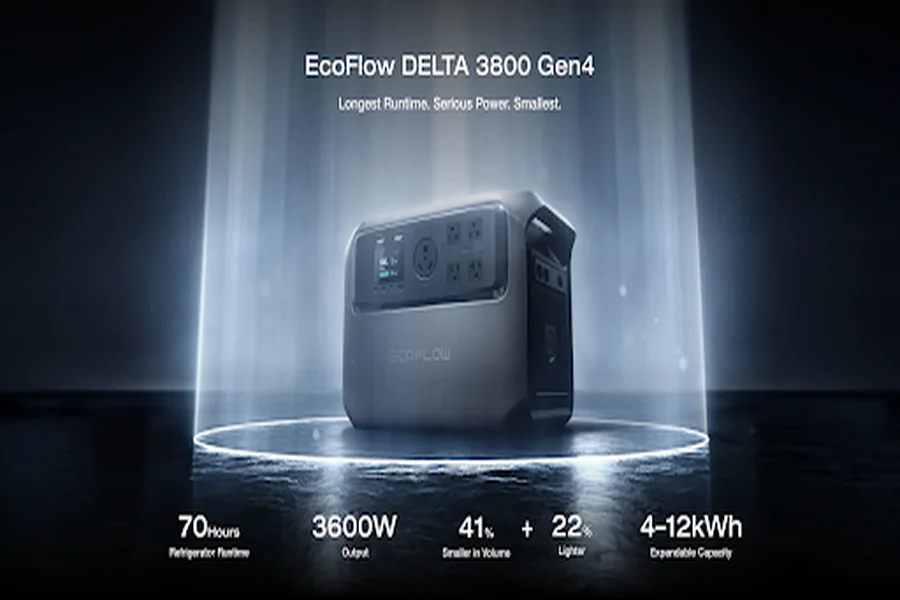
Start Charging and Watch the Input
Start the generator without the charger connected and follow its warm-up instructions. Once it is running steadily, connect the power station’s AC charging cable and confirm that the input display shows a stable charging rate.
Watch the first few minutes. Repeated charging interruptions, engine hunting, or an overload warning call for reducing the charging demand and removing other loads. Do not repeatedly reset a breaker without correcting the cause.
An inverter generator is a useful choice because its regulated output suits electronic chargers. A conventional generator can also work when its voltage, frequency, and power quality meet the station’s requirements. If household AC charges the station normally but the generator does not, investigate the generator supply rather than assuming the battery has failed.
Stop the charging session and disconnect the electrical load before shutting the generator down as directed. Let the engine cool before refuelling.
Charge for the Period When the Engine Will Be Off
Decide what the battery needs to accomplish overnight. For example, a steady 80W combination of equipment running for eight hours requires 640Wh at the devices. Allowing for conversion losses and a reserve gives you a practical target above that figure.
Replenishing 800Wh at a steady 1,000W input takes at least 48 minutes by simple division. Actual charging takes longer because of losses and changes in charging power. The final portion near full charge can be slower, so use the station’s displayed progress rather than treating maximum input as a constant.
There is no need to run the engine solely to reach 100% if the battery already holds enough for the planned task. Equally, stop-and-start charging sessions are inconvenient if they leave too little energy for the night. Choose a useful stopping level based on the load you intend to run.
FAQ
Can the Generator Run Appliances While Charging the Battery?
Yes. Include both the charger and those appliances in the generator’s power budget. If appliances are connected through the power station, its bypass limits also apply. Leave room for motor startup and changing loads.
Do You Need a Special DC Connection?
No. Standard charging uses the station’s supported AC input. Proprietary generator-to-battery DC connections are separate features that require the specified equipment; they are not necessary for ordinary AC charging.
Conclusion
Start with a conservative charging rate, confirm stable input, and replenish enough energy for the next period of battery use. A planned charging session makes the two devices useful together: the generator supplies energy when you need to refill, and the battery supplies quieter power when the engine is off.


