
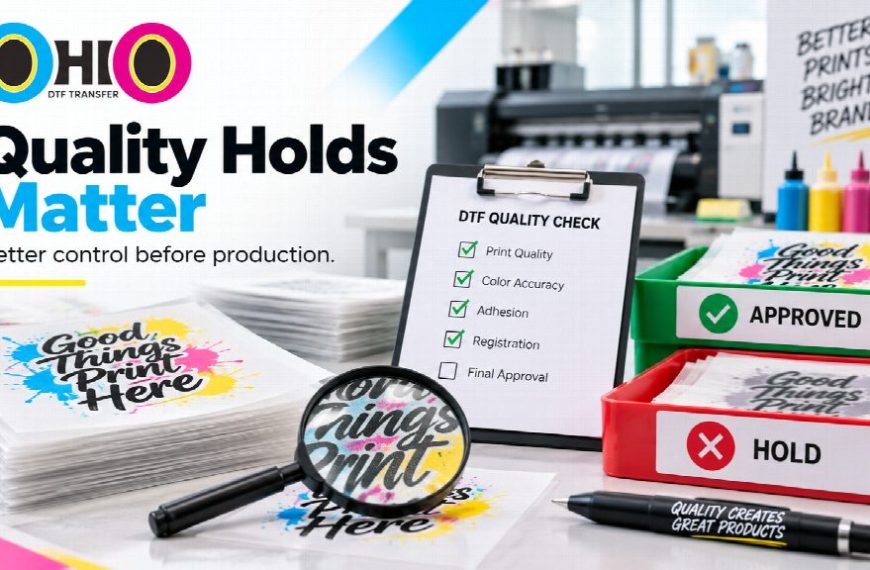
The most useful quality decision can happen before an order leaves the production floor. If a batch contains a questionable design, an incorrect size, a quantity mismatch, or a visible production concern, releasing it quickly only moves the problem downstream. A quality hold creates a controlled pause while the order is still inside the production process.
That makes exception handling an important way to think about DTF transfer companies. Buyers often compare price, turnaround, and print appearance. Those factors matter, but reliability is also influenced by what a provider does when an order does not match the expected specification.
What Is a Quality Hold?
A quality hold is a temporary stop that keeps a questionable order or portion of an order from being released until the issue is reviewed. It is not the same as rejecting every small variation, and it should not be used as a vague reason for delay.
The purpose is specific: separate work that needs review from work that is ready to ship or be picked up. Once the question is resolved, the held items can be approved, corrected, reproduced, or otherwise handled according to the provider’s process.
For a customer, the value of a hold is simple. It is better to investigate an identifiable concern before the transfers enter garment production than after they have reached the press station.
Define the Order Specification First
A quality hold only works when there is a clear standard to compare against. The production team needs to know what the customer actually ordered.
Useful order references may include:
- the approved artwork file,
- the physical transfer dimensions,
- the quantity of each design or size,
- the ordering format,
- the customer or job identifier, and
- any application or packaging information that belongs to the order.
Without that reference, quality review can become subjective. With it, the team can ask a concrete question: does the finished transfer order match the approved specification?
Use Holds for Identifiable Exceptions
A hold should be connected to an observable issue. For example, a production team may need to stop release if the artwork does not match the approved version, the transfer size is inconsistent with the order, the quantity cannot be reconciled, or part of the batch shows an obvious physical difference that requires review.
The point is not to diagnose every problem immediately. The first responsibility is containment. Keep questionable pieces from being mixed with the rest of the order while the cause is investigated.
This distinction matters because a production issue becomes harder to manage after the affected pieces are packed together with approved work.
Separate the Affected Quantity
If only part of a batch is questionable, identify that portion rather than treating the entire order as anonymous. Keep the affected pieces together and record how many are being reviewed.
A useful hold note might identify the order number, artwork name, transfer size, quantity affected, and reason for the hold. This gives the next person in the process enough information to understand why the work stopped.
Physical separation is just as important as digital notes. A marked tray, sleeve, bin, or designated review area helps prevent held transfers from accidentally returning to the normal packing flow.
Investigate Without Changing the Evidence
When something looks wrong, it can be tempting to discard the piece immediately or mix it with a reprint. That removes useful information. Keep representative examples long enough to understand what happened.
If the issue involves artwork, compare the transfer with the approved file. If it involves size, measure the physical transfer against the order record. If it involves quantity, recount the relevant line item. If the concern is visual, compare several pieces from the same batch rather than relying on one impression.
Each check should answer one question. The goal is to replace “this seems wrong” with a documented finding.
Decide the Release Path
Once the review is complete, the held work needs a clear disposition. Depending on what the investigation finds, the batch might be approved as correct, corrected before release, partially reproduced, or fully reproduced.
The important part is that the decision is deliberate. A held batch should not drift back into normal production because someone needs the table space or assumes another employee already checked it.
A release step closes the quality loop. It records that the question was resolved and that the work can continue to packing or fulfillment.
Communicate Material Changes to the Customer
Not every internal check requires a customer message. However, if a quality issue changes the expected completion time, quantity, artwork, or fulfillment plan, clear communication becomes part of the process.
A useful update explains what the customer needs to know without turning internal troubleshooting into a confusing technical narrative. The customer may need confirmation that an issue is being corrected, that a revised completion window applies, or that additional approval is required before production can continue.
The best communication is tied to the order and the next decision, not a generic apology with no operational information.
Ask Providers About Exception Handling
When comparing the best DTF transfer companies for a business workflow, ask what happens when production does not match the approved order.
Useful questions include:
- How is a questionable batch separated from approved work?
- What order information is used during review?
- How are quantity or size discrepancies checked?
- How is a reprint or correction connected to the original order?
- When is the customer contacted about a problem?
- What confirms that a held order is ready for release?
These questions focus on exception management rather than marketing language. A reliable production system should have a way to handle work that needs review, not only work that goes perfectly.
Customers Need a Receiving Check Too
A supplier-side quality hold does not eliminate the customer’s responsibility to inspect incoming transfers. When the package arrives, compare it with the order record before distributing pieces to the press station.
Confirm the design, size groups, and quantities. Keep customer jobs separated. If something appears inconsistent, preserve the packaging and order reference so the issue can be discussed with specific information.
This creates two control points: one before the provider releases the order and another before the customer begins pressing.
Reliability Includes How Problems Are Contained
No production system should be evaluated only by its perfect runs. Reliability also depends on how exceptions are identified, contained, reviewed, communicated, and released.
A quality hold is a simple concept, but it reveals whether production has a controlled path for questionable work. The batch stops, the issue is tied to a specification, affected pieces are separated, evidence is reviewed, and a release decision is made.
For apparel businesses choosing a DTF partner, that process matters because problems are easiest to manage before they travel downstream. A provider that can contain an exception gives the customer a better chance to keep the press room focused on approved work instead of discovering preventable surprises during garment production.


