
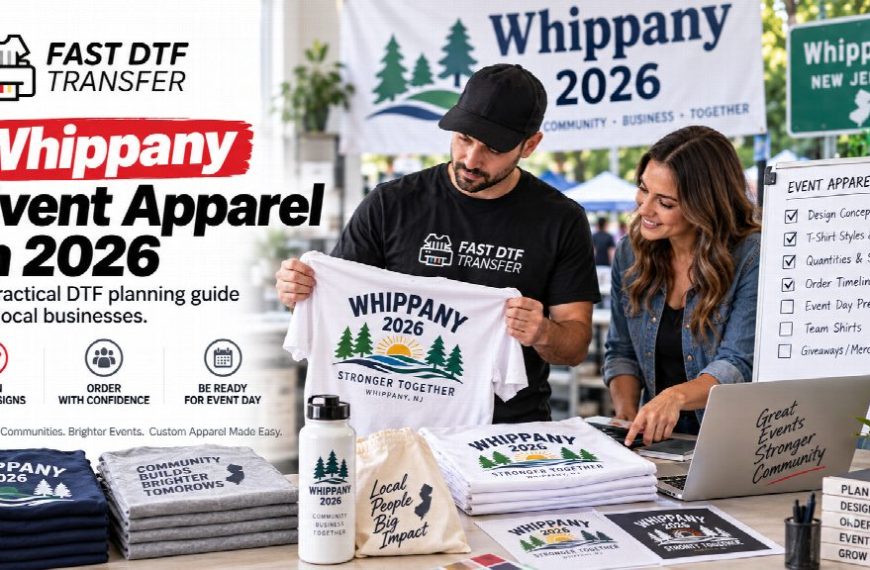
Whippany has an unusual local planning context in 2026. The community is marking its 350th anniversary during the same year the United States celebrates its 250th anniversary, and Hanover Township has organized a year of public programming around those milestones.
For local businesses, organizations, vendors, and community partners, that kind of calendar creates a practical apparel question: how do you produce branded shirts or staff garments for a specific event without turning every event date, sponsor change, or volunteer assignment into a completely new apparel program?
The most useful answer is to separate what should remain permanent from what is temporary.
Local Events Create More Than One Type of Apparel Need
An event order often looks simple from the outside. Put a logo on shirts, choose a quantity, and get them ready before the date. In practice, several groups may need different information.
Staff may need easy identification. Volunteers may need a separate role marker. A sponsor-facing team may use a cleaner brand treatment. Merchandise intended for the public may need an entirely different design.
Trying to make one shirt do every job can produce an overloaded design. Instead, start by identifying the roles that apparel needs to perform.
Separate Evergreen Branding From Event-Specific Artwork
A local business logo may be usable throughout the year. An anniversary lockup, event name, date, location, or sponsor arrangement may only be relevant for one program.
Keep these elements in separate artwork layers or separate transfer files. The evergreen logo becomes the stable brand asset. Temporary information becomes a controlled event asset.
This structure makes it easier to use DTF printing near Whippany for a specific local project without permanently tying every garment to one date or one campaign.
Plan Apparel by Role Before Counting Shirts
Before deciding quantity, create a role list. A typical local event could include organizers, check-in staff, vendors, speakers, volunteers, performers, business representatives, and general attendees.
Not every group needs a unique shirt. The goal is to identify where apparel actually improves recognition or branding.
For example, an organizer may need highly visible staff identification, while a participating business may only need its normal logo apparel. A volunteer group may need a temporary event designation that should not appear on long-term employee clothing.
This role-first method reduces unnecessary artwork variations and keeps the finished order easier to distribute.
Use Three Artwork Tiers
A practical event-apparel system can be divided into three tiers.
Tier One: Core Brand
This is the company or organization logo that can remain useful after the event. Keep it simple and stable.
Tier Two: Event Identity
This may contain the celebration name, program title, campaign mark, or special artwork connected to the occasion. It can be reused during the event series if appropriate.
Tier Three: Date- or Role-Specific Information
This includes details that become outdated quickly: a specific date, volunteer title, booth assignment, staff function, or temporary message.
The more temporary the information, the more carefully its quantity should be controlled.
Whippany's 2026 Calendar Shows Why This Matters
Hanover Township's official anniversary programming has included multiple community events across 2026 rather than one single celebration. That means a local organization participating more than once may have a better use for adaptable apparel than for a large batch permanently printed with a single date.
A core-logo shirt can remain relevant. A separate event design can be produced for a particular audience. Highly temporary details can be limited to the people who actually need them.
This is a more flexible approach than rebuilding the complete apparel concept for every community appearance.
Create an Event Deadline Ladder
Do not treat the event date as the only deadline. Work backward and create smaller checkpoints.
First lock the brand artwork. Then lock event-specific graphics. After that, confirm role counts and garment sizes. Finally, freeze the production files and stop routine design changes.
When each decision has its own deadline, the final days can be used for production and distribution instead of artwork debate.
Keep Late Additions Separate From the Core Run
Local events often add a volunteer, employee, or participant after the main order has been approved. Build the production plan so one late addition does not reopen every design decision.
If the core artwork and dimensions are already standardized, the new requirement can be evaluated independently. That preserves the original production file and reduces the risk of introducing a different logo version or transfer size by accident.
Use Fast Turnaround for a Defined Problem
Speed is most valuable when the order itself is already clear. A rushed production service cannot replace missing approvals, uncertain quantities, or competing artwork versions.
If a Whippany-area business has an event-ready file and a firm deadline, same-day DTF transfer options can become part of the production plan. The important step is to make the job production-ready before depending on turnaround time.
Think Beyond the Event Day
After the event, review which garments still have value. Core-logo staff apparel may continue to be useful. A date-specific anniversary shirt may become commemorative merchandise. A temporary volunteer shirt may have completed its purpose.
This review helps the next order become more precise. It also shows which artwork should remain in the permanent brand library and which files should be archived as campaign-specific assets.
Local Relevance Should Change the Production Plan
Whippany's 2026 anniversary year is a useful reminder that local apparel is not simply national content with a town name added to it. Local calendars create specific timing, role, and artwork problems.
For businesses and organizations participating in Whippany-area programs, the strongest DTF plan is modular: keep permanent branding stable, isolate event-specific graphics, control short-lived information, assign apparel by role, and lock production files before the deadline becomes urgent.
That structure gives local teams more flexibility while keeping each transfer order understandable from artwork approval through final distribution.


