
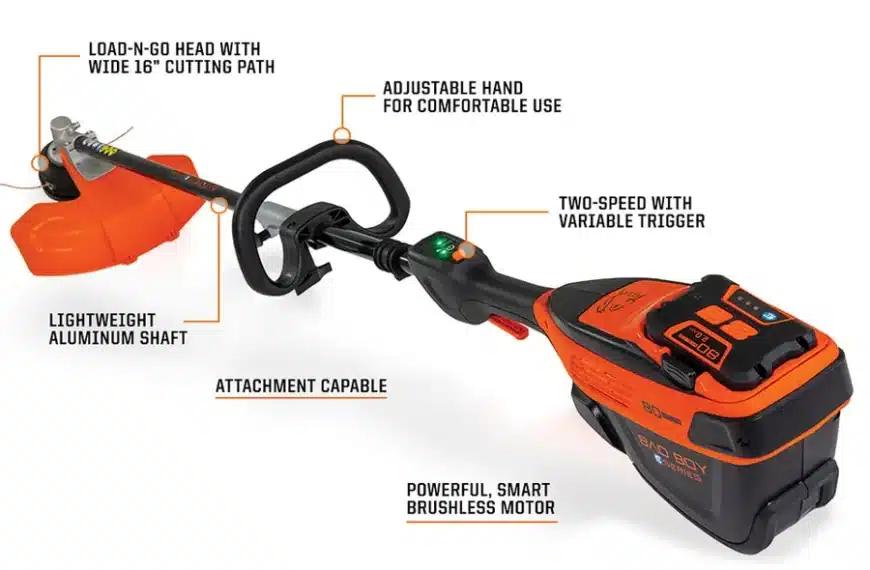
The transition from gas-powered lawn equipment to battery-powered alternatives has changed the way homeowners approach yard maintenance. Modern cordless tools are quieter, require less maintenance, and produce zero direct emissions during operation. Yet one question continues to surface whenever someone shops for an electric weed eater: How much battery voltage is actually enough?
The answer is more nuanced than simply choosing the highest voltage available. Cutting performance depends on the relationship between battery output, motor efficiency, torque delivery, cutting swath, and the type of vegetation you’ll be trimming.
If you’re comparing cordless lawn equipment, selecting an electric weed eater should involve more than reading the voltage printed on the battery. Understanding how the entire power system works together will help you choose equipment that performs consistently season after season.
Why Battery Voltage Alone Doesn’t Tell the Whole Performance Story
Many buyers assume that a higher-voltage battery automatically produces more cutting power. While voltage is important, it is only one part of the equation.
Voltage determines the electrical potential available to the motor, but actual cutting performance depends on several interconnected components:
- Brushless motor efficiency
- Battery capacity (Ah)
- Torque management
- Electronic power controls
- Cutting line speed
According to the Outdoor Power Equipment Institute (OPEI) , advancements in lithium-ion battery technology and motor design have dramatically narrowed the performance gap between premium cordless equipment and traditional gas-powered alternatives.
A well-designed 60V system with an efficient brushless motor may outperform an entry-level 80V model that lacks effective power management.
Understanding How Voltage, Amperage, and Watt-Hours Work Together
One of the biggest misconceptions in cordless lawn equipment is treating voltage as the only specification that matters.
Voltage (V)
Determines available electrical pressure delivered to the motor.
Amp-hours (Ah)
Measures how much energy the battery stores.
Watt-hours (Wh)
Represents total energy capacity by combining voltage and amp-hours.
For example:
- 40V × 4Ah = 160Wh
- 80V × 2Ah = 160Wh
Although both batteries store similar total energy, they deliver power differently depending on motor design and electronic controls.
This is why experienced landscapers evaluate the complete battery platform rather than voltage alone.
How Brushless Motors Influence Cutting Power More Than Many Buyers Realize
Motor design often has a greater impact on real-world performance than battery voltage itself.
Brushless motors offer several advantages:
- Higher energy efficiency
- Lower heat generation
- Better torque under heavy loads
- Longer service life
- Reduced maintenance
The U.S. Department of Energy frequently highlights brushless motor technology as one of the most efficient electric motor designs used across consumer and industrial equipment.
For homeowners trimming dense weeds or thick ornamental grasses, efficient torque delivery is often more valuable than simply having a larger battery.
Choosing the Right Voltage Based on Lawn Size and Vegetation Density
Instead of shopping by voltage alone, match the tool to your property’s requirements.
Small urban lawns (under ¼ acre)
Typically perform well with:
- 20V–40V systems
- Light trimming
- Soft grasses
- Routine edging
Medium suburban properties (¼–½ acre)
Usually benefit from:
- 40V–60V platforms
- Moderate brush growth
- Weekly maintenance
Large properties or heavy vegetation
Often require:
- 60V–80V systems
- Higher sustained torque
- Longer runtime
- Thick weeds and dense grass
Matching the tool to the workload reduces battery strain and improves long-term reliability.
Battery Voltage vs Cutting Power: A Practical Comparison
| Feature | Lower Voltage Systems | Higher Voltage Systems |
| Routine Lawn Edging | Excellent | Excellent |
| Thick Weed Control | Moderate | Excellent |
| Runtime Under Load | Moderate | Higher |
| Weight | Lighter | Slightly heavier |
| Heavy Brush Performance | Limited | Strong |
This comparison illustrates why homeowners should evaluate the type of vegetation they maintain rather than assuming bigger numbers automatically produce better results.
Beyond Voltage: Features That Separate Premium Electric Weed Eaters From Average Models
Experienced users often prioritize features that improve daily usability.
Look for:
- Variable-speed trigger controls
- Automatic torque adjustment
- Brushless motor technology
- Adjustable shaft length
- Comfortable balance
- Easy line replacement system
- Dual-function trimming and edging capability
The Consumer Product Safety Commission (CPSC) also recommends selecting outdoor power equipment with ergonomic controls that reduce operator fatigue during extended use.
These seemingly small design details often determine whether a tool remains comfortable after 45 minutes of continuous operation.
Common Buying Mistakes That Lead to Disappointing Performance
After years of evaluating residential lawn equipment, several buying mistakes appear repeatedly.
Choosing only by voltage
Higher voltage does not automatically equal better cutting.
Ignoring battery ecosystem compatibility
Many manufacturers offer interchangeable batteries across multiple tools, providing greater long-term value.
Underestimating grass density
Dense Bermuda, Bahia, or tall fescue requires more torque than light seasonal grass.
Prioritizing runtime over balance
A very large battery increases runtime but may also increase fatigue if the tool becomes front-heavy.
Selecting the right balance often produces better overall productivity.
Practical Tips for Maximizing Battery Performance During Lawn Maintenance
Proper battery care has a significant impact on long-term performance.
Follow these best practices:
- Store batteries indoors during extreme temperatures.
- Charge only after batteries have cooled.
- Avoid complete battery discharge whenever possible.
- Keep ventilation openings clean.
- Replace worn trimmer line regularly to reduce motor load.
Even the highest-quality battery system performs poorly when paired with dull or improperly sized cutting line.
How to Decide Which Electric Weed Eater Is Right for Your Property
Before making a purchase, ask yourself:
- How large is my lawn?
- What types of weeds do I regularly encounter?
- Do I already own compatible cordless outdoor equipment?
- Will I be edging frequently or primarily trimming?
- How important is lightweight operation?
A homeowner maintaining a small suburban yard has very different requirements from someone managing several acres with thick roadside vegetation.
Choosing based on actual workload rather than marketing specifications almost always leads to greater long-term satisfaction.
Frequently Asked Questions
Is higher battery voltage always better?
No. Voltage is important, but motor efficiency, battery capacity, and torque management collectively determine cutting performance.
What voltage is suitable for most homeowners?
For average residential lawns, 40V–60V systems provide an excellent balance of power, runtime, and maneuverability.
Are brushless motors worth the investment?
Yes. They typically offer longer lifespan, better efficiency, and stronger torque under demanding conditions.
Can an electric weed eater handle thick weeds?
Modern high-performance cordless models equipped with brushless motors and appropriate voltage platforms can effectively manage dense grass and moderate weed growth.
Final Thoughts
When evaluating an electric weed eater, battery voltage should be viewed as one piece of a much larger performance equation. Motor efficiency, battery capacity, torque delivery, ergonomics, and compatibility all contribute to how effectively the tool performs in real-world conditions.
The best choice isn’t necessarily the model with the highest voltage—it’s the one whose complete power system matches your property’s size, vegetation, and maintenance routine. Taking that broader view leads to cleaner cuts, longer tool life, and a more efficient lawn care experience.


