
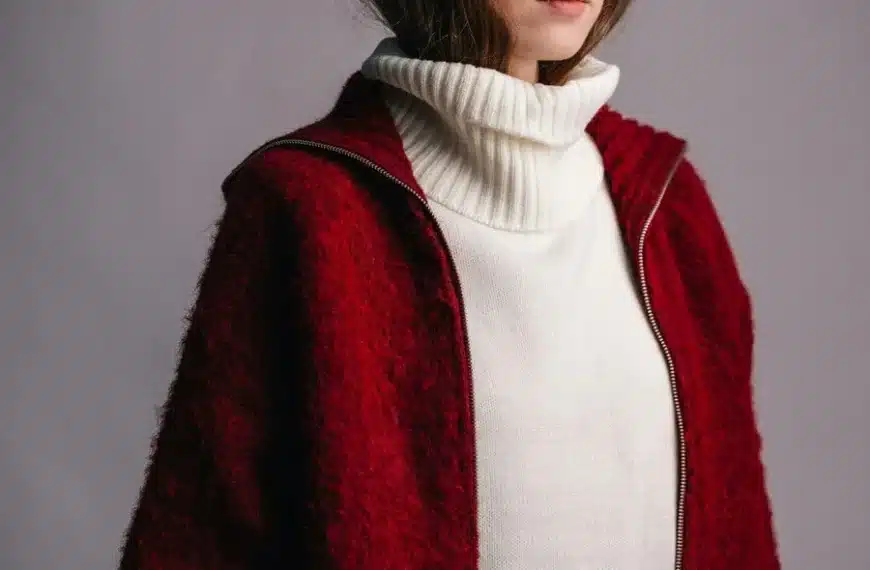
Wool has this quiet, familiar comfort that surprises people once they give it a real chance. Good wool doesn’t itch or weigh you down. It sits lightly on the body and adjusts as you move through the day. Step outside into the cold, and you feel warm. Walk into a heated room, and somehow you don’t overheat. Wool works with you rather than against you, and that’s one of the reasons it has stayed relevant for generations.
A lot of people still picture wool as something thick, old-fashioned, or a little scratchy because that’s how it used to be in the past. But modern wool – especially merino, lambswool, and high-quality blends – behaves completely differently. Merino feels smooth and breathable, almost like a second skin. Lambswool brings structure without feeling stiff. Cashmere adds warmth without adding weight. Each type has its own personality, which is why stylists and designers keep returning to wool when they want clothes that look polished but still feel relaxed.
Another reason wool is so comfortable is its natural ability to regulate temperature. Every wool fiber is full of tiny air pockets that act like miniature insulation chambers. They hold warmth when you need it and release heat when your body starts to warm up. The result is a type of comfort that follows you through the day instead of fighting against you. This is why skiers swear by merino base layers, why commuters love wool coats, and why a simple wool sweater can feel right both indoors and outdoors.
Beyond its temperature-balancing abilities, wool reacts to movement in a way synthetics often can’t match. It has a gentle springiness that lets garments move with your body. When you stretch wool lightly with your fingers, you’ll notice how it bounces back – that elasticity helps sweaters keep their shape instead of sagging. It also means trousers stay sharp, coats stay structured, and knitwear stays neat even after repeated wearing.
Finishing techniques also shape how wool behaves. A dense melton weave becomes a structured coat that feels refined without being rigid. A brushed wool finish softens the surface and adds cozy warmth. Fine-gauge merino knits turn into sweaters you end up wearing on repeat because they feel soft, breathable, and easy to layer. Cashmere elevates even the simplest silhouettes with a light, luxurious warmth.
Together, these qualities explain why wool still feels modern today. It adapts instead of restricting, breathes instead of trapping heat, and wears beautifully over time. In a world of fast fashion, wool stands out as a fiber that keeps earning its place in people’s wardrobes year after year.
Where Wool Fits in Modern Fashion
If you look closely, wool appears everywhere: tailored trousers, warm coats, relaxed cardigans, scarves, dresses, and even lightweight tops. Designers use it because it brings polish without looking overdone. It keeps its shape, drapes well, and stays fresh longer than many other fibers.
When people shop for wool fabrics, they rarely stop at one store because each supplier offers something different.
BeglarianFabrics.com is popular among sewists who like working with deadstock – small, rare quantities of wool originally produced for designer collections. The benefit is uniqueness. The trade-off is limited yardage, which may not suit big projects.
US shops like Mood Fabrics, The Fabric Store, and Fabric.com serve different needs. Mood is great when you want variety: weights, colors, blends, everything in one place. The Fabric Store is known for high-quality merino that’s soft enough for everyday wear. Fabric.com helps when you want to test ideas or stay within a budget, though selection can vary.
European mills – especially in Italy’s Prato region – produce beautifully spun wools with long textile traditions behind them. These fabrics can be more expensive and sometimes harder to source from the US, but the quality is consistently high.
What makes these suppliers worth comparing is that each one solves a different problem: uniqueness, variety, softness, affordability, heritage, or accessibility. Choosing wool becomes easier when you match your project with what each store does best.
Good wool isn’t only about fiber content. It’s about how the fabric feels in your hands, how it moves when you wear it, and how well it fits into your everyday life. Once you find a wool that does all three, it becomes one of those materials you return to again and again.
How Designers Use Wool in Real Life
Designers turn to wool when they want clothing that feels effortless but still looks intentional, and the reasons become obvious once you pay attention to how the fabric behaves. A well-cut wool coat, for example, holds its structure for years. It doesn’t collapse at the shoulders or lose its clean shape the way some synthetics do. A pair of wool trousers stays crisp even after hours of sitting, which is why stylists often recommend them for people who want polish without feeling overdressed. Lightweight merino tops add warmth without bulk, making them perfect for layering in unpredictable weather.
What makes wool so useful in real design work is its ability to shift between moods. Minimalist brands love smooth, fine wools that create clean silhouettes. These fabrics fall in a straight line and allow the shape of the garment to speak for itself. More experimental designers take the opposite direction: they use textured weaves, exaggerated proportions, or draped panels that play with shadow and volume. Wool responds well to all because it has natural elasticity and structure. It holds curves, folds, and angles in a way that adds depth without feeling heavy.
In everyday wardrobes, wool quietly becomes the piece you reach for again and again, even if you don’t think of yourself as a “wool person.” The scarf that survives five winters. The cardigan that works with everything from jeans to skirts. The coat that makes even simple outfits feel put-together. Wool has this reliable presence – it supports your style without asking for attention.
There’s also a practical reason designers keep using wool: it looks good for a very long time. It doesn’t pill easily when the quality is high. It bounces back after being folded. It resists odors better than cotton or synthetics, which is why wool sweaters often need less washing. And because it drapes in a natural, relaxed way, the clothing keeps its original shape instead of stretching out.
All these qualities make wool a staple in both high fashion and everyday clothing. Whether a brand leans classic or modern, subtle or bold, wool gives designers the freedom to explore shape, warmth, and texture without compromising comfort or longevity.


