
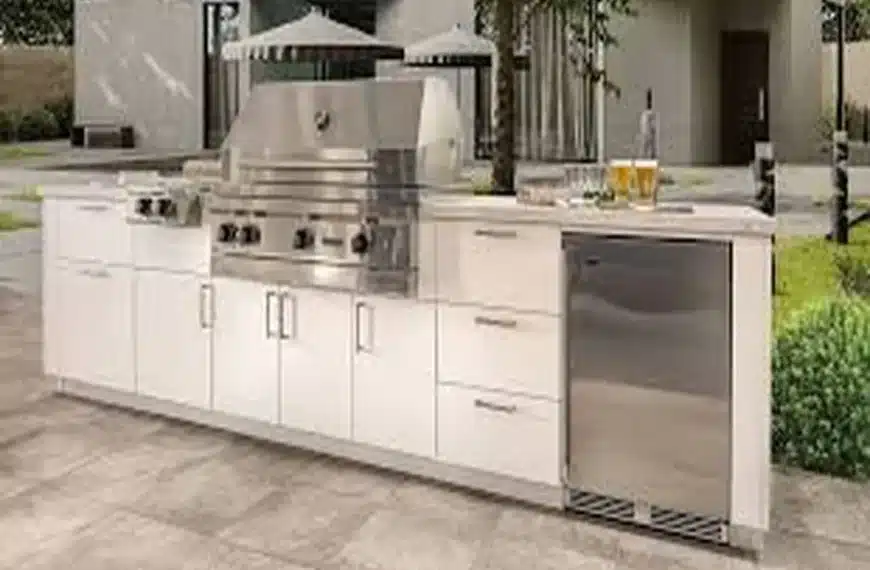
When designing an outdoor kitchen, the materials you choose will have a significant impact on the kitchen’s durability, functionality, and appearance. Among the most popular and trusted materials for outdoor kitchen cabinets are stainless steel and aluminum. Both materials are lightweight, durable, and resistant to outdoor elements, which makes them solid contenders for your outdoor space. However, not all metals are created equal, and picking the right one depends on your specific climate, design preferences, and long-term goals.
As Outdoor Kitchen Factory experts, we’ve seen firsthand how choosing the right materials can make or break an outdoor kitchen. In this blog, we’ll dive into the pros and cons of stainless steel and aluminum, so you can make an informed decision about which material works best for your outdoor kitchen.
Why Material Choice Matters for Outdoor Kitchens
Outdoor kitchens are subjected to harsh environmental conditions such as:
Moisture and Humidity: Rain, dew, and humidity can lead to rust or corrosion on unprotected surfaces.
Sun and Heat: Intense UV rays can fade or warp certain materials, while heat can weaken structural integrity.
Temperature Swings: Fluctuations from freezing winters to hot summers can stress and degrade materials over time.
Pests: Termites and other pests are less likely to damage metal materials, but still, proper protection is key.
Salt Air (Coastal Regions): Locations near the ocean need materials that can resist the corrosive effects of salt in the air.
Both stainless steel and aluminum are weather-resistant metals commonly used in outdoor kitchen construction, but your choice will depend on how well they meet these challenges.
Stainless Steel: The Gold Standard for Outdoor Kitchens
Stainless steel is one of the most durable and reliable materials available for outdoor kitchens. As the go-to material for many professional outdoor kitchen manufacturers (like us), stainless steel combines unmatched strength with a sleek, modern appearance.
Pros of Stainless Steel Cabinets
Superior Durability
Stainless steel is known for its robust structure, making it resistant to dents or bends caused by impacts. This sturdiness ensures it can hold up against heavy grills and appliances, making it ideal for outdoor kitchens that demand functionality and strength.
Corrosion Resistance
The chromium in stainless steel forms a protective layer on the surface, making it resistant to rust and corrosion. For maximum protection in harsh climates, manufacturers often recommend marine-grade 316 stainless steel, which offers the highest corrosion resistance, even in coastal regions with salty air.
Heat Resistance
Stainless steel can withstand high temperatures without warping or deteriorating. This makes it a great option when your outdoor kitchen includes grills, smokers, or pizza ovens that produce significant heat.
Low Maintenance
Stainless steel requires minimal upkeep. A quick wipe with soap and water is enough to keep it looking polished and clean. Additionally, its non-porous surface is resistant to bacteria and stains.
Sleek, Modern Look
Stainless steel gives outdoor kitchens a sophisticated, high-end aesthetic, blending perfectly with other sleek appliances like grills, refrigerators, and range hoods.
Longevity
With proper care, stainless steel cabinets can last 20+ years, making them a worthwhile investment for any outdoor kitchen.
Cons of Stainless Steel Cabinets
Higher Cost: Stainless steel is more expensive upfront than aluminum or other materials. However, its durability and longevity mean fewer replacements or repairs in the long run.
Susceptible to Scratching: Although it is highly durable, stainless steel can scratch more easily than aluminum. Using a protective finish or matte options can help minimize this.
Aluminum: Lightweight and Cost-Effective
Aluminum is another common material used in outdoor kitchen designs. While not as strong as stainless steel, it offers lightweight versatility and remains a viable option for many outdoor setups.
Pros of Aluminum Cabinets
Lightweight Design
Aluminum is much lighter than stainless steel, making it easier to handle during installation. This is especially helpful for modular or DIY outdoor kitchens.
Corrosion Resistance
Aluminum resists rust because it forms a natural oxide layer when exposed to the environment. This makes it a solid alternative to stainless steel, especially when treated with a powder-coated finish for added protection.
Budget-Friendly
Aluminum is generally less expensive than stainless steel, making it appealing for homeowners working with a tighter budget. You’ll get weather-resistant cabinets while keeping initial costs down.
Customizable Finishes
Powder-coated aluminum cabinets come in various colors and finishes, allowing you to customize the look of your outdoor kitchen to match your style.
Good Heat Resistance
Aluminum can withstand high temperatures, although it isn’t as durable as stainless steel when consistently exposed to direct grill temperatures.
Cons of Aluminum Cabinets
Less Durable
While it resists weathering, aluminum is softer than stainless steel and more prone to denting or bending. This makes it less ideal for outdoor kitchens that will experience heavy use or impacts.
Shorter Lifespan
Aluminum cabinets don’t last as long as stainless steel. Over time, despite being rust-resistant, they can develop pitting or other signs of wear, especially in coastal or extreme environments.
Maintenance Needs
Although aluminum resists rust, DIY designs or improper finishes can leave it susceptible to corrosion. Powder-coating is a must to extend its durability, which adds ongoing costs for maintenance and refinishing.
Industrial or Lightweight Appearance
Aluminum does not offer the same sleek, sophisticated appearance as stainless steel. Its surface may look unfinished or appear overly lightweight in high-end outdoor kitchen designs.
Outdoor Kitchen Factory Experts Recommend
Stainless Steel for Long-Term, High-Quality Outdoor Kitchens
If you’re looking for durability, long-term value, and premium aesthetics, stainless steel cabinets are the clear winner. While the upfront cost is higher, the weatherproof performance and extended lifespan make it the best material for outdoor kitchens, especially in extreme climates or high-use areas. Stainless steel is the top choice for luxury outdoor kitchens or setups that need to last for decades.
Aluminum for Budget-Friendly, Lightweight Builds
If your priority is cost-saving and you’re creating a smaller, lighter outdoor kitchen, aluminum cabinets are a good alternative. However, they require extra care (like powder-coating) to maintain their durability and may not perform well under heavy use.
As Outdoor Kitchen Factory experts, we recommend stainless steel for homeowners who want the best of both worlds: enduring performance and stunning design. Aluminum is a viable option if you have budget constraints, but stainless steel’s resistance to dents, rust, and extreme weather ensures a higher overall value.
Build Your Outdoor Kitchen with the Experts
Are you ready to create a weatherproof outdoor kitchen that stands the test of time? At Outdoor Kitchen Factory, we specialize in premium stainless steel cabinetry and offer customized designs to suit your space and style. Contact us today to get started on building the stainless steel outdoor kitchen of your dreams!


