
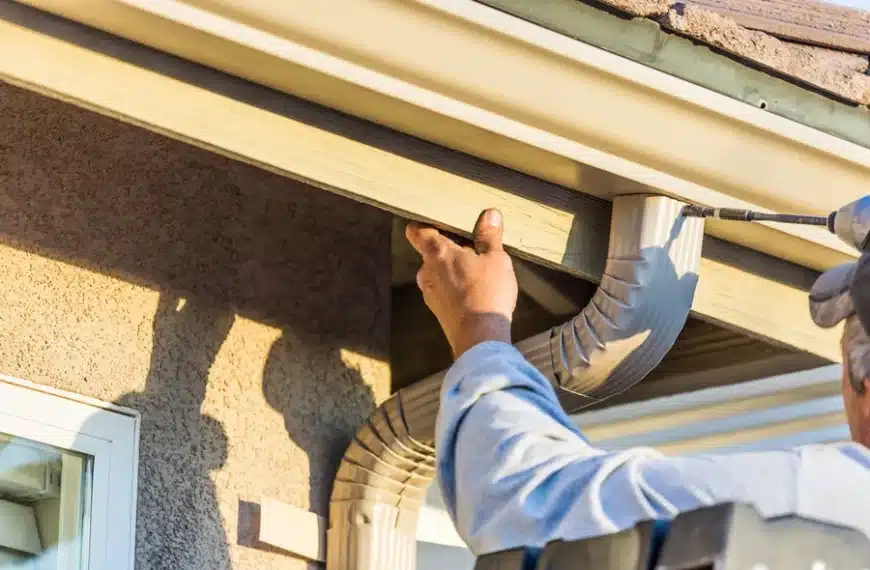
Gutters do more than catch rain. They help move roof runoff away from your roofline, siding, windows, and foundation so water does not collect where it can cause damage. When installation goes wrong, small mistakes can lead to overflow, rot, erosion, leaks, and expensive repairs. That is why understanding common gutter installation mistakes is so important for homeowners planning a new system or replacing an old one.
Why Proper Gutter Installation Matters
A properly installed gutter system helps control the path of water once it leaves the roof. Good placement, correct slope, enough downspouts, and solid fastening all work together to move water away from the house. When one part of that system is off, runoff can collect near the foundation, damage fascia, or spill into landscaped areas.
Poor installation can also create long-term structural issues. Overflowing or misdirected gutters can saturate the soil around the home, which increases the risk of foundation trouble, wet basements, and yard erosion. In short, proper gutter installation is not just about appearance. It is about protecting the whole house.
Most Common Gutter Installation Mistakes
1. Incorrect gutter slope
One of the most common gutter installation mistakes is getting the pitch wrong. Gutters need a slight slope toward the downspout so water can drain instead of sitting in the channel. A common rule of thumb is about 1/4 inch for every 10 feet, though exact needs can vary by layout and rainfall. If the gutter is too flat, water pools. If the pitch is off, drainage slows and overflow becomes more likely.
2. Using the wrong gutter size
Another major mistake when installing gutters is choosing a system that cannot handle the roof’s water load. Gutter and downspout sizing should match the roof area, slope, and local rainfall. PNNL’s Building America guide notes that gutters and downspouts need to be sized for anticipated water loads, and roof pitch is one of the factors that affects drainage design.
3. Improper downspout placement
Downspouts need to be placed where water can leave the gutter efficiently and move away from the house. PNNL recommends spacing downspouts at least 20 feet apart but no more than 50 feet apart, depending on the design. When downspouts are poorly placed, water can back up, spill over the edge, or dump too close to the foundation.
Beyond selecting the correct materials, the physical implementation of your drainage system requires meticulous attention to detail to ensure long-term home protection. Many homeowners underestimate the precision needed for a proper gutter install omaha, often neglecting the subtle pitch requirements that facilitate consistent water flow toward downspouts. Even a slight miscalculation in the slope can result in stagnant pools, which eventually leads to heavy debris accumulation and potential rust. When these structural components are aligned accurately, they effectively divert moisture away from the siding and foundation, preventing the costly erosion and interior leaks that typically stem from hasty or amateurish installation efforts. Maintaining this balance is essential for a truly functional exterior.
4. Installing too few downspouts
Too few downspouts can cause the whole system to underperform, even if the gutters themselves are installed correctly. Family Handyman notes that too few or too small downspouts can cause gutters to back up, spill over, rust, and leak. This is one of the easiest DIY gutter installation problems to miss because the system may look fine until a heavy storm hits.
5. Weak or widely spaced fasteners
Loose support is a common cause of sagging gutters. In most residential installations, gutter hangers are typically spaced about 24 to 36 inches apart, with closer spacing often needed in areas with heavy rain or snow. When fasteners are too far apart or poorly anchored, gutters can pull away from the fascia or lose their alignment over time.
6. Improper sealing of joints and seams
Sectional gutters have more joints, which means more places where leaks can develop. If seams are not sealed correctly, water escapes at the joints instead of moving to the downspout. That is one reason seamless systems are popular: fewer seams mean fewer connection points that need sealing and maintenance.
7. Ignoring roof pitch and runoff speed
Steeper roofs move water faster, which can overload a small or poorly designed gutter system. LeafFilter notes that homes with steeper roofs often need larger gutters because water collects more quickly. Ignoring roof pitch is one of the most overlooked rain gutter installation mistakes, especially in DIY projects.
8. Poor placement under the roof edge
Gutters should sit correctly under the drip edge so water falls into the gutter instead of behind it. LeafFilter recommends positioning the gutter right under the drip edge, with the drip edge slightly overlapping the back of the gutter. A larger gap can lead to leaks, fascia damage, and roof-edge problems.
9. Sending water too close to the foundation
Even a well-mounted gutter system can fail if the discharge point is wrong. Best-practice guidance says downspouts should direct water at least 4 to 6 feet away from the home, and some basement-flooding guidance recommends even more distance. When runoff lands too close to the house, water can pool around the base, increase hydrostatic pressure, and seep into lower levels.
10. DIY installation without proper tools or experience
Many homeowners try to save money with DIY work, but gutter installation requires precise measuring, leveling, fastening, and drainage planning. Even small errors in pitch, spacing, or outlet placement can create major performance problems later. Professional installers are better equipped to spot roofline issues, drainage trouble, and layout challenges before the system goes up.
Problems Caused by Improper Gutter Installation
The biggest problems caused by improper gutter installation usually show up during heavy rain. Water may spill over the front edge, run behind the gutter, or pour next to the foundation. Over time, that can lead to wood rot, wet siding, mold, cracked foundations, basement moisture, and washed-out landscaping. Fairfax County specifically notes that incorrectly set up downspouts can cause foundation problems, erosion, and wet spots in the yard.
Poor drainage also shortens the life of the gutter system itself. Standing water adds weight, encourages corrosion, and increases the chance of sagging and separation. In other words, most common gutter installation errors do not stay small for long.
Tips for Proper Gutter Installation
If you want to know how to install gutters properly, start with the basics:
- Choose the right gutter and downspout size for your roof area and rainfall.
- Use the correct slope so water flows toward the outlet.
- Place enough downspouts along the run and move discharge away from the foundation.
- Space hangers correctly so the gutter stays secure.
- Align the gutter properly under the drip edge.
- Consider seamless systems if you want fewer joints and lower leak risk.
These simple gutter installation tips can prevent many of the most expensive issues homeowners deal with later.
Professional Gutter Installation Services You Can Trust
Proper gutter installation requires experience, precision, and a solid understanding of drainage behavior. Professionals know how to set the correct slope, secure the system with the right hangers, size gutters for the roofline, and place downspouts where they will move water away from the structure effectively. That level of detail matters because even a small setup error can create long-term water damage.
Homeowners looking for reliable gutter solutions can explore Southwest Seamless Rain Gutters, which highlights seamless gutter installation and repair services across Nevada and Arizona. The company’s website says it offers custom seamless gutter systems and notes more than 10 years of experience in installation work, making it a natural resource for homeowners who want professional help instead of gambling on DIY results.
When to Hire a Professional Gutter Installer
Some homes are better left to the pros from the start. Professional installation is especially smart for:
- Multi-story homes
- Steep or complex rooflines
- Large homes with long gutter runs
- Regions with heavy rainfall
- Homes needing custom seamless gutters
- Projects where drainage issues already exist
These situations increase the risk of layout errors, safety issues, and underperforming drainage if the work is done without the right planning or equipment.
Conclusion
The best way to avoid common gutter installation mistakes is to treat gutters like a drainage system, not just a trim feature. Wrong slope, poor sizing, weak fastening, bad downspout placement, and drip-edge gaps can all lead to serious water problems. If homeowners want long-lasting performance, fewer leaks, and better protection for the roof, walls, foundation, and landscaping, the focus should always be on proper gutter installation from the start.


