
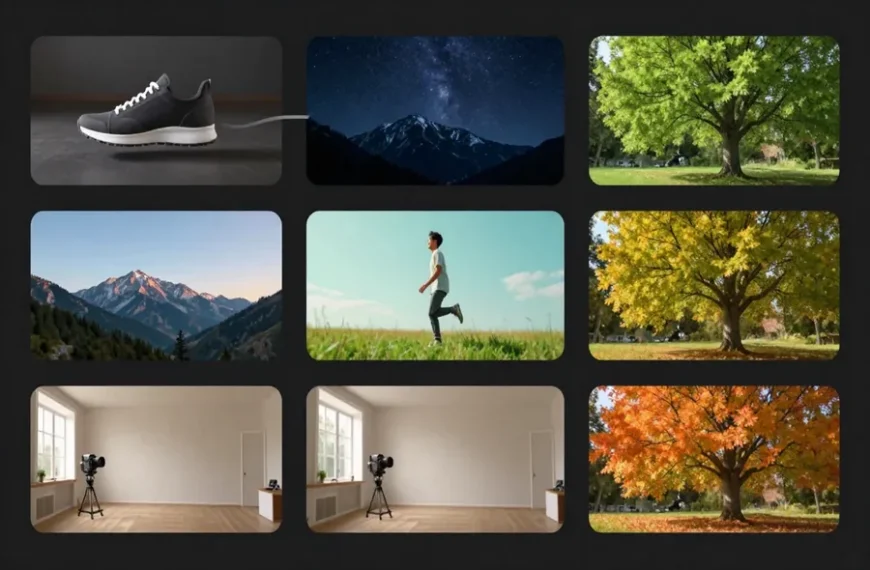
A sixty-second Seedance 2.5 sequence has to cross at least one handoff because a single generation runs for no more than thirty seconds. Use model extension when continuous movement, camera momentum, and generated audio matter most. Use last-frame chaining when the join can behave like a deliberate edit and the second half needs a controlled reset.
Neither method makes continuity automatic. Extension carries more context but can still drift. A returned last frame preserves the visible endpoint, not velocity, off-screen action, or the full sound state.
The two handoffs preserve different information
Model extension continues from an existing generated sequence. ByteDance describes Seedance 2.5 as supporting multiple rounds of extension in addition to clips of up to thirty seconds. When that function is exposed by a product surface, it is the more direct way to ask the model to carry an action or audiovisual scene beyond the first clip.
Last-frame chaining takes a different route. The first request returns its closing image as a still. That image becomes the first frame of a new request, and the second prompt rebuilds the scene from that visual state. The handoff preserves what can be seen in one frame: character appearance, wardrobe, object placement, lighting, and composition. Everything that depends on time must be stated again.
The distinction can be summarized simply:
| Continuity need | Extension | Last-frame chaining |
| Character and set appearance | Carries prior sequence context, but still needs monitoring | Closing frame provides a precise visual starting point |
| Body and camera momentum | Better first choice for a genuinely continuous action | Must be reconstructed from a still and a new prompt |
| Generated dialogue or ambience | May continue with broader audiovisual context | Begins as a new generation and needs an explicit sound plan |
| Editorial control at the join | Less direct if the continuation drifts | Strong when the seam can be placed at a cut or pause |
| Prompt reset | Continues an existing direction | Lets the second segment receive a fresh, tightly scoped brief |
Choose extension for motion that cannot visibly restart
Extension is the natural first option for an uninterrupted walk, a long camera orbit, a sustained dance move, or dialogue that should flow across the thirty-second point. These scenes depend on more than a matching image. The direction and speed of movement immediately before the seam affect what should happen immediately after it.
Write one sixty-second beat sheet and mark the handoff at thirty seconds before generating the opening. The first prompt should reach the seam without wrapping up the scene. In the continuation, repeat only the fixed character, clothing, prop, environment, lighting, and camera details, then move directly into the next action. Reintroducing the whole premise can encourage repetition instead of progress.
Product surfaces do not all expose the same extension control. The underlying model’s extension capability should not be mistaken for a promise that every browser interface includes a one-click extension button. Verify the live tool before making extension the only production plan.
Choose last-frame chaining when a seam can do useful work
Last-frame chaining is effective when the story allows a breath: a character stops at a doorway, a product settles onto a surface, the camera completes a pan, or the frame briefly darkens behind a foreground object. These moments reduce the amount of temporal information that the second generation has to infer.
ClipDance currently exposes seedance 2.5 with a closing-frame return that can feed another request. ClipDance is an independent browser product, not ByteDance or an official Seedance site. Its returned still is a practical handoff asset, not a hidden extension of the first task.
A reliable chaining brief does four things:
- It uses the returned image as the new first frame without recropping or retouching it unnecessarily.
- It repeats the scene invariants in the same words used for the first segment.
- It states the motion already underway: direction, pace, body position, and camera movement.
- It gives the second segment a new destination rather than asking it to “continue naturally.”
“The camera continues its slow clockwise orbit while the actor completes the turn and faces the window” gives a direction. “Continue the scene” asks the model to invent the handoff.
Audio exposes a weak seam faster than the picture
Two frames can match while the edit still feels wrong because room tone changes, a voice shifts, music restarts, or an effect disappears. Model extension is the better first test when generated sound must carry through the join, but reference audio remains guidance rather than a locked master.
With last-frame chaining, treat the second segment as a new audio event. Record the speaker, exact line, ambience, music state, and continuing effects on both sides of the join. If exact preservation is required, bridge or replace the sound in an editor rather than asking a still image to carry it.
Avoid cutting in the middle of a critical word. A brief pause, breath, reaction shot, or environmental sound can create room for an invisible repair. The best visual seam is not always the best audio seam, so both need to be selected together.
Build the sixty seconds as one plan, not two unrelated prompts
Before opening the generator, write a compact continuity ledger. It should record the details that remain fixed, the changes that are allowed, and the exact state at the handoff.
For a character scene, fixed details may include face, hairstyle, clothing, carried object, time of day, and lens behavior. The handoff adds pose, gaze, screen position, movement direction, camera direction, and the last audible event.
For a product sequence, record label orientation, material, reflections, surface, background, and camera height. A clean pause after the object stops moving gives last-frame chaining a strong starting point. A liquid pour or continuous mechanical action is more likely to benefit from extension because the motion itself carries meaning.
The ledger makes review specific: the sleeve changes, the camera reverses, the prop jumps, or the room tone resets.
Test the handoff before rendering both full segments
The seam is the highest-risk part of the sequence, so test it first. Generate a shorter version of the final beat before the handoff and the opening beat after it. Review the pair frame by frame and with sound. A beautiful first half is not useful if its closing state cannot support the next request.
Check these points in order:
- Does the last image of segment one match the first image of segment two?
- Does the subject continue in the same screen direction?
- Does the camera preserve its movement, or stop at an intentional edit?
- Do wardrobe, props, shadows, and background geometry remain stable?
- Does the sound bridge, pause, or restart by design?
Change one variable per retry. If appearance matches but motion jolts, revise the movement handoff rather than replacing all references. If the picture works but the voice shifts, keep the visual prompts and repair the audio plan.
The routing layer does not choose the creative method
Where the current implementation calls reAPI, that outside aggregator transports and tracks the generation request. It contributes neither the creative decision nor the Seedance model itself. ClipDance remains the browser product; reAPI is one upstream service used by selected routes. None of those routing mechanics decides whether a sixty-second concept should use extension or a returned still.
The creative choice belongs in the continuity plan. Extension is a request to preserve more temporal context. Last-frame chaining is a controlled restart from a verified image. If the live interface does not expose extension, chaining remains available, but the prompt and edit must compensate for the information a still cannot carry.
Put the seam where the scene can support it
A successful sixty-second video is not merely two thirty-second outputs placed back to back. It is a scene with a planned transfer of motion, identity, space, and sound. Pick extension when the action truly must remain unbroken; pick last-frame chaining when a visible endpoint can become a precise new beginning.
Choose the handoff beat, write down the invariants, test the join, and keep the method that preserves the detail the audience will notice first. The seam then becomes a directing decision instead of an accident at the middle of the timeline.


