
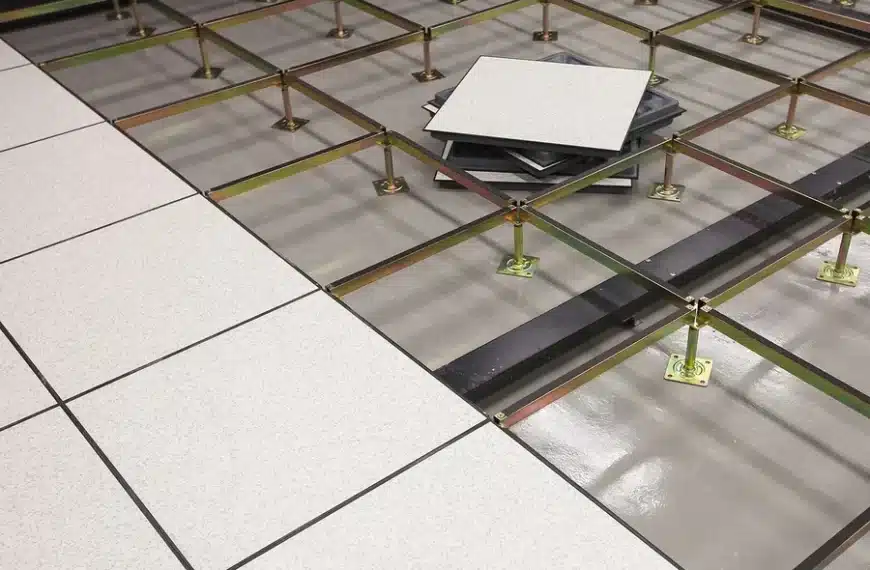
Financial institutions treat downtime as a direct threat to reputation, revenue, and regulatory standing. A few lost seconds can ripple through markets and erode client confidence. Raised access flooring – elevated panels that create a serviceable plenum beneath each workspace – gives banks and fintech firms a powerful buffer against interruptions.
By simplifying cable management, environmental control, and future expansion, this underfoot infrastructure becomes a quiet hero. During the pandemic shift to hybrid trading floors, firms with raised systems reconfigured layouts overnight while peers struggled for weeks.
Ensuring Seamless Cabling and Connectivity
A single trade can traverse dozens of systems before settlement, and every hop depends on rock-solid network links. Raised access floors let low-voltage data, fiber, and power lines run in orderly bundles, isolated from kicks and cleaning equipment. Color-coded raceways and modular patch panels beneath the tiles simplify tracing and change management for IT teams.
Because technicians can lift panels in seconds, they reroute or add circuits without breaking slabs or disrupting staff. The result is cleaner signals, reduced cable stress, and faster fault diagnostics – critical when milliseconds decide millions.
Mitigating Downtime From Infrastructure Failures
Banks build redundancy into servers and storage, yet cables and cooling often remain single points of failure. The under-floor plenum houses wiring, chilled air ducts, and leak-detection sensors that watch for condensation from high-density racks. When a component overheats or a line fails, maintenance teams reach it through the floor instead of shutting down whole aisles.
Spare tiles and grommets let staff install quick jumpers that bypass damage until a permanent fix is scheduled. Panels can be swapped if they show wear, preventing trip hazards and keeping workflows uninterrupted throughout the trading day.
Facilitating Rapid Technological Upgrades
Competitive pressures push banks to adopt new hardware – low-latency switches, quantum-safe modules, and dense servers – on tight timelines. Traditional slabs force crews to chase concrete, schedule after-hours work, and tolerate disruptive noise. With raised floors, heavy lifting happens below eye level.
Teams pop out only the panels they need, slide in conduits or cooling coils, and close the tiles before the opening bell. The same flexibility aids workstation moves when mergers consolidate departments or new product desks spin up overnight. This agility lets firms innovate without the normal renovation drag on revenue.
Strengthening Risk Management and Compliance
Regulators require documented evidence that critical operations can survive fires, floods, and equipment faults. Raised access systems support compartmentalized smoke detection, under-floor fire suppression, and water-sensing cables that alert facilities before assets drown. Clear pathways also keep power and data separated, aligning with electrical codes and cybersecurity best practices.
Because every panel is an inspection hatch, auditors can witness preventive measures in situ, accelerating certification and reducing the likelihood of costly compliance findings. The same design underpins robust physical security, as cables remain invisible to visitors who might otherwise be tempted to tamper.
Conclusion
For banks, credit unions, and fintech players, business continuity is not a luxury – it’s the backbone of customer trust. Raised access flooring turns the ground people walk on into a flexible infrastructure layer that shields critical networks, accelerates upgrades, and satisfies regulators.
Its modest profile belies its strategic value: safeguarding transactions, protecting reputations, and letting professionals stay focused on markets instead of maintenance. In an industry where every second counts, the right flooring system could be the difference between seamless service and front-page headlines – truly for clients and regulators worldwide alike.


