
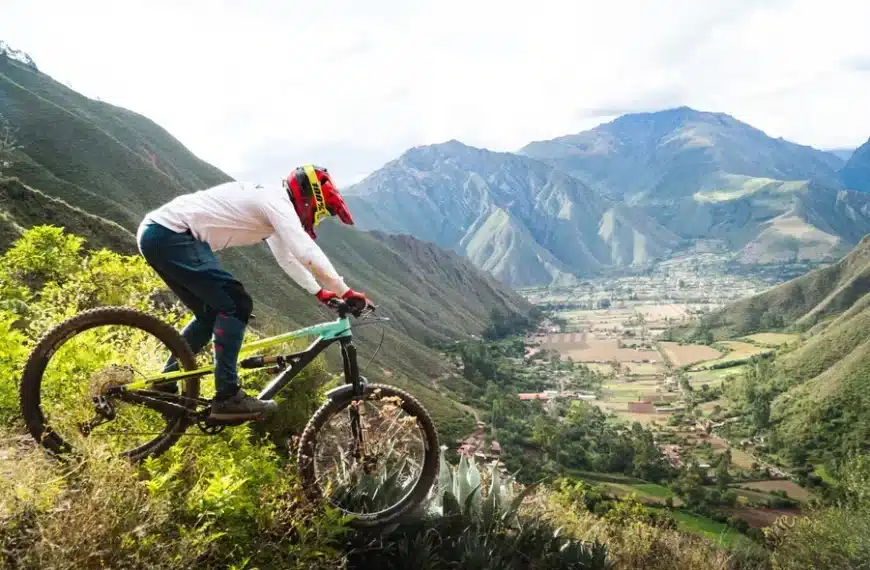
Cusco sits at 11,152 feet above sea level, making it higher than most ski towns in Colorado and nearly any peak east of the Mississippi. The air here holds roughly 30% less oxygen than what you’re used to at sea level. Ancient Inca trails wind through this landscape, offering some of the world’s most distinctive mountain biking terrain where history and altitude create challenges you won’t find anywhere else.
The Sacred Valley and Its Living Infrastructure
Between 9,186 and 9,842 feet elevation, the Sacred Valley maintains surprisingly mild temperatures compared to Cusco itself. The Incas understood this microclimate centuries ago and built elaborate agricultural terraces that local Quechua families still farm today using traditional methods. That 7-inch white corn growing on ancient stone platforms isn’t just scenery, it’s an active crop exported to Spain. When you ride past these terraces, you’re sharing trails with working communities, not touring through abandoned ruins.
The paths beneath your wheels connect to a 25,000-mile network the Incas built without knowing the wheel existed. These weren’t simple dirt tracks but engineered routes with carved stone steps, suspension bridges, and cliff tunnels linking an empire that stretched from Colombia to Chile. Today, muleteers still use these routes to transport potatoes, women carry corn in traditional baskets, and kids walk for hours to reach school. Tourism dollars from mountain biking flow directly to families who’ve depended on subsistence farming for generations.
What Elevation Does to Your Ride
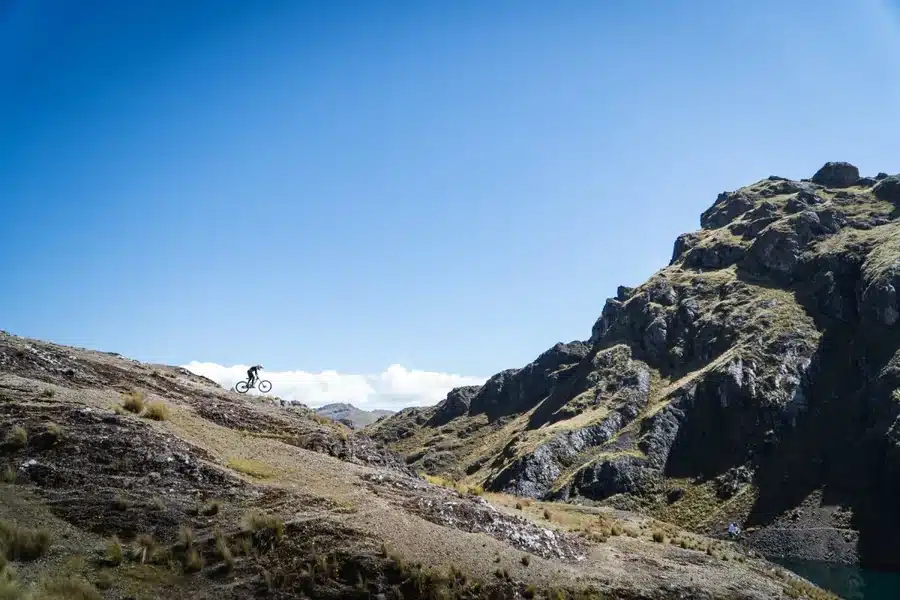
The Andes stretch 4,300 miles down South America’s spine, second only to the Himalayas in height but longer and more diverse. Vertical orientation compresses climate zones dramatically. You might start pedaling at 13,123 feet where only tough ichu grass survives and nighttime temps hit 23°F, then drop 4,265 feet into valleys warm enough for corn and beans. This isn’t gradual transition, it happens over a single afternoon ride.
Three distinct trail systems offer different experiences:
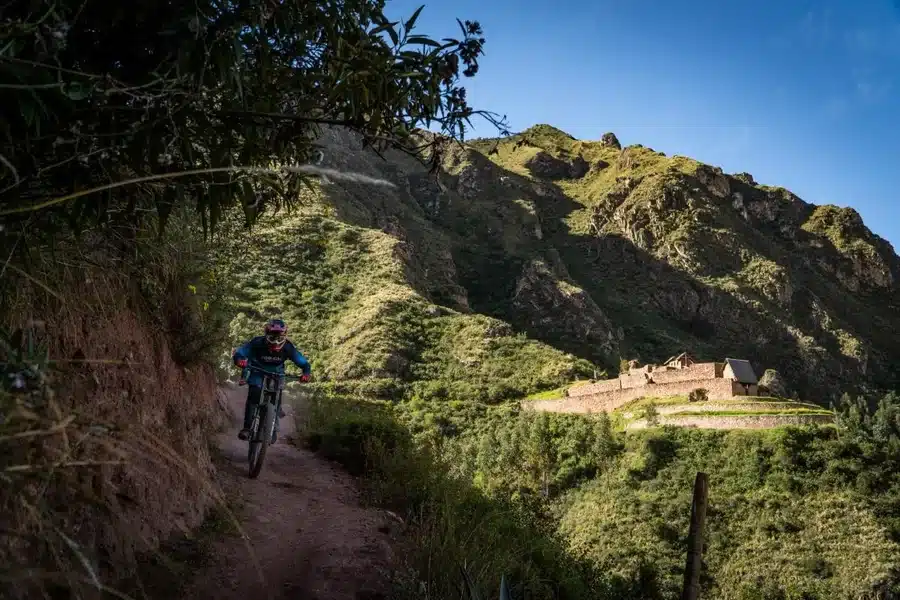
- Yuncaypata stays close to Cusco in eucalyptus forests planted during 1940s reforestation efforts. The trees provide wind protection and shade while gentle terrain makes it perfect for acclimatization rides with killer city views.
- Lamay drops over 4,265 feet through ecological zones the Incas exploited strategically: high pastures for llamas and alpacas, mid-elevations for potatoes and quinoa, lower valleys for corn and peppers. Modern riders face technical rock gardens and loose surfaces requiring precise line choice and speed control.
- Perolniyoc and Raqaypata combine natural singletrack with sweeping descents, delivering adrenaline and culture without extreme technical demands. Open views and clean air make this route ideal for riders wanting adventure and authentic Andean immersion without punishing difficulty.
Altitude Adaptation Isn’t Optional
Lower atmospheric pressure at elevation means fewer oxygen molecules per breath. Your body compensates by breathing faster and increasing heart rate, but this “soroche” affects everyone regardless of fitness level. Plan 48 to 72 hours for your body to produce additional red blood cells. Skip alcohol entirely as it dehydrates and slows adaptation. Drink between half a gallon and a gallon daily, far more than normal, because dry air and exertion deplete fluids rapidly through breathing and sweating. Sleep as much as you need.
Equipment and Agency Selection
Few Cusco companies specialize exclusively in mountain biking, making agency choice critical. Professional outfitters provide full-suspension bikes with hydraulic brakes, tubeless tires, and maintenance schedules adapted to Andean dust, altitude, and temperature swings. Support vehicles carry tools, spare wheels, and first aid supplies. Experienced riders can bring personal bikes if they prefer familiar equipment and precise fit, and most agencies accommodate this.
Weather Reality Check
May through October delivers weeks of clear skies with valley temperatures between 59 and 68°F, perfect for riding. Mornings start around 41°F though, and above 13,123 feet you’ll encounter frost even in July. Solar radiation at this elevation exceeds sea level intensity by 25% due to thinner atmosphere, causing second-degree burns in under 30 minutes without protection.
November through April transforms everything. Rain makes trails slippery, loose rocks unpredictable, and low clouds reduce visibility. February sees over 6 inches of precipitation. Only experienced riders with proper gear should attempt technical routes during wet season.
Costs and Timing
Full-day tours run $200 to $300 depending on meals, snacks, and hydration included. Multi-day expeditions with lodging, food, transport, and Machu Picchu access exceed $1,000 based on duration and service level. June through August is peak season requiring advance booking. May, September, and October offer identical weather with fewer crowds and better prices.
Practical Money and Connectivity
Carry Peruvian soles in cash. Cusco has ATMs but Sacred Valley towns don’t. Credit cards work at hotels, restaurants, and tour agencies, but markets, small shops, and rural communities only accept cash. Notify your bank before traveling to prevent card blocks. Keep small bills handy and store backup money securely. Download offline maps and save digital copies of documents since internet signal weakens in high areas.
The Bottom Line
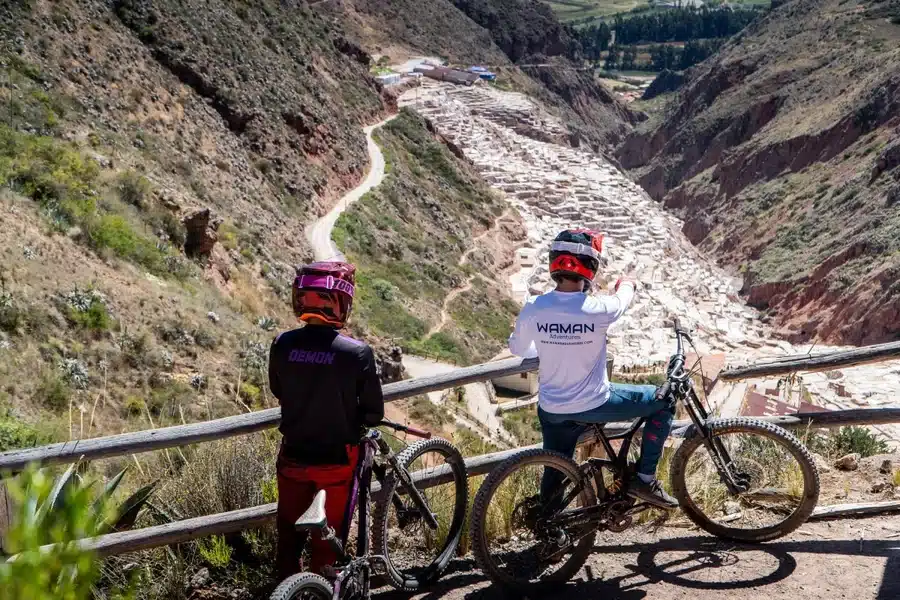
Mountain biking in Cusco demands serious preparation, not vacation mindset. You’re dealing with legitimate altitude, abrupt weather shifts, technical terrain mixing loose dirt with rock sections, and cultural considerations around communal trails and local customs. Proper acclimatization, hydration, and following guide instructions make the difference between suffering and thriving. Respecting Andean communities and wildlife matters as much as bike skills. Peru Biking Tours brings over ten years guiding international riders through these mountains with professional equipment, safety protocols, and authentic Peruvian experience.


