
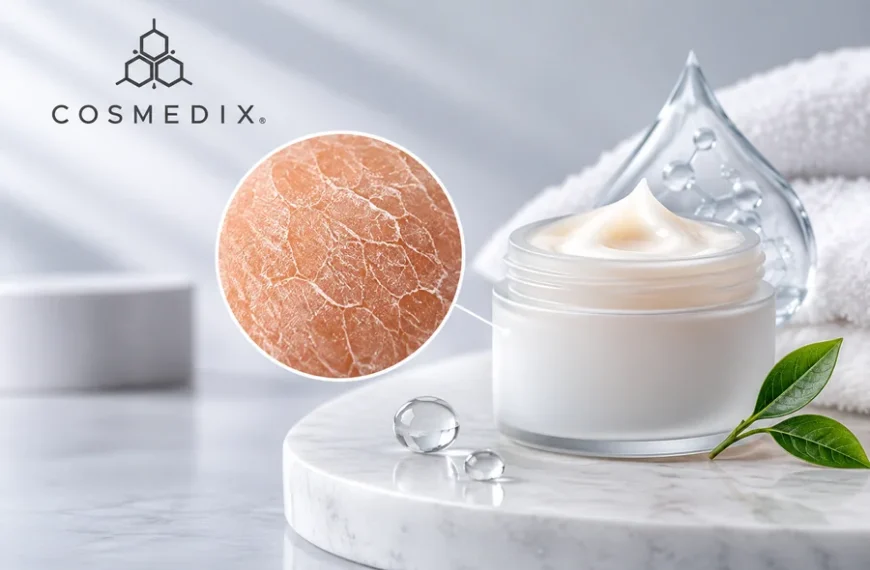
The client uses a moisturizer twice daily but experiences tightness again by lunchtime. Flakiness has developed around the lips. Products that they are used to are causing stinging, and whilst richer moisturizers are helping, it never lasts for very long. A more advanced dry-skin treatment may be needed.
Dry skin can be caused by many factors. This includes a lack of natural oils in the skin, changing humidity levels depending on the season, an overworked skin barrier, eczema, or irritation.
Dry skin can look similar, but it shouldn’t react the same way in the treatment room. Try to understand why your client’s skin is not retaining water, attracting water, replenishing surface lipids, or tolerating your treatments.
What Dry Skin Is Telling You
Dry skin lacks oils, whilst dehydrated skin lacks water. Clients can often suffer from both issues. Extremely dry skin can feel rough and tight throughout the day. Dehydration can cause temporary creping, dullness, and fine lines.
The skin barrier, the stratum corneum, is made up of corneocytes and surrounding lipids such as ceramides, cholesterol, and fatty acids to reduce TEWL and irritation. Having a positive dry skin barrier repair plan will help the skin.
Eczema can cause severe dryness, itching, flaking, and recurring patches. An aesthetician will know when a cosmetic protocol is not enough. However, diagnosing and treating a suspected inflammatory condition is out of our scope.
What Causes Dry Skin Even After Moisturizing?
Sometimes moisturizers will not work due to the client’s lifestyle. They may apply a light moisturizing lotion to completely dry skin and sit next to an aircon for 8 hours. Or they could be using a rich moisturizer that works fairly well, but using a foaming cleanser and exfoliator at night.
Common causes of dry skin include:
- Low humidity, cold weather, heating, and aircon.
- Long hot showers and excessive cleansing.
- Harsh soaps, perfumed products, and frequent detergent use.
- Overuse of acids, scrubs, retinoids, and cleansing tools.
- Low natural sebum production and aging.
- Eczema, psoriasis, medications, and underlying health conditions.
Cold and dry conditions can cause more moisture loss. Hot water and harsh cleansers can strip away some of the surface lipids. However, weather can sometimes cause a flare-up during the winter. Not always, though.
Understanding What Your Skin Needs
| Skin presentation | Likely priority | Suitable formula direction |
| Tight but not visibly flaky | Increase water content | Hyaluronic acid or glycerin under moisturizer |
| Rough, flaky, or easily irritated | Replace and seal surface lipids | Ceramides, squalane, and a cream texture |
| Dryness with reduced suppleness | Combine humectants and emollients | Glycerin with shea butter or squalane |
| Itchy, recurring, sharply defined patches | Consider a condition beyond cosmetic dryness | Pause active treatments and refer |
| Post-procedure tightness | Follow the recovery protocol | Simple, fragrance-conscious barrier support |
Sometimes it’s not clear-cut. If the client is dehydrated and has oily skin, a light humectant serum with some emollience may be needed. If the skin is very dry, a cream that will stay on the skin for a few hours may be needed.
Dry Skin Skin Barrier Plan
1. Minimize Friction
Start with a gentle cleanser (cream or oil) and warm water. Some dry clients won’t need to cleanse in the mornings. Just a comfortable rinse.
Avoid using scrubs, cleansing brushes, and harsh exfoliating acids whilst the skin is tight, visibly flaky, and sensitive. This will cause the skin to look less smooth for a period of time (1-2 weeks). However, continuing to exfoliate can cause discomfort.
2. Use Humectants on Lightly Damp Skin
Hyaluronic acid and glycerin will help attract water into the skin. Hyaluronic acid can give the skin a plumper appearance. Meanwhile, glycerin can leave skin feeling comfortable and supple.
Use a light amount of product. If the skin is dry, a humectant alone may not be enough, so apply a moisturizer right after.
3. Replenish Lipids and Add Emollience
Ceramides will help replenish the lipid structure of the skin barrier. Squalane will help minimize roughness. This is a good option if a heavy moisturizer isn’t suitable.
For ongoing dryness, a moisturizer containing glycerin, shea butter, caprylic/capric triglyceride, cholesterol-derived lipids, jojoba oil, and a calming peptide will provide skin hydration with humectants, emollients, and replenishing lipids.
This will be a thicker product, which can be good for rough/flaky skin. However, products with parfum and aromatic oils should be tested for tolerance.
Shea butter is a great option if extra cushioning is needed. Apply the moisturizer whilst the skin is still slightly damp from the previous hydration step.
4. Sun Protection
Finish the morning routine with a broad-spectrum sun cream. Dry skin can still be exposed to UV rays. Some correction can cause increased sensitivity, so sun protection should be consistent.
On the body or hands, reapply the moisturizer. Using gloves can help reduce exposure to cleansing products. Cotton layers can provide a more comfortable feel than rough wool on eczema-prone areas.
5. Assess
After around 2 weeks, assess how comfortable the client is. Has the tightness post-cleansing reduced? Are products still causing stinging? Is the moisturizer lasting longer?
If the answer is yes, then start to introduce one active at a time. Leave a few days between introducing new products. If the client has had a peel, wax, microneedling, or any other treatment with a recovery period, then there is a good argument to wait longer before exfoliating.
| Pro Tip: Ask the client to take a photo of the area to be treated pre-morning skincare in the same light twice weekly. Checking in the mirror daily can cause exaggeration of natural changes. Using the photos will help you to identify if the skin is improving. |
Common Mistakes
- Using hyaluronic acid without a moisturizer.
- Exfoliating every flaky area.
- Using a light moisturizer year-round.
- Taking long, hot showers because they feel soothing.
- Using multiple skin barrier products together, which can make it harder to tell why irritation is occurring.
- Continuing with treatments on itchy, cracked or inflamed skin.
When to Refer
If the dry skin is causing pain, quickly getting worse, oozing, crusting, bleeding, or affecting sleep, then refer.
If there are recurring itchy patches, swelling, generalized flaking, or suspected infection, then refer. But if persistent dry skin continues after 2-4 weeks of careful skin care, don’t keep changing cosmetic products.
A Good Dry Skin Treatment
A good dry skin treatment links the client’s symptoms to their cleansing, weather, treatments, product tolerance, and any possible contraindications. Give the skin barrier enough time to calm.
Provide hydration with humectants, ceramides, and emollients to help the skin retain moisture. Minimize any factors causing the surface lipids to be stripped away. If the pattern suggests eczema or another issue, refer promptly to protect the client.


