
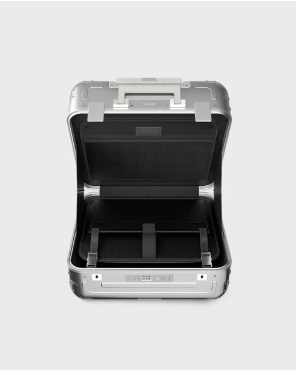
Most people notice the metallic finish of an aluminium suitcase first. The structure is different from an ordinary plastic trolley bag, too. Aluminium cases usually have a firm outer shell, defined edges and a frame that holds the two halves together.
Many newer models also have zipperless locks, spinner wheels and separate compartments for travel essentials. If you’re a frequent flier or just like to keep your belongings organized, these features are worth knowing about.
If you are considering an aluminium suitcase, here are seven things to look at.
1. A Firm Outer Shell That Holds Its Shape
An aluminium suitcase has a rigid metal body. It does not flex as easily as a polycarbonate suitcase when pressure is applied.
This firmness is useful when luggage is stacked with other bags or moved through baggage-handling systems. The shell helps protect the packed contents from being compressed.
Some aluminium suitcases have reinforced corners as well. These areas receive considerable contact during handling, so additional reinforcement can be useful.
Aluminium may pick up scratches or small dents after repeated journeys. Such marks are usually cosmetic, although serious damage should always be checked. The main advantage of the material is that it provides a firm structure without relying on a flexible outer shell.
2. Zipperless Closures That Are Easy to Operate
A conventional suitcase usually has a zip running around its edges. Many aluminium suitcases take a different approach.
They use a framed closure with clasps or built-in locks. Instead of pulling a zip around the case, you release the clasps to open it and fasten them again after packing.
There is no outer zip to get caught in fabric or become damaged through repeated pulling.
The frame also gives the two halves a defined closing edge. On some models, a rubber seal runs along this edge to help limit the entry of dust and moisture.
When inspecting a zipperless aluminium suitcase, check that the clasps fasten properly and that the frame closes evenly. These details matter more than the appearance of the locking mechanism.
3. Built-In Locks Without Separate Padlocks
Many aluminium suitcases have combination locks fitted directly into their frames.
This means travellers do not have to attach a separate padlock to zipper pulls. The locking mechanism is already part of the suitcase.
Some models have locks accepted by TSA, which security personnel can open with tools compatible with the lock if inspection is required.
This is important especially for international flights where the luggage may be subject to further scrutiny.
See how to set and reset the combination before you go. It’s also worth checking both clasps close securely. A lock must be easy to use, especially when one is in a hurry to repack.
4. Compartments That Help Keep Things in Place
Packing space is not just about how many litres a suitcase can hold. The arrangement inside makes a difference.
An aluminium suitcase generally opens into two sections. Depending on the design, these may be equally sized or arranged with one deeper compartment.
Compression straps hold clothes in position, while zipped dividers keep smaller items separate. Some cases also provide mesh pockets for chargers, toiletries and accessories.
Consider a four-day trip that requires formal clothes, casual outfits and an extra pair of shoes. A deeper compartment can accommodate the shoes, while the opposite side can hold folded clothing.
The layout should suit what you normally carry. It is worth opening the suitcase and checking the compartments rather than judging the available space from the outside.
5. Front Access for Laptops and Documents
Not every traveller needs to open the entire suitcase during a journey.
Someone travelling for work may need a laptop, passport, charger or documents several times before reaching the hotel. A separate access compartment can make this easier.
Certain aluminium cabin suitcases now include front-opening sections. These allow frequently used belongings to be removed without opening the main packing compartment.
The Ace aluminium cabin suitcase from Navigo, for example, has a front-access compartment with a padded laptop sleeve. It combines this arrangement with an aluminium body and a zipperless locking system.
For business travellers, this type of layout can help keep work essentials separate from clothing.
It is still important to check laptop dimensions and follow airport security instructions when carrying electronics.
6. Wheels and Handles That Make Movement Easier
A suitcase may spend much of a trip standing upright, but it also needs to move comfortably through airports, stations and hotel corridors.
Four-wheel spinner systems allow a suitcase to roll in different directions without being tilted onto two wheels. On smooth airport floors, this makes it easier to move beside you.
The telescopic handle matters just as much. It should extend smoothly and lock firmly at the available height settings.
Try moving the suitcase in a straight line and turning it around a corner. Check whether the wheels rotate freely and whether the handle feels stable.
Also look at how the wheels are attached. Wheel assemblies can receive knocks during travel, so a sturdy mounting arrangement is important.
Some manufacturers provide replaceable wheels or repair support. Checking this before purchase may prove useful later.
7. A Metallic Finish That Stands Apart
Aluminium has a distinct appearance. Its firm edges, metallic surface and structured body make it easy to recognise.
Silver remains a familiar choice, but aluminium luggage is also available in darker finishes and textured designs.
Unlike fabric, the metal surface can generally be wiped clean with a soft, damp cloth. The suitcase should be dried afterwards, especially around the frame and locking areas.
Small scratches may become visible with use. Many travellers accept these as part of the material’s character, while others prefer to keep the exterior as clean as possible.
Avoid abrasive cleaners or rough scrubbing pads, as these may affect the surface finish.
What Should You Check Before Buying an Aluminium Suitcase?
Two aluminium suitcases can look similar but differ considerably in construction and usability.
Start by checking the body material. A full aluminium shell is different from a polycarbonate suitcase with an aluminium frame.
Next, open and close the suitcase a few times. The locks should work smoothly, and the frame should meet evenly without needing excessive pressure.
Pay attention to the inside as well. Check whether the compartments offer enough room for your usual belongings and whether the straps hold clothing securely.
Finally, compare the empty weight and dimensions with your airline’s baggage allowance. Check the warranty terms, particularly the coverage for wheels, handles and locks.
These details give a clearer idea of how the suitcase will perform in regular use.
Final Thoughts
An aluminium suitcase brings together a firm outer shell, structured closures and several useful storage features. Zipperless locks, accessible compartments and smooth-moving wheels can make packing and travelling more convenient.
The best choice depends on how the suitcase is built and how you intend to use it. Look beyond the metallic finish and examine the frame, locks, interior and moving parts. Those are the details you will notice each time you travel.


