
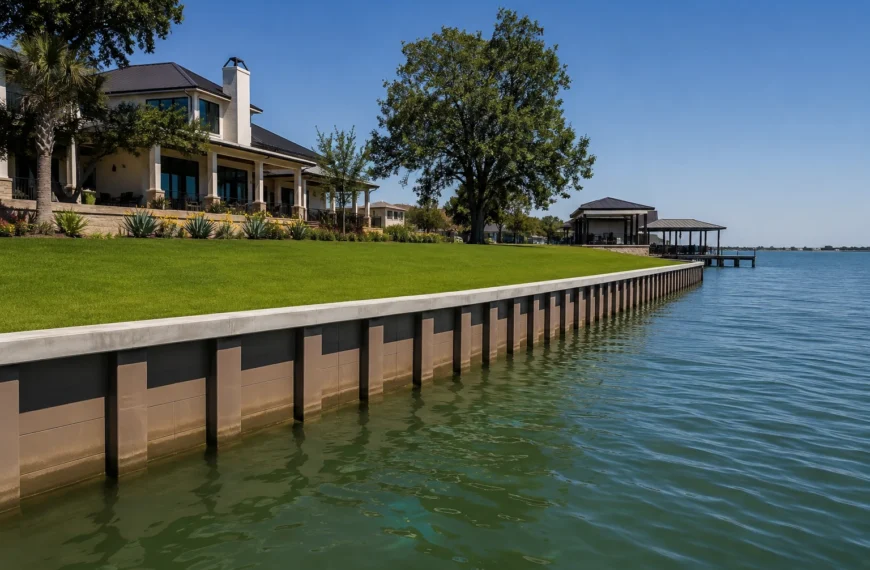
A waterfront property is constantly exposed to soil movement, changing water levels, wave action, rain runoff, and gradual shoreline erosion. A properly built bulkhead creates a firm structural barrier between land and water, helping the property line stay stable while keeping the shoreline more usable, safer, and easier to maintain.
For homeowners, commercial waterfront owners, marinas, and lakefront communities, choosing experienced professional waterfront construction is an important step before any shoreline work begins. The right team evaluates the water body, soil type, existing grade, drainage, access conditions, and expected load before recommending a structure.
Bulkhead construction is not just about installing a wall along the water. It is a system that may include driven piles, horizontal framing, panels, tie-back anchors, drainage elements, backfill, grading, and finishing work along the top of the bank. Each part affects the performance of the full structure.
On Texas lakes, rivers, canals, and Gulf Coast waterfronts, a bulkhead often needs to handle more than one challenge at the same time. The structure may need to resist erosion, hold back soil, protect a lawn or driveway, support future dock access, and remain stable during seasonal weather changes. That is why a standard, one-size-fits-all approach is rarely the right answer.
Why Bulkheads Matter for Waterfront Properties
Unprotected shorelines can change slowly at first. A small washed-out area near the waterline may not seem urgent, but erosion often expands after storms, heavy rain, or repeated boat wake. Over time, soil loss can reduce usable land, expose roots, weaken nearby structures, and make the edge of the property unsafe.
A bulkhead helps define and protect the shoreline. Instead of letting the bank collapse naturally into the water, the wall creates a controlled edge. This can be especially important for residential properties where lawns, patios, walkways, docks, boat slips, or retaining structures are located near the water.
For commercial waterfront sites, bulkheads can also support safer circulation, cleaner property maintenance, and better long-term planning. A marina, resort, waterfront rental property, or community shoreline may need a stable edge that can be maintained and accessed without constant soil repair.
- Land protection – a bulkhead helps reduce ongoing soil washout by creating a physical barrier between the water and the upland area.
- Defined shoreline edge – the structure gives the property a clear, usable boundary instead of an irregular eroding bank.
- Improved access – a stable shoreline can make it easier to connect docks, piers, walkways, and other waterfront features.
- Long-term maintenance control – a correctly built system can reduce repeated grading, filling, and temporary erosion fixes.
Common Bulkhead Materials
Bulkheads can be built with different materials depending on the water environment, budget, desired appearance, expected service life, and site conditions. The material should not be chosen by appearance alone. Soil pressure, water exposure, wave activity, drainage, and maintenance expectations all matter.
Wood Bulkheads
Wood is a traditional choice for many residential waterfront properties. Pressure-treated lumber can create a natural look that works well around lakes, rivers, and private homes. Wood bulkheads are often selected where property owners want a warm shoreline appearance and a practical balance between cost and performance.
Vinyl Bulkheads
Vinyl sheet piling is commonly used where low maintenance and resistance to moisture exposure are important. Vinyl does not rot like untreated wood and can provide a clean, consistent appearance. It is often considered for residential and commercial shorelines where a modern, uniform wall is preferred.
Concrete Bulkheads
Concrete can be used for stronger, heavier shoreline structures. It is often considered for demanding waterfront environments, commercial properties, and sites where higher loads or stronger wave conditions may be present. Concrete work requires careful engineering, forming, reinforcement, and installation planning.
Stone and Rip Rap Systems
Stone and boulder systems can absorb wave energy while creating a more natural shoreline appearance. They are often used where the goal is to protect the bank while blending with the surrounding environment. Proper stone size, slope preparation, and placement are critical for performance.
Gabion Bulkheads
Gabions use stone-filled baskets to create a flexible shoreline protection system. They can help with drainage and adapt to some site conditions better than rigid structures. Gabions must be properly filled, tied, supported, and placed to avoid movement or deformation.
- Evaluate the shoreline – soil type, water depth, bank height, wave exposure, and erosion patterns should be reviewed before material selection.
- Choose the structural system – the wall type, pile spacing, anchor design, drainage method, and backfill plan should work together.
- Prepare the site – vegetation, unstable soil, old damaged materials, and access limitations should be addressed before installation begins.
- Install the main structure – piles, panels, framing, anchors, and drainage components should be installed in the correct sequence.
- Finish the land side – backfill, compaction, grading, and surface cleanup help the new bulkhead connect properly with the property.
Signs a Shoreline May Need a Bulkhead
Not every waterfront property needs the same solution. Some sites may require a new bulkhead, while others may need repair, stone stabilization, drainage improvement, or reinforcement of an existing wall. The condition of the shoreline should be evaluated before deciding.
Visible erosion at the base of the bank is one of the most common warning signs. If soil is disappearing near the waterline, the upper bank may eventually lose support. Cracks in the lawn, leaning fences, exposed roots, or sinking areas near the shore can also indicate that the land is shifting.
Existing bulkheads may show signs of age through leaning sections, separated boards, rusted hardware, damaged panels, failed tie-backs, or soil loss behind the wall. If water can carry soil through gaps in the structure, the problem can worsen even when the front of the wall still looks mostly intact.
- Leaning wall sections – movement can suggest pressure behind the wall, weak anchors, damaged piles, or poor drainage.
- Soil loss behind the wall – sinkholes or soft spots near the bulkhead may mean material is washing out through gaps or under the structure.
- Damaged cap or framing – broken upper members can reduce the strength of the wall and allow panels to move out of alignment.
- Poor drainage – trapped water behind the structure increases pressure and may shorten the life of the bulkhead.
What Affects Bulkhead Design
The final design depends on the relationship between land and water. A calm lakefront property in the Greater Houston area may need a different solution than a canal, riverfront lot, or Gulf Coast shoreline exposed to stronger water movement. Even nearby properties can require different construction details.
Bank height is a major factor. A low shoreline may need a smaller wall, while a taller bank must resist more soil pressure. Water depth also matters because it affects pile length, installation method, and equipment access. Soft bottom conditions may require deeper supports or a different approach.
Drainage is another critical detail. Rainwater and groundwater need a controlled path so they do not build pressure behind the wall. Without proper drainage, even a strong wall can experience unnecessary stress. This is why weep holes, drainage stone, filter fabric, and grading decisions should be considered during planning.
Access can also influence cost and construction method. Open properties with room for equipment are usually easier to work on than narrow waterfront yards with limited entry points. If materials must be moved manually or by water, planning becomes more important.
Bulkhead Construction and Property Use
A bulkhead should support how the property is actually used. A homeowner who needs safe access to a dock may require a different top treatment than a commercial property with heavier foot traffic. A shoreline connected to a pier, boat slip, or boardwalk should be planned as part of a complete waterfront system.
For residential sites in Katy, Houston, Baytown, lake communities, and other Texas waterfront areas, many owners want a clean shoreline that supports lawn use and water access. For commercial sites, the priorities may include durability, safety, low maintenance, and compatibility with future upgrades.
The best results come from planning the structure before the shoreline becomes severely unstable. Early construction or timely replacement can prevent larger repairs later. Waiting until the bank collapses can make access harder, increase restoration work, and reduce the number of practical options.
A well-built bulkhead protects more than the visible edge of the property. It supports the land behind it, improves the function of the shoreline, and gives the owner a stronger foundation for future waterfront improvements.


