
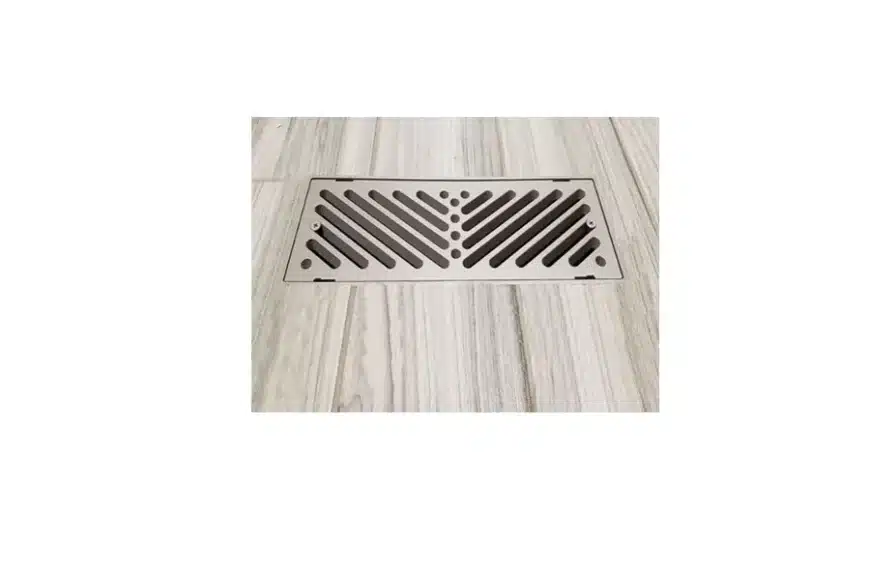
Floor registers are not the first thing you might think about if you walk into a house, but this unglamorous feature is a highly valuable piece of your HVAC system. They’re employed in an attempt to regulate the movement of air in and out of a room in the hope of keeping your HVAC equipment at optimal rates.
Yet, choosing the proper floor register is not something that you consider often. If you’re attempting to decide between plastic and metal floor registers, having the differences in mind will help you make a more informed choice for your home.
What Are Floor Registers?
Before we go through the benefits and limitations of metal and plastic floor registers, first we must consider what they are. Floor registers are covers or grilles which hide air vents that might be placed on or near the ground. They are also built, sized, and designed in a number of different configurations to facilitate airflow control and the delivery of air within an environment.
Specifically, they also provide protection to the vent opening against blockage or dust that would affect HVAC operation. Registers are also fabricated in a number of different materials including metal, plastic, and wood, and each of which is uniquely engineered for certain application and designer preference. Metal and plastic designs are the most favored because they are cost-effective and very versatile. But which is best for you?
Metal or Plastic Floor Registers
Durability
Metal floor registers are highly durable. Being made of metallic materials like steel or aluminum, metal registers don’t wear down easily and so are a great option for heavily used household spaces. Metal registers can endure accidentally drops, hence are a perfect option for households with children, pets, or frequent furniture shuffling.
However, plastic registers, while sometimes robust enough for daily use, will easily crack or break when subjected to too much stress. They can function in low-traffic locations, but they may not be strong enough to take the same amount of physical stress as metal ones.
Cost
Budget usually becomes the determining factor for the majority of homeowners, and that is where plastic floor registers are stepping into the limelight. On an average basis per piece, plastic registers are cheaper.
Metal registers, while a little more costly up front, will be worth it in the long term. Because they last longer, less replacement parts are required in the long term, so they are an economic upgrade for your house in the long term. Buy the best metal floor registers, and you’ll be set for a long time.
Aesthetics
Both plastic and metal floor registers come in a wide range of styles and finishes, but if metal registers are anything, they’re leaders in appearance. They usually come in contemporary styles and shiny, bright finishes, such as brushed nickel, bronze, or flat black, to match your home decor to perfection.
Plastic registers can also be in fancy designs, but they are not as fancy in design and are not necessarily ideal for houses that must have a more elegant or upscale look.
Heat Resistance
Metal floor registers are inherently heat-resistant and an option of houses with appliances of high heat output or houses with heated vents close by. They can withstand constant exposure to hot air without deforming and wearing out.
Plastic records are more likely to be damaged by heat, particularly if they are stored in areas near vents with repeated high heat. Repeated heat can, at times, buckle or yellow plastic materials, making them less usable and desirable.
Maintenance
Plastic and metal floor registers are simple to clean but differ in how they react to cleaning. Metal floor registers are simpler to clean and will not clog grime as would the plastic registers. They rust, however, when no anti-corrosion paint has been used in wet areas, in case one does not seal them. For routine upkeep, devices such as bobsweep ultravision can help reduce the dust and debris that accumulates around floor registers, making regular cleaning easier.
Plastic registers do not rust, but may lose their finish or get hairline cracks if they are cleaned with heavy-duty solutions. Regular gentle cleaning should keep them in good shape.
Final Recommendations
Plastic and metal floor registers both have their negatives and positives, depending on your specific house requirements. Metal registers are better when luxurious appearance, heat resistance, and durability are first concern, therefore they are completely worth spending long term on in living rooms, kitchens, and heavy traffic areas. But where your greatest concern is your budget and this room doesn’t get much traffic, you can forego the cost of a plastic floor register.
If you’re still not sure what type would work best for your home, you may want to try getting a professional’s opinion or testing out both types in a few rooms before you head out and buy. Yes, something as practical a product as a floor register can add value and be pleasing to the eye when well-chosen.


