
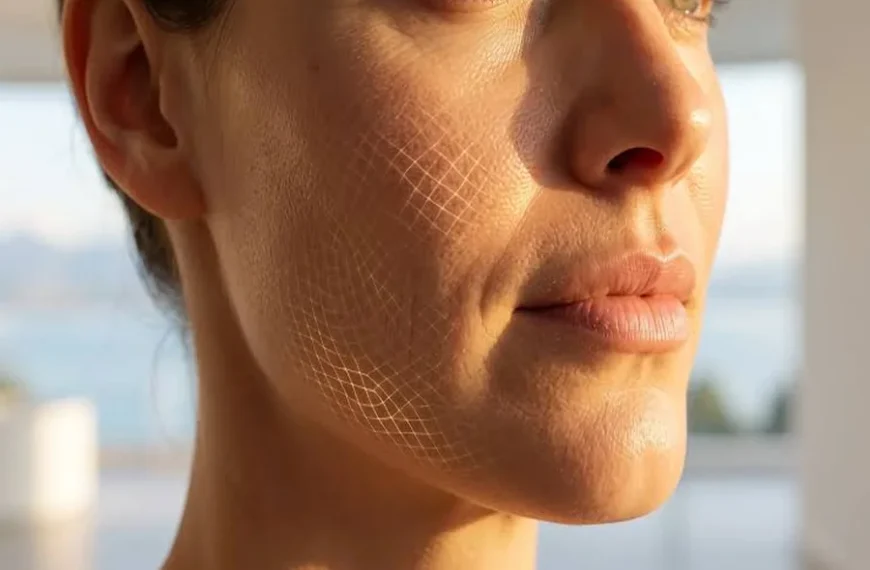
Traditional approaches to aesthetic dermatology prioritized volume restoration over structural integrity. Patients walked into clinics seeking correction for hollow cheeks or deep folds, and practitioners delivered gel products designed to fill voids under the skin. Over time, clinical focus expanded outward. Technicians realized that localized volume replacement failed to address widespread dermal thinning across the neck and body. Skin laxity involves a complex breakdown of extracellular matrix components, elastin fibers, and collagen networks. Diffuse degradation requires a completely different formulation strategy. Researchers began experimenting with altering standard commercial products to treat areas previously considered resistant to non-invasive intervention. Instead of targeting isolated localized deficits, modern regenerative protocols evaluate the entire dermal architecture as a continuous interconnected organ requiring biochemical stimulation rather than passive mechanical displacement.
Understanding Calcium Hydroxylapatite and Biostimulation
At the center of this shift sits calcium hydroxylapatite (CaHA), a substance long familiar to medical science. Radiesse represents a well-established formulation of synthetic calcium hydroxylapatite microspheres suspended in an aqueous gel carrier. Initially utilized for structural volumization and contouring, the material soon revealed a secondary property during laboratory and clinical observation. Microscopic spherical particles stimulate local cellular activity, prompting fibroblasts to synthesize new extracellular matrix proteins long after the carrier gel is metabolized. Practitioners looking to acquire clinical inventory often search for options to buy radiesse wholesale to support large-area body treatments. This foundational material provides immediate structural support before initiating a prolonged cascade of biological remodeling. Radiesse acts as a bridge between immediate mechanical correction and long-term tissue regeneration across multiple anatomical zones.
Biostimulation Versus Volumization
Standard dermal fillers focus on high G-prime values, high elasticity, and localized projection. These characteristics suit cheekbones and jawlines, but they create rigidity and nodularity when placed in thin-skinned regions like the neck or inner arms. Biostimulatory filler technology operates on a different principle entirely. Instead of creating a localized lump of gel, the modified suspension spreads evenly through the subdermal plane. The goal shifts from physical filling to cellular provocation. Fibroblasts interpret the microspheres as a temporary scaffold, migrating into the matrix and laying down fresh structural proteins. This fundamental distinction alters how clinicians approach sagging tissue, and treatment plans target structural density rather than surface contours.
Diluted Versus Undiluted Formulations
The physical state of the product dictates its clinical behavior. Undiluted calcium hydroxylapatite creates focal volume, whereas diluted dermal fillers distribute microspheres across a broader anatomical footprint. Clinic protocols vary regarding the specific dilution ratio, mixing the product with sterile saline, lidocaine, or combinations of both depending on target tissue depth. Higher dilution factors reduce viscosity, allowing the fluid to disperse uniformly through reticular dermis layers and superficial subcutaneous fat. This dispersion mechanism prevents the formation of palpable deposits while maintaining sufficient particle density to trigger neocollagenesis. Research published in dermatologic journals demonstrates that particle distribution remains uniform even at high dilution levels, ensuring consistent biological activation across wide treatment zones. The rheological profile changes dramatically during dilution, shifting the material from a cohesive structural gel into an injectable biostimulatory liquid capable of permeating compromised tissue lattices.
Cellular Mechanisms of Collagen Stimulation
Tissue tightening depends on biological synthesis rather than mechanical stretching. Suspended microspheres entering the subdermal environment trigger a mild, controlled foreign body response. Macrophages infiltrate the area, releasing cytokines that signal fibroblasts to multiply and synthesize type I and type III collagen. A clinical study published by Yutskovskaya and colleagues documented significant increases in dermal thickness and collagen deposition months after treatment with hyperdiluted calcium hydroxylapatite. Histological biopsies showed dense bundles of newly formed collagen surrounding residual microspheres. Ongoing remodeling improves skin quality and elasticity, reversing degradation typical of chronological aging and environmental damage. The biological signaling cascade involves sustained upregulation of growth factors, transforming transient inflammation into a robust matrix deposition phase.
Clinical Applications for Neck and Body Rejuvenation
Clinical intervention across areas outside the face presents unique anatomical challenges. Skin on the neck, chest, and limbs is thinner, possessing fewer sebaceous glands and lower healing capacity.
The neck region exhibits horizontal banding and vertical laxity alongside severe crepey skin. Traditional lifting surgery addresses severe sagging by excising excess tissue, but many individuals experience residual surface crinkling that surgery cannot resolve. Diluted formulations deposit tiny microspheres uniformly across the platysmal border, tightening the skin envelope without altering underlying muscle structure. Décolletage and chest rejuvenation follow a similar methodology, smoothing sun-damaged dermal layers that show persistent wrinkling and loss of turgor.
Upper arm and abdominal laxity respond poorly to standard exercise regimens due to underlying connective tissue failure. Hyperdiluted material introduced into these zones stimulates dermal thickening, providing noticeable firmness where skin folds or sags. The abdomen, particularly following weight fluctuations or pregnancy, benefits from widespread collagen stimulation that restores baseline tissue resistance.
Common anatomical target zones evaluated in clinical studies include:
- The submental neck and platysmal bands
- The anterior chest wall and upper thoracic skin
- The medial brachium and supra-patellar regions
Technical Delivery: Cannulas Versus Needles
Precision delivery remains critical when treating large anatomical zones. Choice of injection technique, specifically comparing cannula versus needle use, determines procedural safety and distribution uniformity. Blunt-tip cannulas minimize vascular trauma, allowing practitioners to sweep across wide planes through a single entry point. Needles offer precise depth control for targeted micro-deposits, though they carry a higher risk of bruising in vascular zones. Experienced operators select instruments based on tissue thickness, choosing cannulas for subdermal fanning across the abdomen and thighs, while reserving fine needles for precise subdermal placement in the superficial neck dermis.
Evaluating Non-Surgical Skin Tightening Versus Surgical Lift
The choice between non-surgical skin tightening and a surgical lift involves weighing anatomical severity against patient tolerance for downtime. Surgical procedures remove redundant skin and tighten muscular fascial planes, delivering dramatic structural correction for severe ptosis. Conversely, biostimulatory treatments improve skin quality and mild to moderate laxity without incisions, general anesthesia, or prolonged recovery periods. These modalities complement each other rather than competing directly, as surgical correction repositions tissue masses while biostimulatory injections repair the damaged dermal matrix that surgery leaves behind.
Future Directions in Regenerative Dermatology
Clinical research continues to refine dilution protocols and combination therapies. Investigators examine synergistic protocols pairing energy-based devices with hyperdiluted injectables to accelerate extracellular matrix remodeling. Patient expectations have shifted toward natural preservation of movement and texture. Science provides the tools to stimulate youthful biology, turning cellular aging into a manageable biochemical process. Ongoing refinement of dilution techniques ensures that modern practitioners possess robust methods for maintaining structural integrity across the entire human envelope.


