
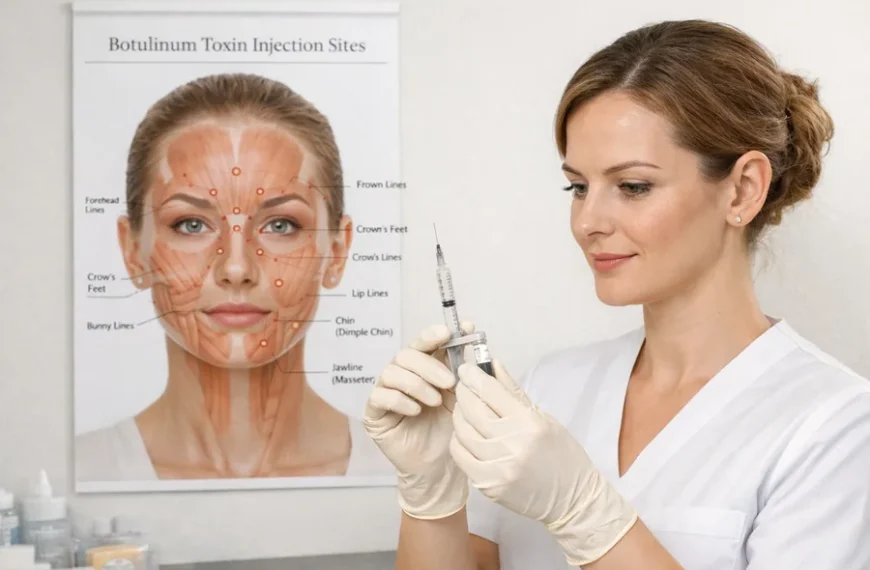
Clinical aesthetics relies heavily on precision when modifying facial expression lines through targeted neuromuscular blockade. Practitioners working with botulinum toxin type A navigate a landscape where small adjustments in technique produce noticeable differences in patient outcomes. Predictable results across the upper third of the face require a firm grasp of how different formulations behave under physiological conditions. Clinical literature often highlights that protein complex size, molecular weight, and accessory proteins influence both local diffusion and onset speed. A 2018 dermatologic therapeutics review noted that pharmacological profiles vary significantly among commercial preparations, making generalized application protocols ineffective. Practitioners must evaluate each formulation on its own merits rather than assuming interchangeable behavior. Biological systems respond uniquely to neurotoxin monomer dissociation, and clinical expertise grows through rigorous observation of tissue response patterns. Facial anatomy presents diverse muscular vectors, meaning that treatment plans should account for individual muscle density, skin thickness, and contraction strength. Medical professionals consistently document how minor variations in reconstitution volume or needle gauge alter clinical results. Precise planning supports patient goals while maintaining natural facial expressions.
Pharmacological Mechanisms and Tissue Diffusion
Pharmacological science demonstrates that the primary mechanism of botulinum toxin type A centers on the cleavage of SNAP-25, a critical protein required for acetylcholine vesicle fusion at the neuromuscular junction. When injected into targeted musculature, the neurotoxin blocks muscular contraction by halting this neurotransmitter release. Yet, the physical spread of the product away from the injection site remains a primary variable in clinical success. Diffusion and spread depend heavily on injection volume, concentration, and the specific molecular characteristics of biocompatible protein complexes. High diffusion coefficients can lead to unintended involvement of adjacent muscle groups, resulting in complications such as brow ptosis or eyelid drooping. Clinical precision therefore demands careful injection site mapping to isolate treatment zones and preserve natural animation. Aesthetic neuromodulation is as much about respecting functional anatomy as it is about reducing muscle activity. Molecular weight differences among commercial neurotoxins dictate how far molecules travel through interstitial tissue spaces. Low protein load formulations often exhibit distinct spatial distribution patterns compared to preparations with larger accessory protein entourages. Analyzing these physical properties allows practitioners to tailor their injection grids to specific tissue depths.
Product Profile and Formulation Dynamics
Formulations containing abobotulinumtoxinA introduce distinct diffusion characteristics due to smaller associated protein complexes and a specific manufacturing process. Dysport is a prominent injectable therapeutic containing botulinum toxin type A-hemagglutinin complex, utilized widely in clinical practice for temporary improvement in moderate to severe facial lines. Clinicians select Dysport for its tendency to spread slightly further from the injection point, which can be advantageous when treating larger surface areas like the forehead. Practitioners frequently mention dysport when discussing broad coverage and smooth blending across contiguous muscle planes. Practitioners seeking to acquire clinical supplies often buy dysport online through verified specialized distributors. Clinicians who store dysport vials must maintain strict cold-chain protocols to guarantee biological activity prior to administration. Careful handling during reconstitution prevents protein denaturation and preserves the structural integrity of the neurotoxin molecule.
Comparative Dynamics and Dosing Ratios
Shifting clinical experience from one neurotoxin to another requires careful attention to potency ratios. The ongoing discussion regarding abobotulinumtoxinA vs. onabotulinumtoxinA highlights that units are not clinically equivalent. Clinical studies demonstrate that the Dysport vs. Botox unit ratio generally falls between 2.5:1 and 3:1, though individual clinic protocols sometimes adjust these numbers based on patient response. Establishing correct dosing ratios prevents under-treatment or unwanted side effects during upper facial contouring. Unit conversion between neurotoxins must account for patient muscle mass, metabolic rates, and previous treatment history. Practitioners who ignore these conversion factors often experience inconsistent clinical outcomes or shortened duration of effect. Comparative trials show that conversion factors depend heavily on the specific muscle group treated, as facial muscles exhibit varying sensitivities to neurotoxin blockade. Reviewing previous treatments helps clinicians refine dosing calculations for subsequent sessions.
Regional Injection Site Mapping
Treating the upper face involves three primary anatomic zones, each requiring distinct injection strategies. Glabellar lines involve the corrugator supercilii and procerus muscles, where concentrated dosing creates a smooth, relaxed glabella without freezing facial expression entirely. Forehead lines present a different challenge because the frontalis muscle is the sole elevator of the brow; improper injection depth or excessive dosing here can easily cause brow heaviness. Crow’s feet around the lateral orbital rim require shallow intradermal or subdermal placement to address the orbicularis oculi while avoiding the zygomaticus major. Successful facial muscle relaxation across these areas depends entirely on precise needle placement and localized product deposition.
- Patient anatomy and muscle mass dictate injection depth and volume.
- Reconstitution practices alter local concentration gradients and diffusion boundaries.
Careful marking of bony landmarks ensures reproducible needle insertion points across multiple patient visits. Practitioners frequently map out specific grids to distribute units evenly across broad muscle expanses.
Onset Timelines, Peak Effects, and Duration
Patients and practitioners alike monitor the onset timeline closely to gauge treatment efficacy. AbobotulinumtoxinA frequently exhibits a rapid onset, with visible reduction in muscle contraction often appearing within twenty-four to forty-eight hours post-injection. The time to peak effect typically stabilizes around two weeks, at which point the neuromuscular blockade reaches its maximum therapeutic extent. Clinical data indicates that the duration of effect generally spans three to four months, though metabolic factors and individual muscle activity levels cause natural variation. Assessing these temporal patterns allows practitioners to schedule touch-up appointments and manage patient expectations effectively. Longitudinal assessments reveal that repeat treatments can sometimes extend clinical duration as target muscles undergo gradual disuse atrophy. Tracking these physiological shifts provides valuable insight for long-term patient management strategies.
Long-Term Clinical Considerations in Neuromodulation
Successful long-term management of facial aesthetics requires ongoing assessment of patient muscle tone and tissue response over successive treatment cycles. Repeated administration of abobotulinumtoxinA can lead to subtle shifts in muscle dynamics, necessitating periodic adjustments in total unit dosing and injection distribution. Practitioners who maintain detailed treatment logs ensure continuity of care and minimize the risk of localized muscle resistance or antibody formation. Patient education regarding expected timelines and maintenance schedules reinforces adherence and satisfaction. Clinical excellence ultimately stems from combining rigorous pharmacological knowledge with precise anatomical execution.


