
Introduction
Global manufacturing is under increasing pressure from stringent environmental regulations and the urgent need to reduce carbon emissions. Within many industrial facilities, inefficient transmission systems, particularly non-optimized gears, represent a major source of energy waste. This not only drives up operational costs but also poses significant environmental compliance risks. Traditional gear selection often focuses solely on initial cost and load capacity, overlooking energy efficiency throughout the entire lifecycle – a short-sighted design philosophy that runs counter to sustainable development goals.
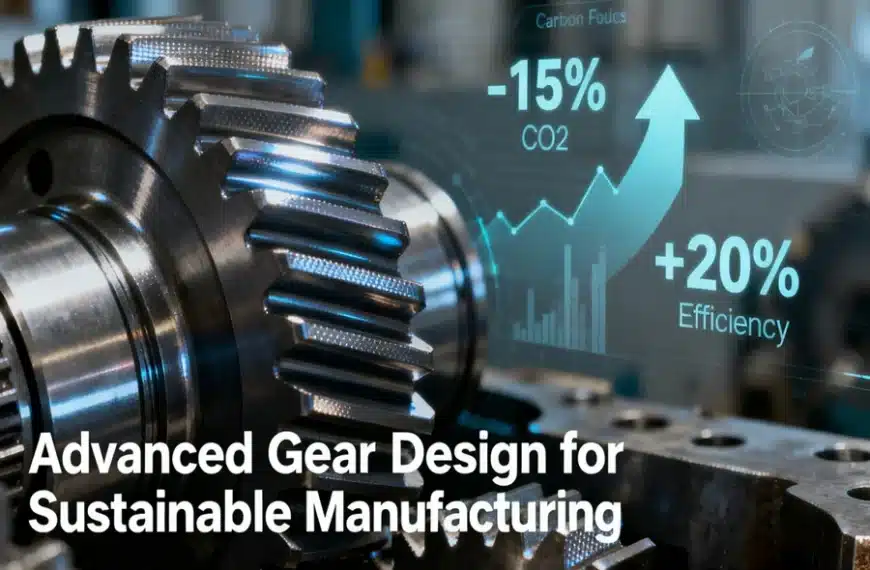
This article will explore how applying advanced gear design principles, such as optimizing tooth profiles, adopting lightweight materials, and utilizing precision manufacturing processes, can significantly enhance transmission efficiency, thereby directly reducing energy consumption and carbon footprints.
What Role Do Gear Types Play in Achieving Energy-Efficient Machinery?
Gears are at the heart of power transmission, and the choice of gear type directly impacts system efficiency. Understanding the characteristics of different gears is the first step toward optimization.
1. The Efficiency Advantage of Helical Gears
Compared to spur gears, helical gears feature a tooth design that allows for smoother and more gradual engagement. This characteristic translates to lower vibration, reduced noise, and lower friction losses in high-speed applications, directly resulting in higher transmission efficiency and energy savings. For engineers seeking energy-efficient machinery, helical gears are often a superior choice over spur gears.
2. Planetary Gears for Power Density and Efficiency
Planetary gear sets are renowned for their high power density and symmetrical structure. They distribute loads across multiple gears, reducing stress on individual tooth surfaces and maintaining high efficiency when transmitting high torque. This compact and efficient design is particularly suitable for applications with space constraints and high efficiency demands, such as wind turbine gearboxes and electric vehicle drive axles.
A deep understanding of gear types is fundamental to optimization. A comprehensive guide on types of gears and their characteristics provides more detailed foundational knowledge.
How Can Precision Engineering and Material Science Minimize Energy Loss?
Precision manufacturing and advanced materials are the technical cornerstones for maximizing gear efficiency.
- The Critical Impact of Tooth Surface Finishing: The precision of the gear tooth surface is paramount. Perfect tooth profiles achieved through processes like high-precision grinding ensure even load distribution across the tooth face, minimizing sliding friction and heat generation. According to the geometric dimensioning and tolerancing standards by ASME (American Society of Mechanical Engineers), strict tolerance control is the foundation for ensuring gear meshing accuracy and thereby improving transmission efficiency.
- Lightweight Materials and Advanced Coatings: Advances in material science have enabled gear lightweighting without compromising strength. Using high-strength, lightweight alloys (e.g., specialized aluminum alloys) or composite materials reduces rotational inertia, thereby decreasing the energy required for operation. Furthermore, applying special coatings with low friction coefficients (such as DLC – Diamond-Like Carbon) can further reduce tooth surface wear and energy loss, significantly contributing to the minimization of energy loss.
What Are the Systemic Benefits of High-Efficiency Gearing Beyond Energy Savings?
The benefits of adopting high-efficiency gear design are systemic, creating a virtuous cycle.
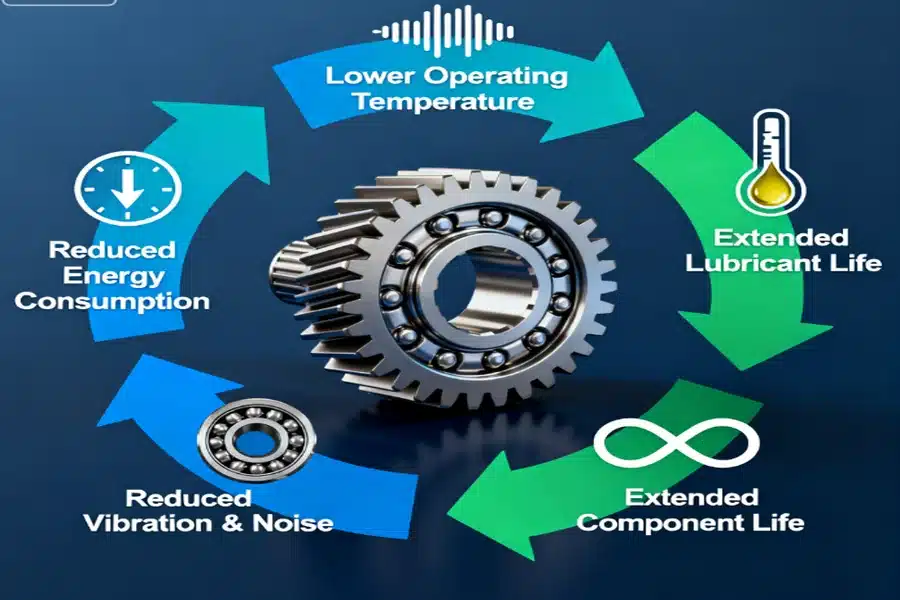
Figure 2: The adoption of high-efficiency gearing creates a virtuous cycle of systemic benefits that extend far beyond direct energy savings, significantly lowering the total cost of ownership.
1. Extended Lubricant and Component Lifecycle
Improved efficiency directly leads to lower operating temperatures, which significantly extends lubricant service life, reduces the frequency of oil waste generation and changes, yielding direct environmental and economic benefits. Simultaneously, smoother operation means lower vibration and noise, which helps extend the lifespan of adjacent components like bearings and shafts, thereby reducing maintenance frequency and spare part replacement.
2. Reduction in Operational Noise and Vibration
Lower vibration levels not only improve the working environment but are also a marker of enhanced mechanical reliability. This is a crucial added value for equipment requiring high-precision positioning (e.g., machine tools) or applications with strict noise requirements (e.g., facilities near residential areas). Reduced maintenance and increased reliability collectively lower the total cost of ownership.
Are International Manufacturing Standards a Catalyst for Sustainable Gear Production?
International standards provide a verifiable framework and commitment for sustainable manufacturing.
1. ISO 14001 as a Framework for Environmental Management
The ISO 14001 Environmental Management System certification requires organizations to systematically manage their environmental responsibilities. For gear manufacturers, this translates to optimizing energy use, controlling waste (e.g., metal chips), and managing chemicals (e.g., cutting fluids). Choosing suppliers with such certification implies their products are manufactured within an environmentally conscious system committed to continuous improvement.
2. Quality Standards as a Proxy for Reliability
Industry-specific standards such as ISO 9001 (Quality Management), IATF 16949 (Automotive), or AS9100D (Aerospace) ensure repeatability and consistency in the manufacturing process. A manufacturer with a rigorous quality culture inherently produces gears with higher reliability and longer service life, which in itself represents the optimal use of resources and is an intrinsic requirement of sustainable production. The ISO integrates environmental management into its core framework, providing a systematic path for organizations to reduce their environmental impact.
How to Integrate Sustainable Gear Design into Existing Industrial Equipment?
Sustainable gear upgrades do not necessarily require purchasing entirely new equipment; retrofitting existing systems is a common and effective strategy.
- Starting with an Energy Audit: The first step in implementing a retrofit is conducting an energy audit to identify key inefficient transmission points within the plant, such as large fans, pumps, or conveyor systems. This helps pinpoint the retrofit targets with the highest potential return on investment.
- The Retrofitting Approach: Collaborate with manufacturers possessing specialized expertise to assess the feasibility of custom-designed, high-efficiency gear sets for existing gearboxes. This retrofitting approach can significantly enhance the performance and environmental profile of existing assets at a fraction of the cost of new equipment. Successful custom gear design solutions require engineers to have a deep understanding of the application scenario.
Implementing sustainable gear solutions requires partnership with an experienced provider. Professional precision gear manufacturing services can offer comprehensive support from design consultation to precision machining.
Conclusion
By adopting advanced gear design, precision manufacturing processes, and adhering to international standards, the manufacturing industry can transform transmission systems from primary energy consumers into drivers of sustainability. This is far more than an environmental responsibility; it is a strategic investment for business success through lower operational costs, improved equipment reliability, and ensured compliance. Optimizing industrial gearbox efficiency as a core part of a carbon footprint reduction strategy can deliver immediate and long-lasting returns for enterprises.
FAQs
Q1: What is the most significant factor in gear design for reducing energy consumption?
A: The most critical factor is reducing friction loss, primarily achieved through optimizing tooth surface accuracy and proper lubrication. High-precision tooth profiles ensure even load distribution, avoiding localized stress concentration and excessive sliding friction. Simultaneously, appropriate gear type selection (e.g., using helical gears in high-speed applications) and material coatings with low friction coefficients are also crucial.
Q2: Can upgrading gears really make a noticeable difference in a large factory’s carbon footprint?
A: Absolutely. Industrial transmission systems are a major part of a factory’s energy consumption. Even a 1% improvement in efficiency can translate into significant annual energy savings and carbon emission reductions in continuously operating scenarios. Considering the widespread use of gearboxes in critical equipment like fans, pumps, and compressors, the cumulative effect of upgrading to high-efficiency gears is substantial, often with a short payback period.
Q3: How do international standards like ISO 14001 directly relate to gear manufacturing?
A: The ISO 14001 standard requires organizations to systematically manage their environmental obligations. For gear manufacturers, this includes controlling and reducing waste, optimizing energy usage, managing chemicals, and promoting a circular economy within their production processes. Selecting a supplier certified to this standard means their products are manufactured within a controlled, continuously improving environmental management system, indirectly assuring the sustainable attributes of the product.
Q4: Is sustainable gear design only applicable to new equipment, or can it be used for retrofitting?
A: Sustainable gear design principles are equally applicable for retrofitting existing equipment. In many cases, replacing entire transmission systems is cost-prohibitive. Custom-designed, high-efficiency gear sets can serve as a direct replacement solution, significantly upgrading the performance and environmental profile of existing assets at a lower cost, making it an effective strategy for sustainable operation.
Q5: What information should I prepare when seeking a custom sustainable gear solution?
A: To obtain an accurate proposal, prepare the current equipment’s operating parameters (input speed, torque, power), duty cycle (continuous or intermittent operation), existing gear specifications (e.g., module, number of teeth, material), and specific performance targets (e.g., desired percentage efficiency gain). Environmental conditions (temperature, dust) and any spatial constraints are also critical information that will help engineers provide targeted design and material recommendations.
Author Bio
This post shares expertise from the precision manufacturing specialists at LS Manufacturing, a leader certified to ISO 9001, IATF 16949, AS9100D, and ISO 14001. The company is dedicated to helping global industrial clients achieve efficiency and sustainability goals through high-performance custom gear solutions. For a free technical consultation regarding your project, please contact its engineering team today.


