
Experiencing snowfall is undoubtedly a beautiful experience. However, it also comes with challenges of removing snow from the driveways, walkways, and sidewalks. In such situations, a Snow Pusher and a Snow blower come in handy. But which one of them is better?
If you also wonder the same, keep reading. In the forthcoming content, we will be exploring what both devices are, the differences between them, the benefits, and the drawbacks to help you choose better.
What Is a Snow Pusher?
A snow pusher is also known as the box plow or a containment plow. It is specially designed to push snow away from a particular place. The device has a curved mold board with side walls that hold the snow in front as the machine moves forward, dumping the whole pile somewhere else.
Advantages of a Snow Pusher
- A box plow has fewer moving parts and simpler mechanics.
- These are great for clearing large flat surfaces quickly when the snow depth is moderate.
- Because it pushes the snow rather than trying to throw it, it’s often more efficient on even paved surfaces.
- The snow pushers cost less than the other equipment.
- Made up from heavy steel material, which makes it resistant to bending or breaking under pressure.
Limitations
- Piling snow requires space. The same is why you need somewhere to deposit the snow you have pushed, which can be hard in urban areas.
- It may struggle when the depth is very high or the snow is wet and heavy. In such situations, the machine may slow down or require multiple passes.
What Is a Snow Blower?
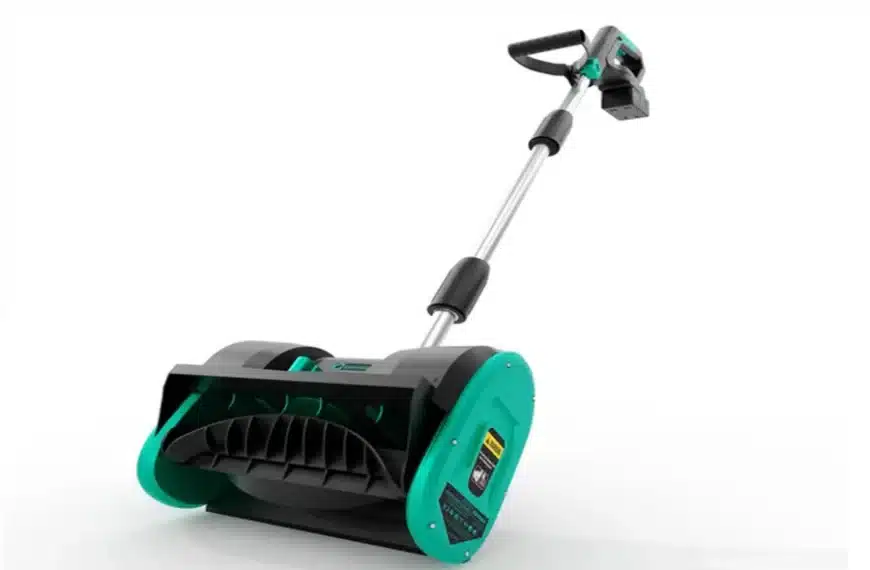
A snow blower is an electronic snow removal machine. It scoops the snow off the ground and throws it away from the cleared area. The device uses a rotating blade system, which is called an “Auger”. The same is why it is an ideal choice to deal with deep and compacted snow.
Advantages of a Snow Blower
- Excellent for deeper snow, heavy wet snow, and situations where you need to throw the snow a distance or away from sensitive areas.
- Because it does more than just push, it can handle heavy conditions and more complex surfaces.
- As the device is motorized, the physical efforts become minimal.
- In the situation of continuous heavy snowfall, a snow blower can be used to quickly clear large rocks.
Limitations
- As the machine has a bit of complex mechanics and more moving parts, it is more expensive than a snow pusher.
- Requires space not just for the path but for the snow trajectory.
- May be less efficient on uneven surfaces and over the shallow snow.
Factors to Consider When Choosing Between a Snow Pusher & a Snow Blower
Here are some of the key factors to consider when choosing between the two options:
1. Snow Depth and Frequency
If you regularly get heavy accumulation and deep drifts, a snow blower is a more compelling choice to go with. On the other hand, if your snow is lighter but more frequent and shallow, a pusher may get the job done with equal efficiency.
2. Surface Type & Condition
A snow pusher can be an ideal recruitment tool if you have paved driveways, concrete, or smooth surfaces. However, for gravel, uneven terrain, or surfaces requiring more precision, you might need the Snow Blower.
3. Snow Disposal/ Space for Piling
If you have plenty of room to pile the snow you have pushed aside, a pusher is efficient. If space is constrained (for example, a tight driveway, limited pile area), then the ability of a blower to throw the snow away may be needed.
4. Budget & Maintenance
Pushers are typically less expensive upfront because of simpler mechanics. Plus, they require less maintenance and are good for lighter jobs and tight budgets. At the same time, blowers are a higher investment, require more upkeep, but can pay off when snow loads are severe.
5. Finish Quality & Precision
If you need a neat finish with minimal leftover windrows, a clean edge, cutting close, a blower can be your way to go. Nonetheless, for bulk clearing where speed is required along with a perfect finish, always go with a snow blower.
6. Scenario
The selection is also based on scenarios such as the following:
- If you own a large parking lot and live in a region where snowfall happens frequently, and you have plenty of extra space, go with a snow pusher.
- If you have a residential driveway and your area observes heavy snowfall (between 8 to 12 inches), or deep drifts, and need to throw snow across a yard, go with a snow blower.
- For uneven surfaces and fluctuating snow conditions, it is better to acquire both pieces of equipment.
Maintenance of Equipment
- With pushers, always keep the cutting edge sharp, such as that of steel or rubber. At the same time, ensure the mold boards and sidewalls are in good condition so that snow does not leak from anywhere.
- With blowers, make sure the chute is properly aimed, and clear out any jammed snow or ice. Be aware that heavy, damp snow can cause malfunctioning of the machine. Also, be careful about throwing snow into unwanted areas or hitting objects.
- If you are planning to get both, inspect the equipment before the season, clear corrosion, and ensure all parts work. Proper storage in the off-season extends lifespan.
Snow Pushers Vs. Snow Blowers- Which One to Choose?
Now that we are done discussing all the key considerations of both the equipment, the question remains: Which one to choose? Well, both options come with their own set of features and limitations. Hence, final choice depends upon your need and preference. If you have a lighter snowfall with shallow snow, go with snow pushers. However, if snow falls frequently and you need to remove larger volumes, go with snow blowers.
Conclusion
In a nutshell, snow blowers and snow pushers are two prominent options to get rid of unwanted accumulations. However, choosing one between the two can be highly difficult. The same is why, in the content above, we have discussed what both devices are, their advantages, and their limitations. Furthermore, there are key factors to consider before choosing an option. Hence, make sure to read from start to end before taking a final call.


