
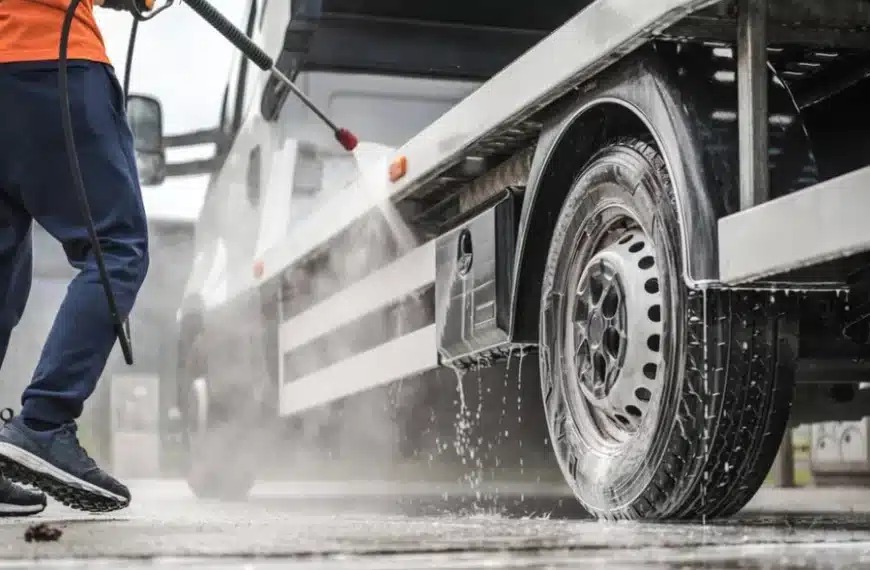
If you’ve ever tried cleaning a work truck with dish soap or a generic car wash, you’ve probably noticed something: the dirt doesn’t actually come off. You scrub harder, use more product, and maybe get it mostly clean—but the grime, road film, and grease stains remain embedded in the paint.
This isn’t a problem with your technique. It’s a problem with your cleaner.
Commercial trucks, off-road rigs, construction vehicles, and heavy equipment face contamination levels that standard cleaners simply weren’t designed to handle. Understanding why those household or passenger car products fail—and what’s needed to actually get the job done—can save fleet managers, owner-operators, and contractors significant time, money, and frustration.
The Problem: Standard Cleaners Are Built for Passenger Cars
Most consumer-grade car wash soaps are formulated for weekend warriors washing sedans in the driveway. They’re designed to remove light dust, pollen, and the occasional bug splatter. The chemistry is mild because the dirt is mild.
But commercial trucks don’t accumulate light dust. They accumulate:
- Road grime and diesel soot that bonds to paint at high temperatures
- Mud, clay, and mineral deposits from job sites and unpaved roads
- Grease, oil, and hydraulic fluid overspray from equipment operation
- De-icing chemicals and road salt that corrode and stain if not removed properly
- Brake dust and industrial fallout that embeds into porous surfaces
Standard cleaners don’t have the surfactant strength, pH balance, or lubrication properties to break down and lift this level of contamination. The result? You either under-clean the vehicle, or you scrub aggressively and risk scratching the paint.
Why Dish Soap and Degreasers Don’t Work Either
When a standard car wash fails, many turn to dish soap or industrial degreasers. This creates a different set of problems.
Dish soap is extremely effective at stripping oils—which is exactly why it’s terrible for vehicles. It removes protective wax, sealants, and ceramic coatings along with the dirt. Over time, this leaves paint unprotected and accelerates oxidation and fading. For a fleet of trucks exposed to harsh conditions daily, this shortens the lifespan of the paint and tanks resale value.
Industrial degreasers are even worse. Most are alkaline-heavy (high pH) and designed for concrete floors or engine bays, not painted surfaces. They can etch clear coat, dull finishes, and damage rubber seals and trim. They’re not formulated with the lubrication needed to prevent scratches during the wash process.
What Commercial Cleaning Actually Requires
Effective heavy-duty truck cleaning requires a soap that balances three critical factors:
1. High Cleaning Power Without High pH
The cleaner needs strong surfactants to break down oils, diesel residue, and bonded grime—but it can’t be so alkaline that it damages protective coatings or the paint itself. A pH-neutral formula ensures effective cleaning while remaining safe for wax, sealants, and ceramic coatings.
2. Lubrication to Prevent Scratches
Dirt on commercial trucks isn’t just surface-level. It’s abrasive—mud mixed with gravel, brake dust with metallic particles, road grime with silica. Without proper lubrication during the wash, you’re essentially sanding the paint with every pass of the mitt or brush. This is why heavy duty truck wash soap formulations include engineered glide technology—additives that create a slick barrier between the dirt and the paint, allowing contaminants to slide off without scratching.
3. Thick Foam That Clings and Lifts
Foam isn’t just for show. A high-foaming formula clings to vertical surfaces, giving the surfactants time to break down and encapsulate dirt before you even touch the vehicle. This dwell time is critical for heavy contamination—it does the heavy lifting so you don’t have to scrub as hard.
Thin, watery soaps run off immediately, forcing you to rely entirely on mechanical agitation (scrubbing), which increases the risk of marring the finish.
The Real Cost of Using the Wrong Cleaner
For a single truck owner, using the wrong soap might mean a few extra hours of scrubbing or a slightly dull finish. But for commercial fleets, the costs multiply fast:
- Labor hours: Crews spend 30-50% more time washing when using underpowered cleaners
- Paint damage: Aggressive scrubbing with inadequate lubrication causes micro-scratches that compound over time
- Protective coating loss: Stripping wax or sealant every wash means reapplying protective products far more frequently
- Corrosion: Residual road salt and de-icing chemicals that don’t fully rinse away lead to rust and body panel deterioration
The cost of professional-grade cleaning products is offset many times over by the reduction in labor, paint correction expenses, and extended vehicle lifespan.
What to Look for in a Heavy Duty Truck Wash Soap
If you’re responsible for maintaining work trucks, construction equipment, or off-road rigs, here’s what separates professional-grade cleaning products from consumer shelf options:
- pH-neutral formulation: Cleans aggressively without stripping protective layers
- Max-foam capability: Thick, clinging suds that encapsulate dirt before you touch the surface
- Engineered lubrication: Reduces friction and prevents scratches during the wash process
- Safe for all finishes: Won’t damage wax, sealants, ceramic coatings, or vinyl wraps
- Biodegradable: Safer for runoff, especially important for businesses with environmental compliance requirements
The Bottom Line
Standard car wash soaps, dish detergents, and industrial degreasers fail at commercial truck cleaning because they weren’t built for the job. Work trucks operate in conditions that demand purpose-built chemistry—formulations that can handle extreme contamination while protecting the integrity of the paint and coatings underneath.
Switching to a heavy-duty truck wash soap designed for commercial use isn’t an upgrade. It’s the baseline requirement for doing the job correctly. The difference shows up in cleaner trucks, faster wash times, and finishes that hold up under punishing daily use.
If your current cleaning routine involves scrubbing harder, washing more often, or constantly reapplying wax because it keeps disappearing, the problem isn’t the truck. It’s the soap.


