
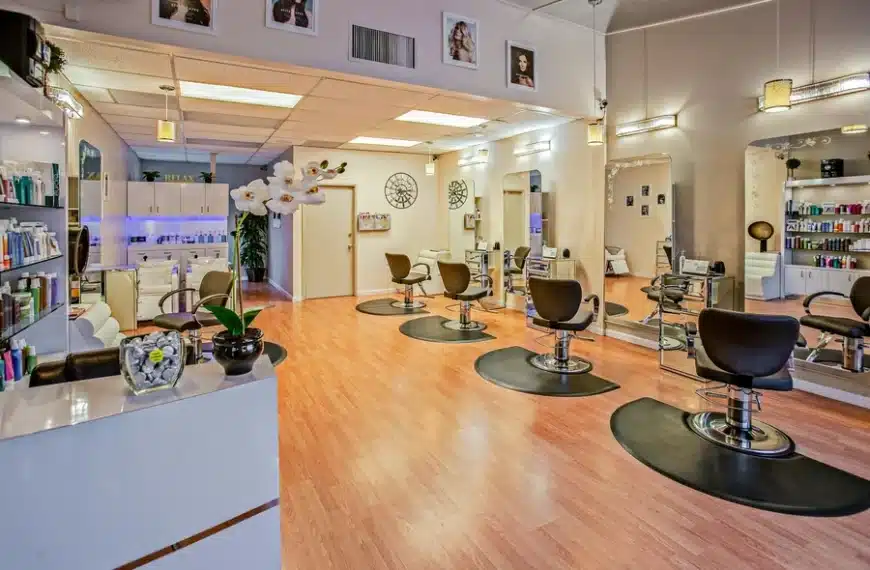
A no-show isn’t just a missed appointment. It’s lost revenue, wasted prep time, an empty chair where a paying client should have been, and — over the course of a year — the difference between a salon that thrives and one that barely keeps the lights on.
Most owners only count the obvious cost: the price of the service that didn’t happen. The real damage runs much deeper. By the time you understand what every no-show actually drains from your business, you’ll see why eliminating them isn’t a “nice to have” — it’s one of the highest-leverage things you can do as an owner.
This guide breaks down the true cost of no-shows and walks through seven practical ways to stop them, ranging from policy changes you can implement tomorrow to small tech upgrades that quietly do the work for you.
What a No-Show Actually Costs You
Industry estimates put salon no-show rates somewhere between 10% and 20% of all appointments. Even on the lower end, that’s a serious leak. To understand why, you have to count every line item — not just the missed sale.
Here’s what one no-show really takes from you:
- The lost service revenue. This is the obvious number. A €50 haircut that doesn’t happen is €50 gone.
- The lost retail and add-on sales. Clients who show up often buy products, upgrade their service, or tip generously. None of that happens with an empty chair.
- The opportunity cost. That slot could have gone to another client — possibly one on a waiting list. You didn’t just lose the no-show’s money; you lost the money of the person you turned away because the slot looked taken.
- Staff cost. Your stylist or therapist is still on the clock. If they’re salaried, you paid for time that produced nothing. If they’re commission-based, you’ve still lost the labor you could have deployed.
- Prep and reset time. The station was set up. Towels, color, tools — all prepped for nothing.
- Psychological cost. Repeated no-shows wear down morale. Stylists start booking pessimistically. Front desk staff stops trusting the schedule. The whole operation gets a little more anxious.
Run the math on your own salon for a moment. If you average 20 appointments a day across all chairs and 15% are no-shows, that’s roughly 3 lost slots per day. Across a six-day week, that’s around 18 missed appointments. At even an average ticket of €40, you’re looking at over €700 a week walking out the door — well over €36,000 a year.
That’s not a leak. That’s a hole in the floor.
The good news: most of it is preventable. Here’s how.
1. Require a Booking Deposit
If you do only one thing on this list, do this one. Deposits are the single most effective tool for reducing no-shows because they convert a soft promise (“I’ll be there at 3”) into a financial commitment.
When a client puts even a small amount of money down — say, 20% of the service price — three things happen at once:
- They’re psychologically invested in showing up.
- If they don’t show, you keep the deposit, which softens the financial hit.
- Casual or low-intent bookers self-filter. People who weren’t really going to come don’t bother to book in the first place.
The historical objection to deposits has been “clients won’t go for it.” That hasn’t been true for years. Deposits are now standard practice across high-end salons, popular barbers, and busy nail bars worldwide. Clients are used to them. What clients actually push back on is bad deposit policies — confusing rules, no clear refund window, no easy way to pay. As long as your policy is clean and the salon payment system is one tap away on their phone, deposits won’t cost you bookings. They’ll protect them.
A modern salon booking system makes this almost frictionless: deposits are collected at the moment of booking, applied automatically to the final bill, and refunded or kept based on rules you set in advance.
2. Send Automated Reminders Across Multiple Channels
A surprising number of no-shows aren’t malicious. They’re forgetful. The client booked three weeks ago, the appointment slipped their mind, and by the time they remember it’s too late to reschedule.
Automated reminders solve this almost entirely — but only if they reach the client. That means going beyond email.
A solid reminder cadence looks like this:
- A confirmation message the moment the booking is made, so the appointment is logged in the client’s phone.
- A reminder 48 hours out, giving the client time to reschedule if they realize they have a conflict.
- A final reminder 2 to 4 hours before the appointment, when it’s too late to reschedule but just early enough to make sure they leave on time.
Send these via SMS or WhatsApp where possible. Open rates for SMS hover around 98%, compared to roughly 20% for email. WhatsApp performs even better in markets where it’s the dominant messaging app. The platforms most salon owners use today — including TimeTailor salon CRM software — handle this automatically across SMS, email, and WhatsApp once the client books, so you’re not chasing reminders manually.
The ROI here is massive. You set it up once and it runs forever in the background, quietly recovering appointments that would otherwise vanish.
3. Make Rescheduling Effortless
Counterintuitively, one of the best ways to reduce no-shows is to make it easier for clients to cancel.
Here’s the logic: a client whose plans change has two options. They can take 30 seconds to reschedule online, or they can simply not show up. If your booking flow makes rescheduling a hassle — calling during business hours, navigating a phone tree, leaving a voicemail — many clients will silently choose option two.
Give them a one-tap reschedule link in every reminder. Let them pick a new slot directly from your live calendar. The appointment doesn’t disappear; it just moves. You keep the client, they keep the relationship, and your chair gets refilled — often by another client on the waiting list.
A no-show is a binary outcome. A reschedule is a recovered appointment.
4. Build and Use a Waitlist
Even with the best prevention systems, some no-shows and last-minute cancellations are inevitable. The question is whether the chair stays empty or gets refilled.
A waitlist is the answer. When clients call asking for a slot that’s already booked, don’t just turn them away — capture them. A short, fast-moving waitlist of clients who’ve said “let me know if anything opens up” can recover a substantial portion of your would-be losses.
Modern booking systems can automate this entirely: the moment a cancellation hits, the system messages waitlisted clients in order. The first to confirm gets the slot. Often you can refill a chair within minutes, with zero effort from the front desk.
The mindset shift is important: a cancellation isn’t a loss. It’s an inventory event. Treat it like one.
5. Set a Clear, Visible No-Show Policy
Most salons have a no-show policy somewhere — buried in fine print on the booking page, or only mentioned to repeat offenders. That doesn’t work.
Your policy needs to be visible at three moments:
- When the client books (front-loaded, before they confirm).
- In the booking confirmation message.
- In the reminder messages leading up to the appointment.
Keep the language plain and friendly. Something like: “Cancellations within 24 hours forfeit the deposit. No-shows are charged the full service fee.” Clear, fair, and impossible to misunderstand.
A visible policy doesn’t make clients feel mistrusted — it makes them feel like they’re dealing with a professional business. The clients who object to a reasonable policy are usually the ones most likely to no-show anyway. Letting them self-select out is a feature, not a bug.
6. Track Repeat Offenders in Your Client Records
Some clients no-show once. Life happens; let it go. Other clients no-show repeatedly, and they’re quietly costing you a fortune.
The only way to handle this systematically is to track it. Every client record in your CRM should note:
- How many appointments they’ve booked.
- How many they’ve kept.
- How many they’ve no-showed or late-cancelled.
Once you have that data, you can act on it. Standard practice is to require full prepayment from any client with two or more no-shows on record. Some salons go further and decline future bookings from chronic offenders.
This isn’t punitive. It’s just math. A client whose no-show rate is 40% is a net cost to your business, no matter how much they spend when they do show up. Letting them book freely means you’re effectively subsidizing them with the time and chairs of your reliable clients.
A salon CRM that automatically flags these patterns saves you the work of remembering who’s who.
7. Audit and Tighten Your Booking Window
The longer the gap between booking and appointment, the higher the no-show rate. A client who booked yesterday for tomorrow is far more likely to show up than a client who booked five weeks ago.
Two practical adjustments help here:
- Shorten your far-out booking window for high-risk slots (Saturdays, peak holiday weeks). Letting people book six months in advance feels generous but invites flakiness.
- For long lead-time bookings, send a soft “are you still planning to come?” check-in two weeks before the appointment. It gives the client an easy out if their plans changed and prevents the silent no-show.
You can also experiment with prepayment for bookings made more than four weeks out. The principle is the same as deposits: the further away an appointment is, the more financial commitment is needed to keep it real.
Pulling It All Together
You don’t need to implement all seven of these at once. The highest-impact moves are deposits, automated reminders, and easy rescheduling — get those three right and you’ll likely cut your no-show rate in half within a couple of months.
The bigger lesson is that no-shows aren’t a personality problem with your clients. They’re a system problem. Salons that run on phone calls, paper appointment books, and goodwill will always have a high no-show rate, no matter how loyal their clientele. Salons that run on the right tools — automated reminders, frictionless rescheduling, integrated deposits, and a CRM that remembers who’s reliable — quietly eliminate most of the issue without ever needing a difficult conversation.
The chair you save is the chair that pays for itself many times over. Start with deposits and reminders this month. Layer the rest in as you go. Within a quarter, you’ll wonder how you ever ran the business without them.


