

Outsourcing PR services means hiring outside agencies or freelancers to handle a brand’s public image, media contacts, and communication plans. The main benefits include quick access to media networks, lower costs than hiring a full in-house team, and the ability to scale up or down as your business changes.
The main downsides are less direct control over your messaging, possible communication issues, and the time it takes for an outside team to fully understand your company’s culture and values. For many companies today, the value of expert support often outweighs the practical challenges of working with an outside partner.
In the fast-moving digital landscape of 2026, building a brand’s reputation is no longer something you do once and then ignore. Companies that want strong, ongoing support often turn to PR services All 4 Comms to connect their brand with the media. By working with outside experts, businesses can handle both traditional media and modern online exposure without paying for a large internal department.
What Does It Mean to Outsource PR Services?
At a basic level, outsourcing PR means handing over your business’s “storytelling” and “reputation management” to an outside partner. Instead of relying on one full-time staff member who may be juggling social media, HR, and marketing, you give these important duties to PR specialists. Their main focus is how the public sees your brand and how to get the attention of journalists, influencers, and experts in your field.
Many companies outsource PR because they see a gap in their own skills. They may be great at creating products or delivering services, but lack strong media contacts or the writing skills needed to craft pitches that big outlets will accept. By bringing in an outside firm, the company is basically “renting” years of contacts and industry knowledge that would take an in-house employee a long time to build.
What Types of PR Services Are Commonly Outsourced?
Outsourced PR can cover a wide range of services, from day-to-day tasks to high-level strategy. The most common is media relations, where agencies pitch stories, set up interviews, and reply to press inquiries to gain positive coverage. This usually comes with press release writing and distribution, so company news reaches the right journalists at outlets like Forbes, Business Insider, or TechCrunch.
Companies also regularly outsource more specialised areas such as crisis management, which calls for clear thinking and proven plans to limit damage from bad publicity. Other popular services are influencer outreach, where the agency finds and works with online personalities to spread your message, and event planning for launches and corporate events. Modern PR often includes social media strategy and content creation too, making sure your own channels-like blogs and newsletters-match how the outside world sees your brand.
Which Businesses Benefit Most from Outsourcing PR?
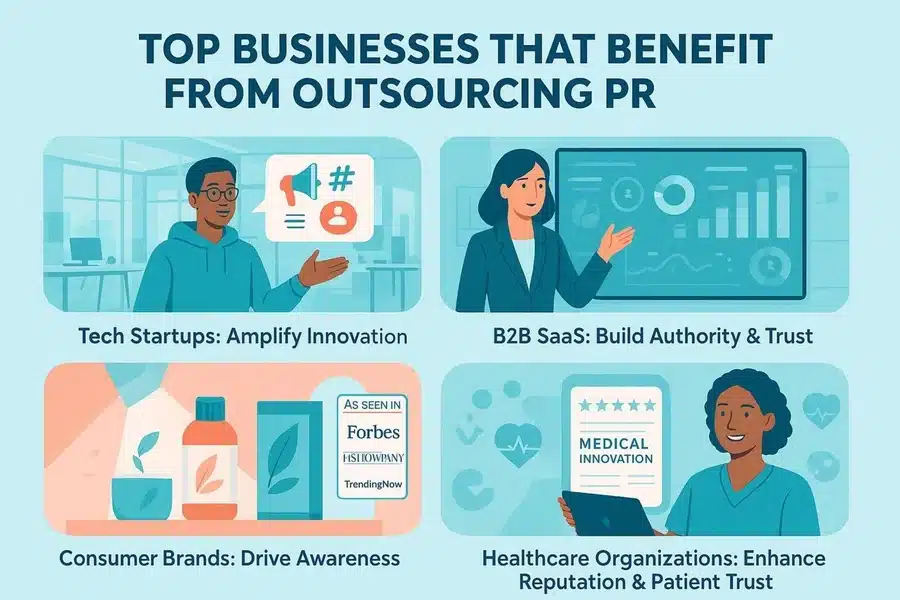
Almost any brand can gain from professional PR, but some sectors depend on it more than others. Startups and young brands often lack the trust and proof points needed to raise money or win first customers; an outside PR agency helps them build that key sense of credibility. B2B tech and SaaS companies also gain from agencies that can build thought leadership and industry status, helping them stand out in crowded markets where product features alone may not be enough.
Consumer goods brands (from global names like Nike or Coca-Cola to small boutiques) use outside PR to create buzz around launches through unboxing content, reviews, and social media activity. Nonprofits and healthcare organizations often lean on external PR to deal with strict rules and get their message out more widely. Any business that needs more awareness or has a sensitive reputation to manage-but cannot afford a big in-house team-is a strong candidate for outsourcing.
How Does Outsourced PR Compare to In-House and DIY PR?
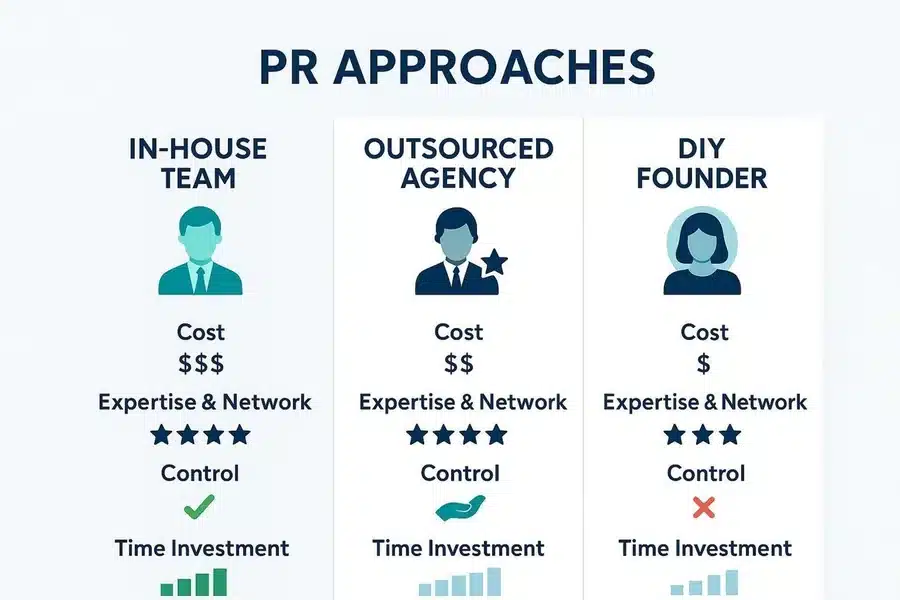
The choice between in-house and outsourced PR is often about “depth” versus “breadth.” An in-house team lives your company culture every day. They are close to product and operations teams, so they can spot stories as they develop. But they are limited by their own experience and can end up with “tunnel vision,” so close to the brand that they stop seeing it the way outsiders do.
DIY PR is popular among solo founders and small businesses. It saves money on fees, but it takes a lot of time. Founders often struggle to stay objective because they are so attached to the brand. They may take rejections from journalists personally or fail to see why an update they see as huge is not real “news” to the press. Outsourcing offers a middle path: outside perspective plus wide experience across industries, which is why many brands choose to work with a dedicated agency like https://all4comms.com/ to gain an objective and effective edge in their communication.
Key Differences Between Outsourced and In-House PR
One of the clearest differences is how long it takes to get up to speed. An in-house team often needs 6 to 12 months to become fully effective while they set up tools, build media lists, and start outreach. A PR agency can often show results within 4 to 8 weeks because their systems and contacts are already in place. While an in-house employee gives all their working time to your brand, an agency gives you a team of writers, planners, and media experts, each with different strengths that are hard to find in just one hire.
Another difference is continuity and risk. If your only in-house PR manager resigns, you may lose most of your media relationships at once. With an agency, your contract is with the company, not one person. If an account manager leaves, other team members can step in and keep the work going. The trade-off is closeness to the brand; an agency will never know your internal language or everyday office feel quite as well as someone on staff.
Pros and Cons of Do-It-Yourself PR Solutions
The main “Pro” of DIY PR is clear: low direct cost and full control. You pay no agency retainer, and you sign off on every line sent to the media. For a founder with a strong personal story and determination, this can lead to very real, human relationships with journalists who like dealing with the source directly. The brand voice stays unfiltered and honest, which can stand out in a market full of very polished corporate messages.
The “Cons” are also clear. DIY PR is often slow and inefficient. Without professional databases like Cision or Meltwater, you may spend hours finding a journalist’s email, only to discover they switched jobs months ago. There is also a lack of distance; founders often keep pushing stories that have no timely angle, leading to many rejections. Over time, this can cause frustration and burnout, and the business may give up on PR because results are slow.
Pros of Outsourcing PR Services
Many companies treat outsourced PR as an investment. One of the biggest benefits is faster results. Agencies work across many clients and sectors, so they see the bigger picture of what the media cares about. They know which topics are trending and which reporters need expert comments. This ready-made knowledge lets a business skip much of the trial-and-error phase and move quickly to stories that have real impact.
Professional PR support also protects brand visibility during slower periods. An in-house person may get pulled into other tasks, but an outside team is focused on outcomes like media coverage and website traffic. This steady attention helps keep your name in front of your audience, which matters for long-term trust and recognition.
Access to Specialized Expertise and Industry Connections
When you outsource, you are paying for more than one person’s time; you are paying for a network. Established agencies have spent years building trust with editors at major outlets. When an email comes from a known PR firm, a journalist is statistically more likely to open it than a pitch from an unknown company. This agency “stamp” gives your brand extra credibility from the start.
Agencies also bring specialist skills that are hard to combine in one hire. You might gain access to a former reporter who knows how to shape an opinion piece, a digital expert who understands SEO-focused PR, and a crisis specialist who has handled major incidents. This mix of skills helps you create messages that are creative, strategic, and well-suited to search engines and online audiences.
Cost Efficiency and Budget Flexibility
Many companies assume outsourcing is more costly than an in-house role. But once you include salary, benefits, payroll taxes, and training, a full-time PR manager can cost $150,000 to $200,000 per year or more. An agency retainer often costs less while giving you access to a whole team. You also cut software and tools expenses because agencies pay for media databases, monitoring platforms, and analytics, which can otherwise cost tens of thousands per year.
Outsourcing also gives you more control over your budget level. With an agency, you can often increase activity for busy seasons, such as a big product launch, and then scale back when the calendar is quieter. This helps you avoid high fixed costs in periods when you do not need heavy PR work.
Scalability for Changing Business Needs
Scalability is a key strength of outsourcing. Fast-growing startups can see their PR needs change very quickly. One month may be about local outreach, while the next month may involve handling attention from new funding or expansion into new markets. Agencies can quickly adjust, adding more staff or bringing in different specialists when needed.
In-house teams usually have limited capacity. If one PR manager is hit with a sudden crisis plus a large product launch, there is only so much they can do. This can cause stress and missed chances for coverage. Outsourced PR lets you temporarily increase effort in busy periods, helping your brand capture attention when it matters most.
Fresh Perspectives and Creative Strategies
Internal PR teams can fall into an “echo chamber.” Over time, they may stop questioning old habits or miss new ways to tell the company story. Outside PR professionals bring fresh viewpoints. They are not affected by internal politics or habits and can give direct feedback on whether a story will truly interest the public.
This outside view often leads to more interesting and effective campaigns. An agency might see how your product links to a trending topic that your in-house team missed. By drawing on ideas from clients in other industries, they can mix concepts and bring new energy to a tired brand story.
Time Savings and Focus on Core Business Activities
PR demands a lot of time. Researching reporters, writing specific pitches, following up, and tracking coverage can easily fill a full workweek. For founders or small marketing teams, this is time taken from product work, sales, and customer care. Outsourcing gives that time back, so leaders can focus on running and growing the business.
By handing off routine PR tasks-such as updating media lists or answering basic questions from journalists-your internal team can focus on their main jobs. This clearer split of responsibilities helps the whole company work more smoothly. You gain the comfort of knowing experts are looking after your reputation while you handle core operations.
Leveraging Modern Technologies and Tools
PR now relies heavily on technology. It uses AI-based media monitoring, social listening tools, and detailed analytics. Agencies invest in these systems so they can track public opinion in real time and measure campaign performance. They use data to find where your audience spends time, whether on LinkedIn, niche blogs, or specialist podcasts.
Access to these advanced tools makes your PR efforts more informed and flexible. Instead of guessing which outlets drive results, you get clear numbers on reach, traffic, and conversions. For smaller companies, buying all these tools alone would be too expensive, but outsourcing usually includes them in the service.
Improved Media Reach and Brand Visibility
The main aim of PR is visibility, and agencies are built to deliver coverage at scale. Through coverage in many outlets, they help your brand appear in several trusted sources at once, reaching different groups of people. This broader presence grows your authority and makes your company feel well-known, even if it is still relatively new.
Agencies also make sure you show up where potential customers already pay attention. This could be a strong review in a key newspaper or a guest spot on a business news program like CNBC. These independent mentions provide trust and proof that paid ads alone cannot match. This kind of exposure often continues to send traffic and leads long after a single campaign ends.
Cons of Outsourcing PR Services
Outsourcing has many upsides, but there are also clear risks. One of the biggest is a drop in direct control. When you hire an agency, you are asking people outside your company to speak for your brand. You can approve key materials, but you do not hear every phone call or email between your publicist and a journalist. This setup needs a strong level of trust and a very clear brief.
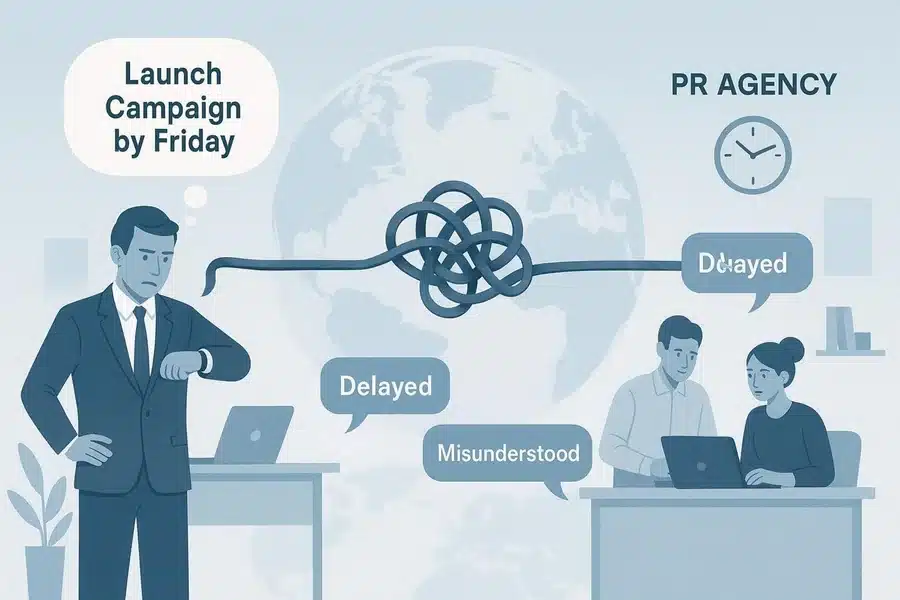
Another issue is the chance of communication breakdowns. Agencies manage multiple clients, so you may not always be the top focus. If important news happens inside your business and you forget to inform the agency, they might keep pitching old angles. Staying in sync requires regular check-ins and updates, which can sometimes feel like extra admin work.
Less Control Over Brand Messaging
When PR is kept inside the company, you can adjust a plan in minutes. With an agency, changing course often involves several steps of communication. By the time your feedback travels from you to the account lead and then to the media team, small details of your message can be lost or changed.
This risk of off-brand coverage is highest at the start of an agency relationship. If the agency does not fully understand what makes your brand unique, they may win stories that are positive but slightly off target. For founders who care deeply about how their brand is presented, this can be stressful.
Potential for Higher Costs Over Time
Even if outsourcing is cheaper than an internal hire at first, expenses can build up as your needs grow. Many agencies charge extra for special tasks like handling a major crisis, managing large events, or producing professional video. If you often need these extras, your monthly fees may rise into the higher range.
There is also the chance that you pay for unused hours. If you are on a steady monthly retainer but go through a quiet period with little news, you may feel you are paying without getting enough value. Unlike an employee who can switch to other tasks, a PR agency is mainly focused on media work. When there is no news to push, the return on your spend can feel low.
Limited Internal Knowledge Transfer
A less obvious drawback of outsourcing is that much of the know-how stays with the agency. When they land a big media win, they keep the direct link to that journalist. Your team may not learn the steps involved or build the contact themselves. If you later decide to bring PR in-house, you might find you have to build these relationships from the beginning.
This can lead to a reliance on the outside firm. Since they hold key media contacts and data, ending the contract can mean losing momentum. Companies that do not stay actively involved in PR decisions and planning may find they cannot continue PR at the same level without that external support.
Cultural and Communication Challenges
Each business has its own culture, language, and values. By their nature, agencies are outsiders. They may not fully grasp your internal dynamics or the subtle details that give your brand its character. This can lead to pitches that sound generic and lack the authentic tone an internal person might bring.
Locations and time differences can also create problems. If your agency is in London and you are in Los Angeles, you share only a few working hours each day. During a fast-moving crisis, delays of even a few hours can make things worse. If you must wait for your agency’s workday to start before reacting to breaking news, you may lose valuable time.
Risk of Misaligned Priorities or Goals
You are one of several clients for any agency. If another client is dealing with a nationwide crisis, your more routine news may wait. This sort of priority shuffle does not happen with an in-house employee whose only focus is your business.
You may also face a difference in how success is defined. An agency might celebrate a high number of media impressions, meaning how many people could have seen your story, while you care mainly about leads or sales. If targets are not agreed in detail at the start, you might end up paying for coverage that does not support your main business goals.
Key Factors to Consider Before Outsourcing PR
Choosing to outsource is not just about picking an agency; it is also about being ready to work well with one. PR works best as a partnership. Even a strong agency cannot succeed if the client does not provide clear information, access to key people, and timely feedback. Before you sign, you should honestly look at whether your team has the time and structure to manage the relationship.
You also need to think about your long-term plan. Do you want a short, intense campaign for a launch, or an ongoing partner over several years to build your brand’s reputation? Your answers will shape what type of agency you choose and how you set up the contract. PR does not work well with a “do it once and walk away” attitude; it needs regular input and cooperation.
Evaluating Business Objectives and PR Needs
Your starting point should be a clear picture of what “success” means. Are you trying to increase sales, attract investors, or handle a crisis? A startup chasing Series A funding needs a very different PR plan from a long-standing manufacturer trying to update its image. Clear goals help you find an agency that has done similar work before.
You also need to look at how newsworthy your company is. If you rarely have launches, updates, or unique data, even a strong agency may struggle to place stories. In that case, you might need a partner focused more on “thought leadership”-such as guest articles and commentary-rather than classic news coverage. Knowing what kinds of stories you can offer makes it easier to choose the right service.
Assessing Budget and Resource Availability
Be realistic about your budget. PR works over time, and results usually build slowly. If you can only fund a three-month test, you may not see the full benefit. Many specialists suggest a commitment of at least six to twelve months to see clear returns. You should also keep some extra funds for items like sponsored articles or event costs.
Money is not the only resource. Think about who inside your company will manage the agency. This person must be able to answer questions, arrange interviews with leaders, and approve content quickly. If your current marketing lead is already overloaded, they may not have the time to support the agency, and results will suffer.
Finding the Right PR Partner or Agency
Do not choose an agency only because their website looks good. Look for sector experience. If you sell B2B software, a fashion or beauty PR agency is unlikely to be a good match, whatever their contacts. Ask for examples and references from similar companies by size and stage. You want a partner who has already solved problems like yours.
Fit with your company culture also plays a big role. While you are checking agencies, pay attention to their communication habits. Do they ask thoughtful questions about your business, or just run through a standard pitch? You will work closely with them during busy and stressful times, so you need to feel you can speak openly and rely on their advice.
Integrating Outsourced PR with Your Overall Marketing Strategy
PR should connect closely with your other marketing work. It is strongest when combined with SEO, social media, and paid campaigns. For example, when you gain a major media mention, your social channels should be ready to promote it, and your SEO team should track the backlink. This joined-up approach gets the most benefit from each piece of coverage.
When talking to agencies, ask how they will work with your existing teams. Do they offer shared dashboards or regular updates that your marketers can use? A good agency will act like an extra part of your marketing function, join planning meetings, and help keep your brand story consistent across all channels. This shared push behind one clear message separates average PR from truly strong results.
Making the Decision: Is Outsourcing PR Right for Your Business?
The choice to outsource often depends on your size and growth stage. For many companies under $50 million in revenue, an agency is usually more cost-effective than a full internal PR department. It lets you have a larger “presence” in the media than a single in-house hire can manage. If you need visible results fairly quickly and cannot spend years building contacts, outsourcing is often the practical choice.
For a Fortune 500 company or a business in a highly sensitive area that needs constant crisis monitoring, a mixed approach is often better. This could mean having an internal PR lead who knows every detail of the company, supported by an outside agency that provides extra reach and specialist skills. The main thing is to be honest about your strengths and limits and choose the setup that gives the best return for your goals.
Frequently Asked Questions About Outsourcing PR Services
What Results Can You Expect from Outsourced PR?
No agency can promise front-page coverage in the New York Times, but you can usually expect clear growth in media reach, mentions of your brand, and quality backlinks. Over time this can improve your search engine rankings and boost trust among your target customers. Many companies also notice that PR wins make their paid ads perform better because the brand is more familiar to people.
On the numbers side, businesses often see up to 30% faster lead generation once professional PR is part of their funnel. There are also softer wins, like more speaking invitations at industry events or more reporters contacting you for expert comment. These gains build a layer of credibility that makes marketing and sales easier across the board.
How Do Agencies Measure PR ROI?
Modern agencies use more useful metrics than old measures like “Advertising Value Equivalency.” They track website visits from media links, how people feel about your brand (sentiment), and your share of voice compared with competitors. With tools such as Google Analytics 4 (GA4), they can sometimes link specific leads or sales back to a single article or interview.
They also monitor SEO results. A link from a strong site like Forbes or Vogue can greatly help your domain authority. Agencies watch how these mentions affect your rankings for key search terms. In addition, they report on engagement, such as how often a story is shared or discussed online, to see how much it resonates with your audience.
When Should You Consider Bringing PR In-House?
Bringing PR inside the company makes sense when you have a steady stream of news. If you are a large public firm making frequent announcements and spending $400,000 or more a year on agencies, it may be cheaper long-term to build your own team. At that point, constant access to a dedicated group who know your business deeply can matter more than an outside view.
It may also be time to hire in-house when PR becomes a core strength for your company. If success relies on close, daily relationships with a small set of journalists or regulators, you want those contacts in your own staff’s hands. Many large companies still keep agencies on for busy periods or for new ideas, but the main relationships live inside the organization.
Looking ahead, PR continues to change. The line between “earned” and “paid” media is getting thinner, with many big outlets adding affiliate links and sponsored pieces into their normal content. These changes make expert PR guidance even more valuable. In 2026 and beyond, success in PR is about more than being mentioned; it is about moving through a complex mix of digital trust, AI-driven search, and honest stories. Whether you build a team inside your company or hire outside help, the goal stays the same: when people see your brand, they should see a story they can believe.


