
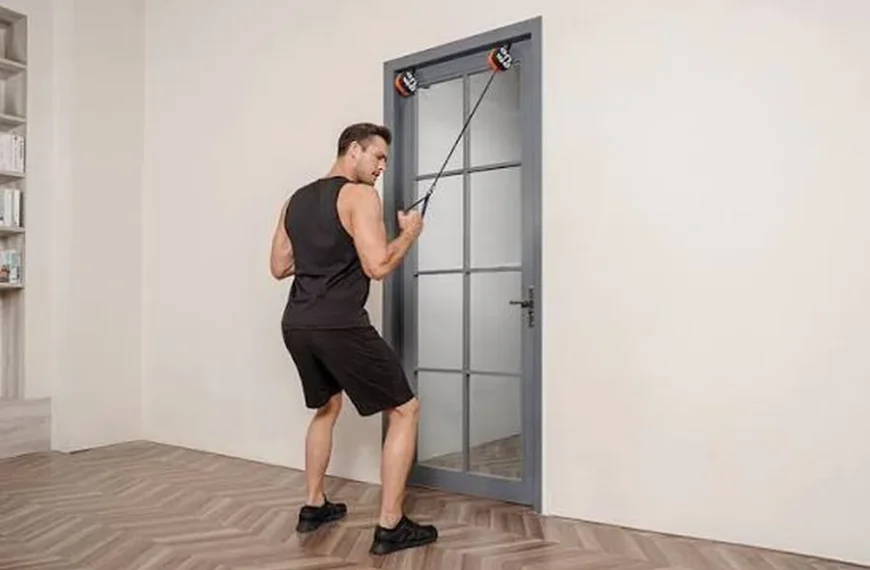
A door anchor turns a resistance band into a versatile home training station without requiring a rack or cable machine. By changing the anchor height, body position, and pulling direction, a trainee targets the chest, back, shoulders, arms, legs, and core with controlled resistance. The setup also supports repeatable exercise angles, which makes technique easier to track across sessions. Safe placement and deliberate adjustments come first, then each muscle group receives a focused movement plan.
Before training, inspect the door, close it fully, and place the anchor on the side opposite the opening. A padded strap protects the contact point and keeps the band centered during each repetition. The resistance band door anchor helps create a fixed line of pull for rows, presses, and pulldowns. Check the strap, carabiner, and band for wear before loading them.
Resistance bands commonly contain latex; check the product details if you have a latex sensitivity.
1. Train the Chest and Shoulders
Set the anchor at chest height for standing presses and flyes. Face away from the door, hold a handle in each hand, and press forward without locking the elbows. For a fly, keep a slight bend and bring the hands together in front of the sternum. Keep the ribs stacked over the pelvis throughout.
Move the anchor above shoulder height for a high press. Stand far enough to maintain band tension before the first repetition. Press upward and slightly forward, then slowly return until your hands reach shoulder level. This angle trains the front shoulders and upper chest while the trunk stays still.
Use lighter resistance for flies and presses until your shoulder joints move smoothly. Eight to 12 controlled repetitions work well for technique practice, while a slower lowering phase increases the challenge without changing posture.
2. Train the Back and Arms
Set the anchor at eye level for face pulls and upper-back work. Pull the handles toward the sides of your face, keeping your elbows high and wrists neutral. Finish by moving the shoulder blades together, then return the bands under control. This pattern trains the rear shoulders, mid-back, and external rotators without requiring heavy loads.
Lower the anchor to waist height for rows. Step back until your arms reach forward without slack, brace your abdomen, and pull your elbows behind your torso. Stop when the hands reach the ribs. Avoid shrugging or leaning backward, since those changes shift work away from the back.
For biceps curls, keep the anchor low, face the door, and pin the elbows beside the ribs. Curl without swinging the shoulders. For triceps pressdowns, place the anchor above your head, keep your upper arms still, and extend your elbows fully. Use a resistance level that lets you finish every repetition cleanly.
3. Train the Legs and Core
Place the anchor near the floor for belt squats or squat variations. Face the door, hold the handles at shoulder height, and sit back until your thighs approach parallel. Drive through your feet while keeping your knees aligned with your toes. The band adds resistance as you stand, helping keep your posture upright.
For a split squat, face away from the anchor and hold the handles near the shoulders. Step one foot forward, lower the rear knee toward the floor, and push through the front foot. Keep the pelvis level and use a range that preserves balance. Switch sides.
Set the anchor at chest height for anti-rotation presses. Stand sideways, hold the handle with both hands, and extend the arms without letting the torso turn. Pause, then bring your hands back to your sternum. The abdominal muscles resist rotation.
4. Build a Repeatable Session
Start with five minutes of easy movement and several practice repetitions. Choose one exercise for the chest, back, lower body, and core. Complete two or three sets of eight to 15 repetitions, resting until breathing returns to a steady pace.
Increase band tension only if you can maintain full-range control consistently. Stop if the anchor shifts, the door opens, or you feel sharp joint pain. Inspect the setup before the next exercise.
If you are new to resistance training or returning after a break, consult a physician before starting a new program.
Conclusion
A door anchor becomes useful when its height matches the movement, and the band stays under control. Chest presses and flyes train pushing muscles, and rows and curls train pulling muscles, while squats, split squats, and anti-rotation presses cover the lower body and core. The next session should start with a door inspection, one exercise per target area, and a resistance level that keeps reps clean throughout. Record the band choice next time.


