
Smart Money and Its Influence
Modern trading is increasingly influenced by the concept of Smart Money—the large institutional capital controlled by hedge funds, investment banks, and professional traders. By analyzing market behavior through the lens of Smart Money, traders can anticipate trends, reduce risk, and improve the accuracy of their decisions.
The concept goes beyond simple technical analysis or news interpretation. It integrates insights from volume, liquidity, and price action to interpret where the “smart” capital is flowing.
The concept of Smart Money forms the foundation of many professional trading approaches, as it emphasizes understanding how institutional investors influence market direction. Smart Money refers to capital invested by those with superior market knowledge, access to privileged information, and professional experience. Unlike retail traders, Smart Money participants often drive significant price movements because of the volume and precision of their trades.
Several characteristics define Smart Money influence:
- Large trade sizes that can shift supply and demand dynamics.
- Access to advanced research and analytics that give them an informational edge.
- The ability to create momentum and liquidity in specific instruments.
- A long-term perspective combined with the patience to wait for the right setups.
By observing market behavior and interpreting where these participants are acting, retail traders can better anticipate potential price moves instead of reacting to lagging signals.
Key Tools to Detect Smart Money Activity
Modern traders rely on several analytical techniques to infer Smart Money activity and gain insight into the behavior of institutional participants. While these tools cannot reveal the exact positions of large investors, they help uncover underlying trends and liquidity movements that shape market direction.
Volume analysis is one of the most telling indicators—sudden spikes in trading volume often suggest that institutional players are entering or exiting the market. Similarly, monitoring order flow and market depth can reveal the presence of large buy or sell orders that subtly influence price movement. Price action also provides clues: sharp advances followed by periods of consolidation frequently indicate areas where Smart Money is building or reducing positions. Liquidity zones, such as major support and resistance levels, tend to act as magnets for institutional trading, as these are the points where large transactions can occur with minimal slippage.
Together, these analytical approaches allow traders to separate genuine market trends from short-term noise caused by smaller participants. By learning to read these subtle signals, traders can align their strategies with institutional momentum, improving timing and overall decision-making in fast-moving markets.
How Smart Money Shapes Trend Trading
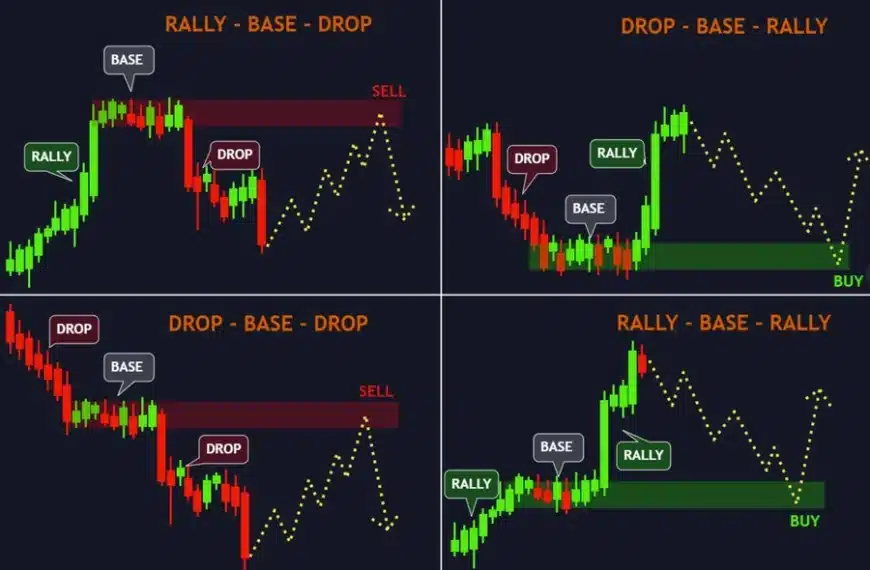
Trend trading strategies benefit significantly from observing Smart Money behavior. Institutional participants tend to move the market in phases: accumulation, markup, distribution, and markdown. Recognizing these phases helps traders align their strategies with the dominant market forces.
During the accumulation phase, Smart Money quietly builds positions at key support levels. Retail traders often perceive this phase as low-volatility trading, but careful observation of volume patterns and price behavior can reveal subtle signals. Once the markup begins, price accelerates, and trend-following strategies can capitalize on the movement.
Ignoring Smart Money flows often leads to:
- Entering trends too late, resulting in reduced profitability.
- Reacting to false breakouts created by market noise.
- Overtrading in countertrend conditions without understanding the underlying flow.
By incorporating Smart Money analysis, trend traders can filter signals and improve the risk-reward ratio of their trades.
Smart Money Concepts in Swing Trading
Swing trading focuses on capturing medium-term market moves, usually lasting several days to weeks. In this context, understanding Smart Money positioning can help identify reversals, continuations, and optimal entry points.
Swing traders often look for:
- Institutional footprints near key support or resistance levels.
- Confirmation of trend reversals through price and volume divergence.
- Patterns indicating accumulation or distribution before significant price moves.
For example, a swing trader noticing high volume near a support zone with minimal price decline may infer Smart Money accumulation. This insight allows them to position trades in alignment with upcoming market moves, increasing the probability of success.
Combining Smart Money with Technical Analysis
While Smart Money concepts offer valuable insights, combining them with traditional technical analysis creates a more robust strategy. Indicators such as moving averages, RSI, and Fibonacci retracement levels can complement Smart Money observations.
Benefits of combining approaches include:
- Confirming that price movements reflect genuine institutional interest rather than retail speculation.
- Identifying high-probability entry and exit points.
- Reducing exposure to false signals during volatile market conditions.
- Improving timing when aligning with major trends driven by Smart Money flows.
A trader who observes unusual volume spikes at a key Fibonacci retracement level, for example, may have a stronger case for entering a trade than one relying on price action alone.
Risk Management in Smart Money Strategies
Understanding Smart Money is not just about identifying opportunities—it’s also about managing risk. Institutional participants often use large positions that create sudden market swings. Retail traders must account for these movements to protect capital.
Effective risk management includes:
- Using stop-loss levels that account for potential volatility created by large orders.
- Scaling positions to reduce exposure when uncertainty is high.
- Monitoring liquidity to avoid being trapped in illiquid conditions.
- Diversifying trades across instruments and timeframes to mitigate correlated risks.
By respecting the potential impact of Smart Money, traders can stay disciplined and avoid emotional reactions during sudden market swings.
The Psychological Edge of Observing Smart Money
Incorporating Smart Money analysis also provides a psychological advantage. Traders who understand the forces behind market movements can trade with confidence, knowing they are aligned with dominant market players. This mindset reduces stress, curbs impulsive decisions, and encourages patience.
Understanding institutional behavior helps traders detach from short-term noise and focus on higher-probability setups. This alignment fosters a disciplined approach, essential for long-term success.
Practical Applications in Modern Markets
Smart Money concepts are highly versatile and can be applied across a wide range of asset classes, including Forex, commodities, stocks, and cryptocurrencies. Institutional participation leaves traces in every market, and understanding how to interpret these signals allows traders to anticipate potential price movements more effectively. In commodities, for example, futures and options volume can reveal where large players are positioning themselves ahead of major market shifts. In equities, patterns of accumulation or large block trades often indicate institutional interest before a significant move. Meanwhile, in Forex and crypto markets, order book imbalances frequently highlight areas where major buyers or sellers are active.
Today’s advanced trading platforms make it easier than ever for retail traders to approximate institutional behavior. Tools such as Level II quotes, order flow analytics, and volume profile charts help identify zones of heavy trading activity and provide a clearer picture of how liquidity is distributed across price levels.


