
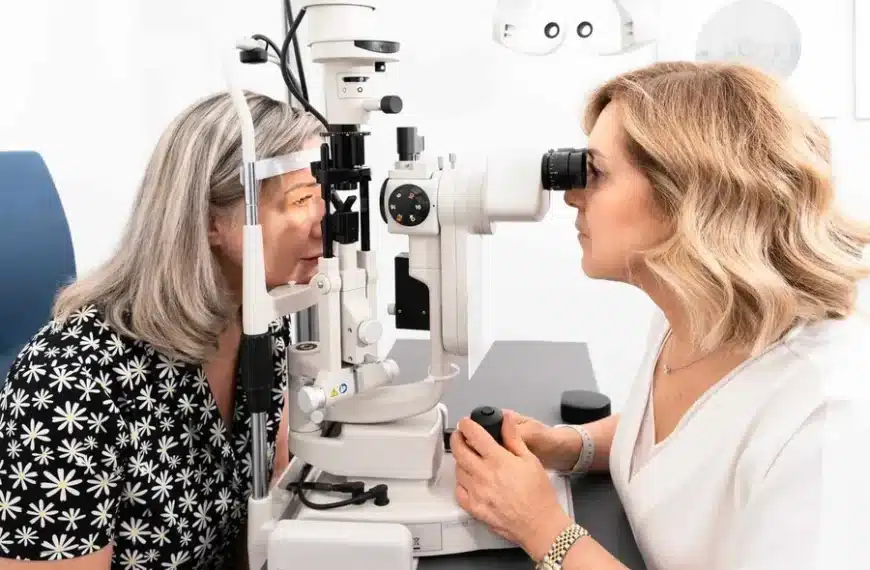
The eye exam that nearly missed a torn Retina.
She blinked twice and said, “I just see a little floaty.”
Routine stuff. No vision loss, no pain, just a wiggly speck drifting across her field of view. Could be nothing. Could also be a retinal tear waiting to become a full-on detachment.
You lean in. Flip on the slit lamp. Focus the beam. And suddenly—there it is.
That thin shimmer of vitreous haze? That’s the clue. That’s the thing that saves her vision.
Not the autorefractor. Not the Snellen chart.
The slit lamp.
Let’s Get Real: The Slit Lamp Is the Star of the Show
Sure, your practice may be decked out with the latest gadgets. Fancy screens. AI refraction tech. A coffee machine that talks.
But when it comes down to clinical judgment—actual, human eyeballing—the slit lamp is the MVP.
It’s how we catch corneal ulcers before they melt through.
It’s how we spot iritis, microhyphemas, drusen, and early lens changes before they get coded into an ICD-10 nightmare.
It’s how we do our job well.
So Why Visionix? Because Seeing Shouldn’t Be Guesswork
If you’re going to invest in clarity, Visionix slit lamps are a smart move. Clean optics. Bright, cool LED light. Ergonomics that don’t make your back hate you by 2 p.m.
Here’s what makes them different:
- Precision-built optics that reveal micro-details most lamps miss
- Adjustable illumination that doesn’t overheat your patient (or your face)
- Modular designs—so you’re not locked into outdated tech
- Photo-ready setups for documentation and remote consults
They’re sharp, smart, and made for real-world clinics.
Not just glossy catalogs.
You Can’t Diagnose What You Can’t See
Harsh truth: even experienced clinicians miss things.
Especially if the lighting is bad.
Or the optics are soft.
Or the patient’s blinking like a Morse code machine.
A solid slit lamp cuts through all of that.
And if you’re still using an old halogen-based model from 2006? You’re probably working harder than you need to. And seeing less than you should.
Visionix lamps use modern optics, real-time filtering, and brilliant LED clarity that make subtle findings… not so subtle.
Digital Documentation = Fewer Headaches
Gone are the days when you scribbled “trace SPK” in the margin and hoped it meant something three months later.
With Visionix’s integrated imaging options, you can:
- Capture high-res slit beam photos
- Track corneal pathology over time
- Send documented findings to specialists
- Show patients what you’re seeing—instantly
This isn’t just good medicine. It’s good defense.
Clinical clarity is your best malpractice insurance.
Who’s It For? Honestly, Everyone.
Let’s break it down:
- New grads will appreciate intuitive controls and easier focusing
- Busy docs get fast, consistent, confident exams
- Patients get clearer explanations—and earlier interventions
- Owners get fewer redos and more revenue per chair time
Win-win-win-win.
(Unless you enjoy over-referring every red eye “just in case.” Then ignore all of this.)
Final Take: Stop Squinting Through Mediocrity
If your slit lamp is older than your associate doctor, it’s probably time for an upgrade.
And if you’re already maxing out your diagnostic ability with subpar gear? Imagine what you could do with optics that actually keep up.
Visionix slit lamps bring the modern touch your clinic—and your patients—deserve.
Because in eye care, the smallest details make the biggest difference.
Especially when you can finally see them.


