
Aggregates—granular materials such as crushed stone, sand, and gravel—form the quiet backbone of every road, bridge, and high-rise. Yet few outside the industry pause to consider the intricate path these humble rocks travel before they become part of concrete or asphalt.
From the first controlled blast in a remote quarry to the final compaction on a bustling job site, each stage of the supply chain demands precision, safety, and environmental stewardship. The four phases below trace how raw geology is transformed into engineered infrastructure.
Extraction: Blasting and Excavation
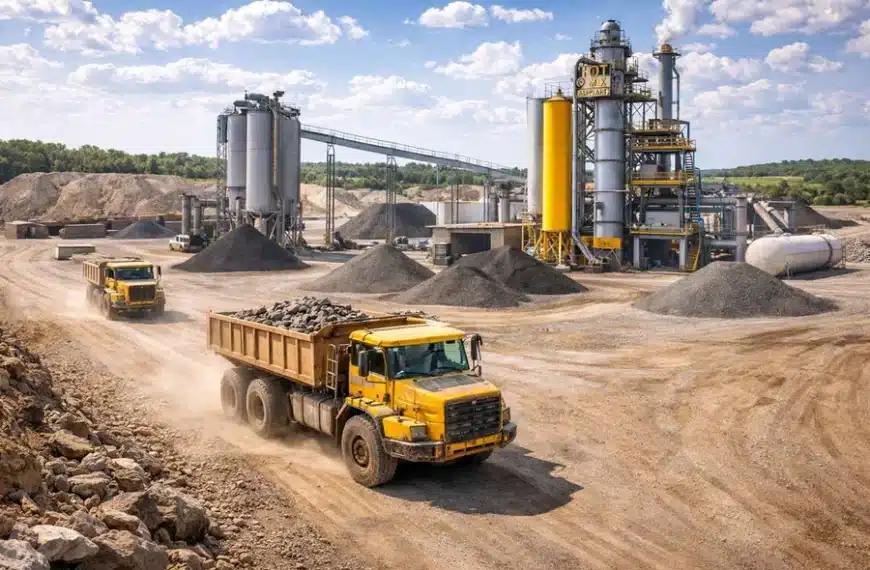
The journey begins deep in the earth, where suitable rock formations are identified through geological surveys and core sampling. Once a deposit is proven, engineers design a blast pattern that fractures the rock while minimizing vibration to nearby communities and wildlife. After each blast, heavy excavators and wheel loaders move the fragmented rock to haul trucks capable of carrying up to 100 tons per trip.
Strict dust-control measures—such as water sprays and wind breaks—are applied throughout extraction to protect workers and reduce environmental impact. Because modern quarries operate on long-term permits, operators simultaneously plan for reclamation, ensuring that mined land can later be restored as wetlands, parks, or agricultural fields.
Primary Processing: Crushing and Initial Sorting
At the quarry’s primary crusher, mammoth jaws or gyratory cones reduce boulders the size of compact cars to more manageable fragments. Conveyor belts then transfer this material to secondary and tertiary crushers that further refine stone to precise gradations. Magnets remove stray metal, and wash plants scrub clay and silt from the aggregate surface, improving adhesion in concrete mixes.
While processing is highly automated, technicians regularly sample the product to verify compliance with ASTM or local highway agency specifications. By the time the material leaves the processing plant, it has already been categorized into dozens of stockpiles—everything from coarse base layers for highways to fine sands destined for masonry grout.
Quality Control and Transportation Logistics
Demand for consistency pushes producers to adopt rigorous quality-assurance programs. On-site laboratories test particle size distribution, abrasion resistance, and moisture content; failed batches are re-crushed or blended until they meet project requirements. Meanwhile, logistics teams orchestrate the movement of thousands of tons of aggregate each day.
Rail spurs, barges, and over-the-road trucks link quarries to regional distribution yards, allowing producers to reach construction markets hundreds of miles away. GPS-equipped fleets transmit real-time location and weight data, enabling contractors to schedule pours with just-in-time accuracy. Efficient routing not only lowers transportation costs but also reduces the carbon footprint of each ton delivered.
On-Site Delivery and Final Application
Once at the construction site, aggregates enter a tightly choreographed sequence of placement. Dump trucks backfill foundations, ready-mix trucks blend stone with cement and water, and pavers spread asphalt across freshly graded sub-bases. Before these materials arrive, however, industrial screening equipment at the batch plant performs a last check, removing any oversized or undersized particles that could weaken the final mix.
Field technicians conduct slump tests, density checks, and surface inspections to verify that aggregate performance aligns with design specifications. Properly compacted and cured, these grains of rock will shoulder traffic loads, resist freeze-thaw cycles, and channel stormwater for decades to come.
Conclusion
The next time you drive over an overpass or walk across a concrete sidewalk, remember the silent voyage undertaken by the aggregates beneath your feet. From a carefully planned blast to the hum of screening decks and the roar of mixers, each stage blends earth science, engineering, and logistics into a seamless process. This disciplined journey ensures that every grain contributes strength, durability, and safety to the structures that shape our daily lives.


