
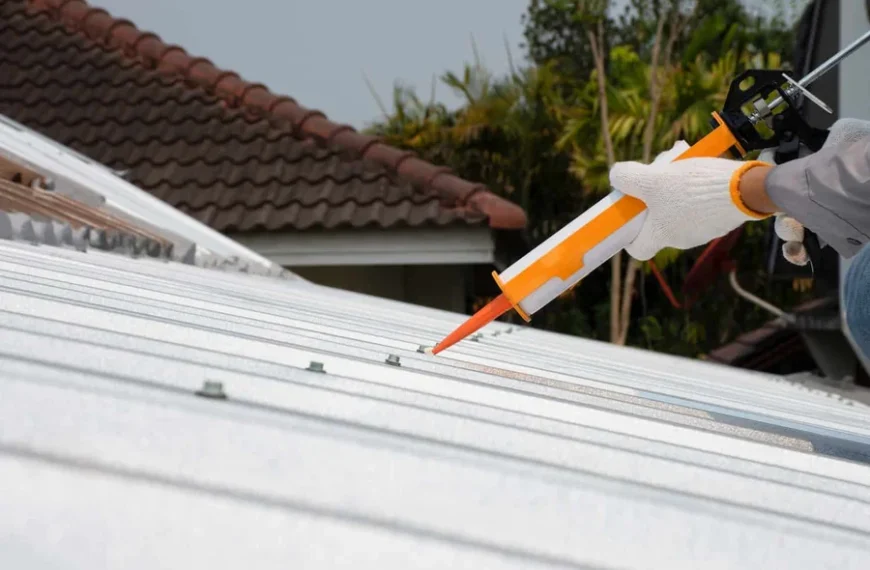
A metal sheet roof rarely leaks across the open sheet. It leaks at the laps, the fixings, the flashings and the places where the roof meets a wall, a gutter or a skylight. Those are the joints that sealant is asked to protect, and on a roof in a hot, wet climate they are working harder than almost any other joint on the building. Choosing the sealant by what was left in the van is how the same leak gets repaired every rainy season.
What the Roof Does to a Sealant
Two things set a roof apart from interior work. The first is sunlight. A bead on a roof sits in direct UV for most of the day, and a product that is not suited to that exposure can harden, crack or lose grip within a few seasons. The second is movement. Metal sheet heats quickly in the sun and cools quickly in rain, so laps and flashings open and close every day. A bead that cannot follow that movement will tear along one edge, and the gap it leaves is exactly where water gets in.
Steel framing and polycarbonate sheets add their own versions of the same problem. Polycarbonate moves a great deal with temperature, and joints between different materials move at different rates.
Where Roof Leaks Actually Start
Most roof leaks trace back to a short list of details:
- Laps and end joints where water is driven uphill by wind or held back by debris.
- Fixing points where the washer has aged or the fixing has been overtightened or left loose.
- Flashings at walls, parapets and upstands, where two different surfaces meet.
- Penetrations for vents, pipes and brackets added after the roof went on.
- Skylight and polycarbonate junctions, where movement is greatest.
A walk along the roof with that list usually finds the problem faster than a search from inside the building, because water can travel some distance along a purlin or the underside of a sheet before it drips.
Preparation Decides the Outcome
Sealant on a roof is only as good as the surface it is bonded to. Remove old, loose sealant completely rather than sealing over it. Clean off dust, oil and chalky residue from weathered coatings, and make sure the surface is dry before applying. Where the coating on the sheet is flaking, the bead will fail when the coating does, so deal with the coating first. Ask the supplier whether a primer is recommended for the specific substrate.
Joint Size and Bead Shape
A thin smear over a joint has nothing to stretch with. Give the sealant enough width and depth to accommodate movement, follow the supplier’s guidance on joint proportions, and tool the bead so it is pressed into firm contact with both sides of the joint. On laps, seal in a way that does not trap water behind the bead.
Timing and Access
Roof work is weather-dependent. Apply sealant when the surface is dry and rain is not expected before the product has had time to skin, and check the manufacturer’s stated cure guidance. Work safely: roof access needs proper edge protection and footing, and a fragile polycarbonate sheet should never be walked on.
A Short Specification Check
Before choosing a sealant for a metal roof or steel detail, confirm that the product is listed for that application, that it is suited to continuous UV exposure, what surfaces it has been checked on, whether a primer is needed, and the joint size it is intended for. Record which product went where, so the next repair starts from known information.
Practical Takeaways
- Roof joints face constant UV and daily thermal movement; choose a product listed for that exposure
- Most leaks start at laps, fixings, flashings, penetrations and skylight junctions
- Remove old sealant and clean, dry the surface before applying a new bead
- Give the bead enough width and depth to move, and tool it into both sides
- Never walk on polycarbonate sheet, and plan roof work around the weather
Where to Start
When choosing a sealant for metal sheet roofs and steel, start from products the manufacturer lists for that application. First Sealant Technology’s application page for metal sheet roofs, steel and polycarbonate lists CW-1 and N-100, and describes the products for this application as UV-resistant with excellent leak and water resistance.
For advice on surfaces, primers and joint sizes for a specific roof, their team can be reached at 096-818-9168, 097-959-5111, or 097-959-1222, Monday through Saturday, 08:30-17:30.
Technical specifications referenced above are drawn from the manufacturer’s published product information. Confirm suitability for your application directly with the supplier.


