
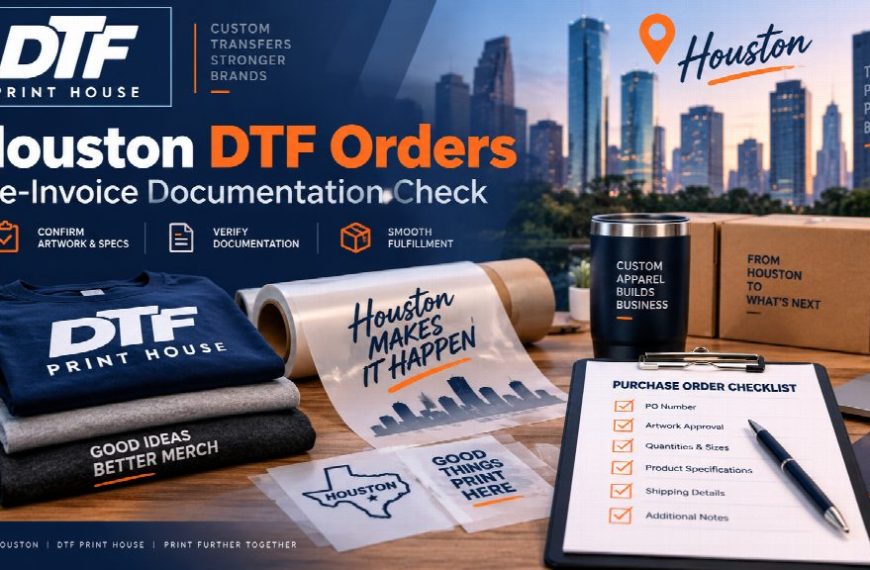
For many apparel orders, the printing step is not the part that creates confusion. The real trouble often appears later, when a purchasing team tries to match the invoice to the approved artwork, the requested quantities, the delivery plan, and the person who originally authorized the job. In a large, multi-industry market like Houston, branded apparel can be purchased by marketing teams, operations groups, event coordinators, human resources departments, contractors, and small business owners. That makes a clean purchasing record especially useful before an invoice ever reaches accounting.
A simple pre-invoice check gives the buyer one place to confirm what was ordered and why. It does not need to become a complicated procurement system. The goal is to make the final purchase easy to recognize, approve, and explain. When the team is sourcing DTF transfers for Houston projects, that record can also help separate the local project details from the transfer format itself.
Start With the Business Purpose, Not the Artwork File
Artwork is important, but accounting rarely approves an expense because a PNG looks correct. Start the purchase record with the business reason for the order. Is the apparel for a customer event, a field team, a product launch, a temporary campaign, a conference, a visitor-facing crew, or a recurring branded program? A short purpose statement gives the invoice context and makes it easier to compare the order with the original request.
Next, identify the budget owner and the person who can approve changes. This matters when quantities move, garment sizes change, or the project adds another design. If nobody owns commercial approval, small changes can accumulate without anyone understanding how they affect the final purchase.
Create a Minimum Documentation Set
Before production begins, create a compact order record that follows the job from request to payment. It can live in a purchasing platform, shared drive, project management system, or even a structured spreadsheet. The format matters less than consistency. At minimum, record:
- project or purchase-order number;
- business purpose and requesting department;
- approved artwork filename or version identifier;
- transfer format and requested dimensions;
- quantity or sheet count requested;
- delivery or pickup contact;
- commercial approver for changes;
- date the order was released for production.
This list is deliberately different from a print-production checklist. It is not trying to tell a designer how to build artwork. It is a procurement bridge between the creative decision and the financial record.
Separate Creative Approval From Purchasing Approval
A common source of confusion is treating one “approved” message as approval for everything. A designer may approve the visual file but have no authority to approve a larger quantity. A department manager may approve the budget but not know whether the latest logo file is correct. Treat these as separate decisions.
Creative approval should answer one question: is this the correct visual file for the job? Purchasing approval should answer another: are the quantities, format, delivery plan, and expected charge authorized? Keeping those decisions separate helps the invoice review later because the buyer can trace each part of the order to the right person.
Match the Invoice to the Order Record Before Payment
When the invoice arrives, do not begin with the total. Begin with the identifiers. Match the project number, the order reference, and the transfer format. Then compare quantities and any approved changes. If a change was requested after the original order, the documentation should show who approved it and when.
This process is particularly useful when the apparel team uses more than one ordering format. For example, one project might use a sheet-based workflow while another uses individual transfers. A central reference page for ready-to-press DTF transfer options can help the buyer name the format consistently in the record instead of relying on informal descriptions.
Do Not Let Local Convenience Replace Documentation
Local access can make a project easier to coordinate, but proximity should not eliminate normal purchasing controls. Whether an order is shipped or collected, the internal record should still identify the authorized recipient, the job reference, and the person responsible for confirming receipt. The closer the deadline, the more valuable those basics become because teams are more likely to communicate through short messages and verbal updates.
If someone outside the original purchasing group picks up the order, add that person to the record before collection. If the job is being delivered to a different department or event location, record that destination before the order leaves production. These small steps reduce the chance that accounting sees an unfamiliar charge with no obvious connection to the finished apparel.
Use Exceptions as a Signal to Improve the Process
The first version of this documentation system does not need to be perfect. Watch for the questions that repeatedly delay invoice approval. If accounting keeps asking which department requested the order, make the department field mandatory. If teams frequently dispute quantities, record both original and revised counts. If the wrong artwork version is difficult to trace, add a file identifier to the purchase record.
Over time, the procurement file becomes a short institutional memory for apparel purchasing. That is valuable in Houston organizations where projects may cross departments, locations, vendors, and event schedules. A well-documented DTF order is easier to approve, easier to receive, and easier to explain without forcing the purchasing team to reconstruct the project after the fact.
Final Check Before the Invoice Moves Forward
Before approving payment, make sure the business purpose, artwork reference, order format, quantities, delivery recipient, and approved changes all tell the same story. If they do, the invoice should be easy to process. If they do not, resolve the mismatch before the record disappears into an email thread. The goal is not bureaucracy. It is a clean handoff from branded-apparel request to accountable business purchase.


