
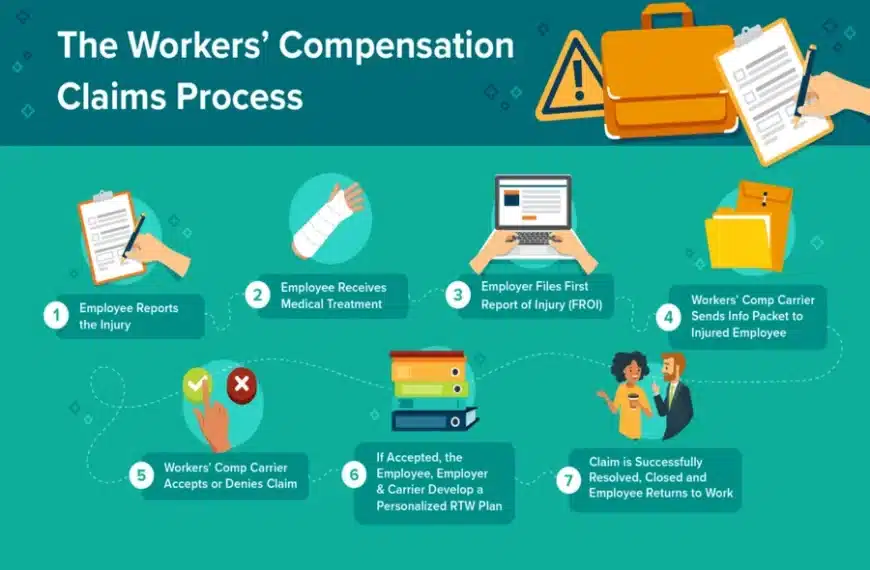
Workplace claims move through a defined sequence from incident notification to final resolution. For large organisations, understanding each stage is essential for compliance, cost control, and employee support. A structured lifecycle reduces delays, clarifies responsibilities, and ensures consistent decision-making across departments and locations. Rather than reacting to individual cases, businesses that follow a clear process create a repeatable and auditable framework.
Reporting Stage Sets Claim Foundation
Every claim starts with a formal notification of an incident or illness. Internal reporting, medical confirmation, and initial documentation activate the workers compensation claims process, and accuracy at this point shapes everything that follows. Incomplete records or late submission often lead to disputes, extended timeframes, and compliance risks.
Large organisations manage this stage through incident reporting systems, statutory timeframes, and trained first responders. A clear intake pathway ensures evidence is preserved, employees receive early guidance, and insurers can begin assessment without administrative delays. Strong reporting practices also create a reliable data trail for later decision-making.
Assessment Stage Confirms Liability
After lodgement, the claim enters formal evaluation. Insurers examine whether the condition is work-related and whether it meets legislative criteria. This relies on causation analysis, medical evidence, and employment records to confirm liability.
For enterprise employers, internal documentation directly affects speed and outcome. Accurate role descriptions, risk assessments, and training histories provide the context needed to verify claims. When these records are fragmented, assessment becomes slower and more likely to result in disputes, increasing both cost and operational disruption.
Management Stage Drives Recovery Plans
Once accepted, focus shifts to recovery and ongoing support. This phase is guided by treatment approval frameworks, occupational rehabilitation planning, and regular capacity reviews. The aim is not only medical improvement but also maintaining a structured connection to work.
Coordination is critical in large organisations because multiple stakeholders are involved at the same time. HR, insurers, healthcare providers, and operational leaders must work within a shared process. Integrated case management systems streamline communication, track progress, and ensure timely approvals, which shortens overall claim duration.
Return-to-Work Stage Rebuilds Capacity
Return to work is a phased process based on functional ability, not a single clearance date. Graded duties, workplace adjustments, and capacity assessments allow employees to resume work safely while continuing recovery, typically under a formal return-to-work obligation that requires employers to provide suitable duties where reasonably practicable.
Consistency across locations is essential for large businesses. Standard frameworks ensure comparable support for all employees and defensible decision-making under employment and compensation law. When managed well, this stage improves engagement, reduces long-term absence, and demonstrates compliance with reasonable adjustment requirements.
Resolution Stage Captures Key Insights
Resolution occurs when full duties are restored or a legislated outcome is reached. For mature organisations, closure also triggers review. Claims analytics, trend mapping, and risk modelling reveal recurring hazards, high-cost injury types, and process delays.
These insights feed directly into safety strategy, policy updates, and leadership reporting. Each completed claim becomes a source of operational learning rather than a standalone event.
Lifecycle View Enables Structured Governance
Reporting, assessment, management, return-to-work, and resolution each require clear ownership, reliable data, and consistent execution. This visibility strengthens regulatory compliance, supports better recovery outcomes, and creates a scalable governance model.
When the lifecycle is managed as a continuous process, workplace claims become structured, predictable, and measurable. The result is faster resolution, lower disruption, and stronger alignment between employee well-being and organisational performance.


