
The backlog management, prioritization, and working with development teams are natural and common roles and responsibilities of most Product Owners. Behind every successful product, there’s a greater skill that quietly drives clarity, alignment, and value. This hidden skill separates average POs from exceptional ones, and sometimes it’s not something you will find listed in most job descriptions.
A 2025 SurveySparrow survey of 1,800 product teams found that 85% of high-performing teams credit success to strong communication and people. Another study by the Massachusetts Institute of Technology reported that 95% of products fail within one year when customer needs aren’t understood or communicated well. These numbers show how important people-centered skills are to make a product successful.
The Hidden Skill:
If one ability stands out as the true superpower for Product Owners, it’s the combination of strategic empathy and effective communication.
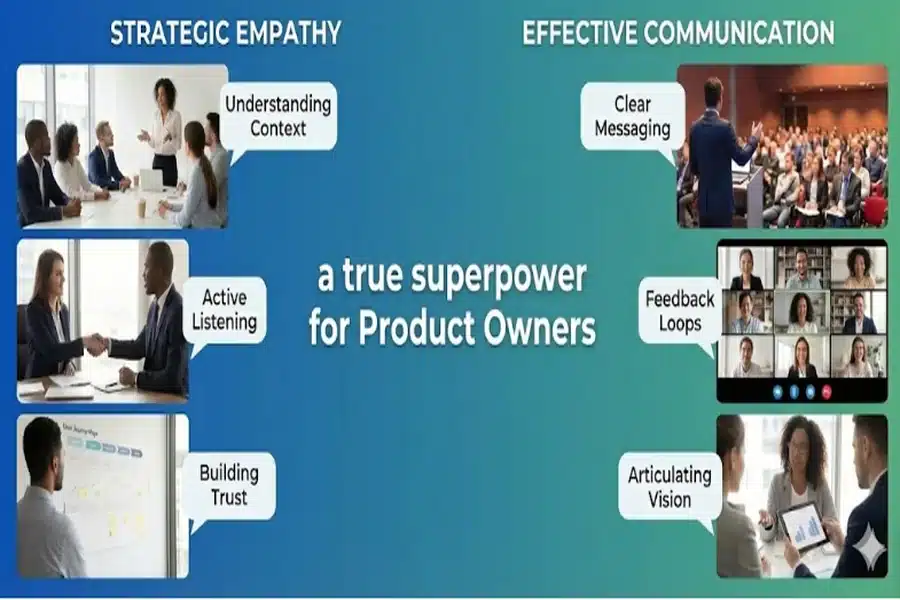
This is more than just talking or attending meetings. It’s the art of truly
- Understanding users,
- Framing problems meaningfully, and
- Translating insights into clear decisions
These are moving the product towards success.
Along with that, the following skills are silently encouraging Clarity in Conversation & Human-Centered Thinking.
- Prioritization,
- Stakeholder alignment,
- Negotiation,
- Backlog grooming and even
- Storytelling.
Without it, products get deviated, teams struggle, and features lose their purpose.
Why This Skill Stays Hidden:
Most PO job descriptions list tasks like writing user stories, managing backlogs, attending ceremonies, and collaborating with stakeholders. But the actual success of these tasks depends on something deeper:
1. Saying “No” the Right Way
A PO must reject more ideas than they accept. But how they reject determines whether the team feels motivated or discouraged.
| A respectful, data-based “no” creates trust and protects the product from bloat. |
2. Knowing Who Needs What, When, and Why:
Great POs communicate the right information to the right audience at the right moment using the right method.
This means a PO must adapt. Sometimes email works, sometimes a quick call, sometimes a visual model.
| When communication fails, misunderstanding grows, slowing down development and lowering value. |
3. Understanding Real User Problems (Empathy + Shadowing)
Data helps, but watching users in action changes everything. Customer shadowing, similar to a Gemba Walk (lean management practice), helps POs uncover what users actually struggle with versus what they say they struggle with.
This empathy-driven insight guides better decisions, reduces assumptions, and inspires innovation.
4. Storytelling and Meaningful Narratives
Storytelling is one of the most underrated abilities.
Users don’t connect with features; they connect with stories.
Stories bring urgency, alignment, and emotional meaning; something data alone cannot achieve.
A strong Product Owner looks at every problem this way:
- Who is struggling?
- Why does it matter?
- What changes when we solve it?
This story becomes like a directional compass for teams.
5. Cultural Competency for Global Teams
How cultural awareness helps POs collaborate more effectively, especially in global teams. Understanding how different groups interpret feedback, timelines, or priorities helps avoid conflict and strengthens relationships.
Strategic empathy isn’t only for customers; it’s for everyone involved in the product.
How Strategic Empathy + Communication Gives Results
1. It Aligns Everyone Faster
Product Owners bridge business goals, technical realities, and user needs.
Clear communication ensures everyone understands what the team is building and why it matters.
2. It Prevents Scope Creep
A tactful “no” combined with a compelling narrative protects the product vision.
The backlog stays lean, relevant, and outcome-focused.
3. It Boosts Innovation
Shadowing and empathy uncover real problems, mostly revealing opportunities that data alone cannot show.
4. It Improves Team Morale
When POs communicate clearly and empathetically, teams feel heard, respected, and aligned.
5. It Maximizes Product Value
Every decision, what to build, what to cut, what to delay, is more informed and customer-centric.
How these Hidden Skills work for PO:
Let’s take a simple real-world example:
Consider a stakeholder who requests a new reporting feature.
A Product Owner using strategic empathy would:
- Shadow users can understand the real pain (maybe not reports, but too many manual steps).
- Build a story around the problem.
- Communicate the “why” clearly to developers and stakeholders.
- Say “not now” to other requests that don’t help solve this bigger problem.
- Align everyone on the value and expected outcome.
Instead of developing just another feature, the team solves the real user frustration.
Where Product Owners Can Begin:
Here are practical steps POs can begin today:
1. Start weekly or monthly customer shadowing
Observe how users interact with your product in real environments.
2. Replace feature lists with narratives
When sharing backlog items, add a simple story:
- Who is this for?
- Why does it matter?
- What changes after it’s done?
3. Practice saying “no” with empathy
Use alternatives like:
- “Let’s revisit this after X goal.”
- “This idea has value, but our priority is solving Y.”
4. Switch communication modes intentionally
Don’t rely on just Slack or email.
Use diagrams, voice notes, Miro, or short demos.
Final Thoughts:
The strongest skill a Product Owner brings isn’t technical; it’s about people.
Your journey through CSPO certification training helps you uncover the hidden skill every Product Owner needs. Strategic empathy paired with clear communication shapes smarter decisions, stronger relationships, and better products. Whether you are saying no, aligning teams, or exploring user pain points, this skill quietly drives everything forward.
Grow this skill, and you will unlock new levels of impact and confidence in your role.


