
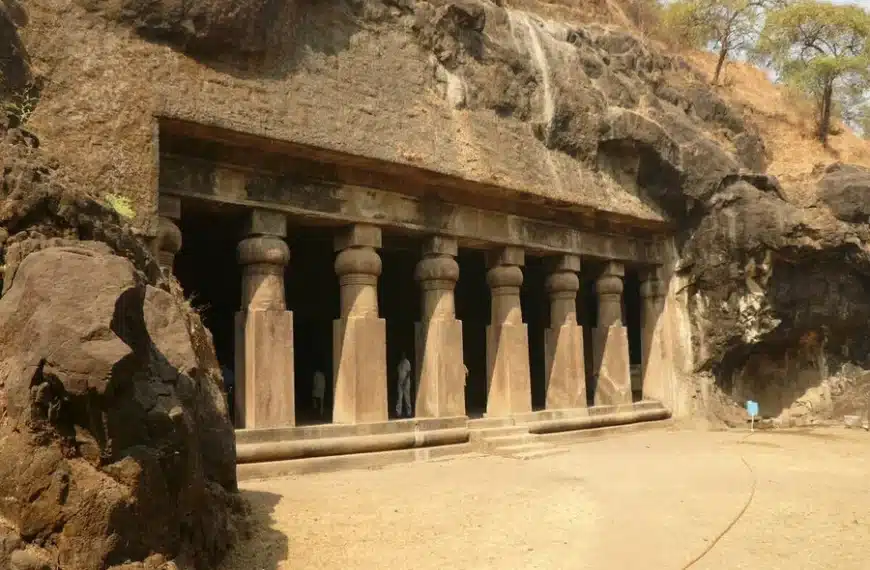
A brief ferry boat ride from crowded Mumbai is a realm of ancient carvings, myths, and eternal beauty — the Elephanta Caves. On Elephanta Island in Mumbai Harbour, the rock-cut caves are more than mere stone carvings. They are living tales cut into basalt rock, a testament to India’s rich art and religious heritage.
With grand stone halls, intricately detailed sculptures, and firm mythological foundations, the Elephanta Caves provide a serene yet breathtaking retreat from contemporary existence. Whether history is your passion, art your muse, or you’re simply searching for an off-the-beaten-path experience in a tranquil setting, this UNESCO World Heritage location is well worth the trip.
A Walk Through Time: History of the Caves
The caves date back to around the 6th to 7th centuries A.D., though some scholars believe they may have originated even earlier. The site is believed to have been an important religious centre for Shaivism, a sect of Hinduism devoted to Lord Shiva.
Over centuries, the island passed through the hands of many dynasties, including the Konkan-Mauryas, Trikutakas, Chalukyas of Badami, Silaharas, Rashtrakutas, Kalyani Chalukyas, Yadavas of Deogiri, Muslim rulers of Ahmedabad, the Portuguese, the Marathas, and finally the British. The place is even mentioned as “Puri” in the Aihole inscription of Pulakesin II, revealing its ancient spiritual importance.
The Portuguese named the island “Elephanta” after discovering a large stone elephant statue near the shore. The statue was eventually relocated to a museum in Mumbai, but the name was kept.
For visitors coming from Pune, booking a car rental service in Pune makes the journey to this historic site even more convenient and memorable.
What You’ll See at Elephanta Caves
The island features seven cave excavations, comprising five Hindu caves and two smaller Buddhist caves. Cave 1, the biggest and most elaborate of the Hindu section’s attractions, is the major draw.
Within Cave 1, there are amazing sculptures of Ardhanarishvara, as well as depictions of Shiva and Parvati playing chausar (a dice game), chiselled right into the walls of the cave. It resembles the Dumar Lena (cave 29) of Ellora in plan and grandeur.
It has a large central hall supported by six rows of pillars (with six in each row except on the western end). A shrine housing a Shiva lingam is located in the western corner.
Other sculptures depict Shiva in various guises, including Nataraja (the Lord of Dance), Gangadhara murti (Shiva bringing Ganga River to Earth), and depictions of significant Hindu myths. Although some have suffered damage down the centuries, they are a testament to the craftsmanship and dedication of the sculptors.
Many travellers prefer booking Pune to Mumbai cabs to make the journey more relaxed and comfortable before catching the ferry to the island.
Getting to Elephanta Caves
Elephanta Island is located in Gharapuri, about 19 km from Mumbai’s coast, and can only be reached by ferry. But before you get on that boat, here’s how to reach the Gateway of India — your starting point for this historic journey — unless you’re booking a car rental service in Pune and arriving directly.
By Air
If you’re arriving by flight, the closest airport is Chhatrapati Shivaji Maharaj International Airport (BOM) in Mumbai. From the airport, you can take a taxi or auto-rickshaw to the Gateway of India, which takes about 45 minutes to an hour, depending on traffic.
By Train
Mumbai is a major rail hub with several major stations like Chhatrapati Shivaji Terminus (CST), Dadar, and Mumbai Central. Once you reach any of these stations, you can easily grab a local taxi or auto-rickshaw to reach the Gateway of India in under 15 minutes.
You may take a ferry from the Gateway of India. The hour-long ferry ride offers stunning views of the ocean and the skyline of Mumbai. After arriving on the island, you can either walk or take a toy train to the base of the hill, followed by a climb of around 120 steps to reach the cave complex.
By Road
If you’re travelling from nearby cities like Pune, the road journey can be smooth and scenic. Most travellers prefer Pune to Mumbai cabs for the flexibility and comfort they offer. The Mumbai–Pune Expressway is well-maintained, making it an ideal route for a short road trip.
Wrapping Up
The Elephanta Caves are not merely a place of tourist appeal; they are where history, religion, and art come together in one eternal space. From the majestic Trimurti to the serene pedestrian walks lined with trees, all of this beckons you to slow down and reflect on our history, our narratives, and the wonder of creation.
For a smooth and hassle-free journey, travel with Savaari Car Rentals, a trusted online cab aggregator that ensures your travels are easy and pleasant. Book your ride today!


