
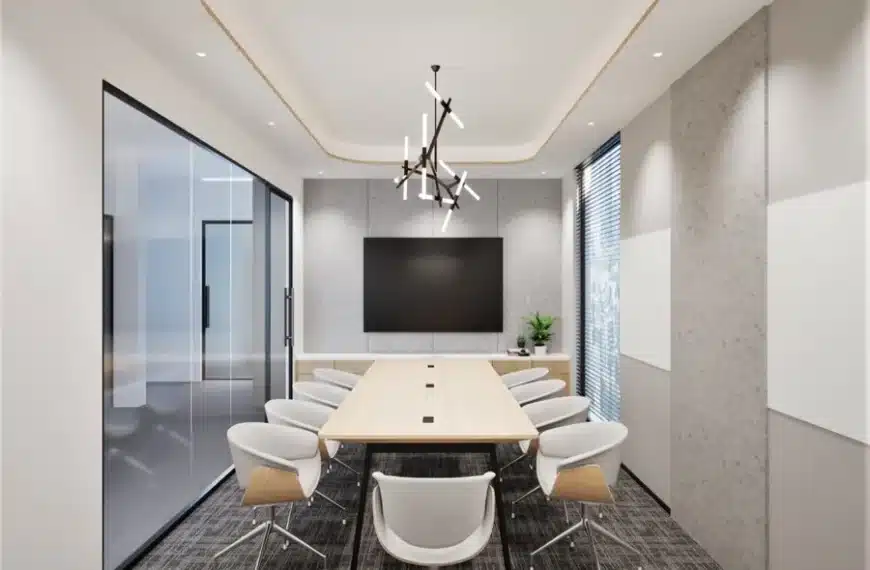
Every important office decision starts with a conversation. These conversations usually happen inside conference rooms. If the room feels uncomfortable, noisy or confusing meetings lose their value. A well designed conference room helps people think, speak and decide better.
A good conference room can
- improve meeting focus.
- support clear communication.
- make clients feel confident.
- help teams take faster decisions.
Conference room design is not about size alone. It is about planning comfort clarity and function. Let us understand step by step how to design conference rooms that truly work.
Understand The Purpose Of Your Conference Room
Before designing anything it is important to know how the conference room will be used. Some rooms are for team discussions. Others are for client meetings, presentations or video calls.
A room used for daily team meetings needs flexibility. A room used for clients needs a more formal look. Offices guided by commercial interior designers in Kolkata often start by studying meeting types and frequency.
When the purpose is clear, design choices become easier. You avoid over designing or under planning the space. This clarity helps decide the right size and layout for the room.
Choose The Right Size And Layout
Conference rooms should never feel crowded or empty. Size depends on the number of people using the room regularly.
Table shape also matters. Rectangular tables work well for formal meetings. Round tables support open discussion. Clear space around the table helps people move easily.
Walkways should remain free. Doors should not open into seating areas. Many spaces designed by office interior decorators in Kolkata focus on layouts that allow smooth movement.
A good layout reduces distraction and improves comfort. Once layout is fixed the next focus should be seating and furniture.
Select Comfortable And Practical Furniture
Meetings often last long. Chairs must support the back and posture. Hard or unstable chairs reduce focus quickly.
The table should allow laptops, notebooks and documents easily. Cable holes help manage wires. Storage for markers, remotes and documents keeps the room organized.
Furniture should look professional but feel comfortable. When people sit comfortably they listen better and share ideas freely. This comfort supports better communication which depends heavily on sound control.
Focus On Acoustics And Noise Control
Sound quality is very important in conference rooms. Echo noise or outside sounds can ruin meetings.
Use sound absorbing panels, carpets or soft wall materials. Doors should close properly. Glass walls can be used with acoustic treatment.
Offices designed as part of office interiors in Mumbai often plan acoustics carefully especially for video meetings. Good sound control ensures every voice is heard clearly.
When the sound feels right people stay engaged. This makes it important to plan lighting and visuals next.
Use Lighting And Visual Elements Wisely
Lighting affects mood and attention. Conference rooms need balanced lighting. Very bright lights cause discomfort. Very dim lights reduce alertness.
Natural light is helpful but should be controlled with blinds. Soft white ceiling lights work best. Task lighting near presentation areas improves visibility.
Wall colors should stay neutral. Avoid busy patterns. Visual clarity helps people focus on discussion. With lighting done well technology can be added smoothly.
Integrate Technology Without Making It Complex
Modern conference rooms need technology. Screens, video systems speakers and charging points are essential.
Technology should be easy to use. Cables should stay hidden. Controls should be simple. Screens should be visible from every seat.
Poor tech setup wastes meeting time. A smooth system keeps meetings productive. When technology works well meetings feel efficient and professional.
Keep The Conference Room Organized And Easy To Maintain
A conference room should always be ready for use. Messy tables, loose cables, and leftover items create distraction before meetings even start. Good design helps keep the room organized.
Built-in storage for remote markers and documents keeps surfaces clean. Cable management systems hide wires and improve safety. Easy to clean surfaces save time and effort.
When a room stays clean people respect it more. Meetings start on time and feel professional. An organized conference room supports smooth daily use and completes the overall design successfully.
Final Thoughts
Designing conference rooms in offices is about comfort, clarity and purpose. From understanding how the room will be used to planning layout furniture acoustics lighting and technology every step matters. A well designed conference room supports better discussions, stronger decisions and confident client interactions. When the space supports people, meetings become meaningful and productive every day.


