
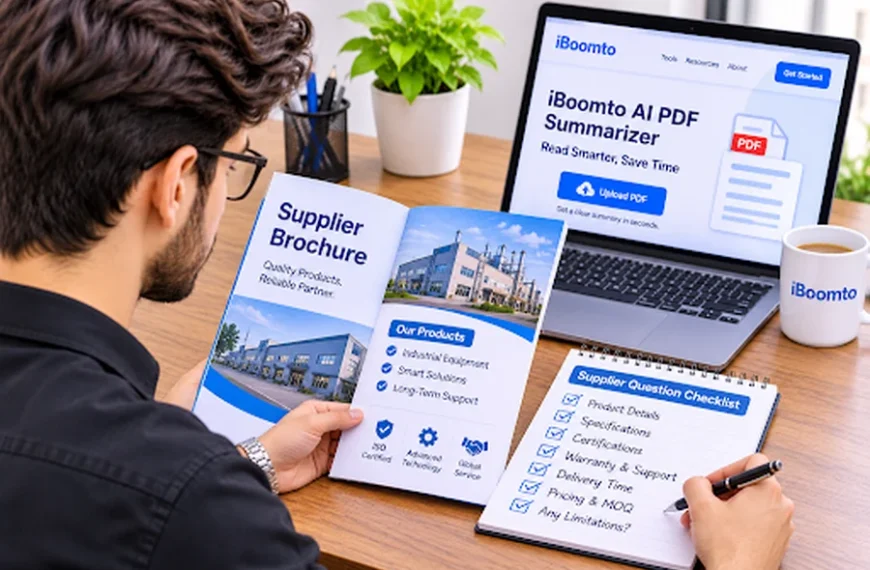
Choosing a supplier often starts with a brochure. A company sends a PDF showing its products, technical specifications, certifications, production capacity, and service options. Everything may look convincing at first glance. The product appears suitable, the company seems experienced, and the listed qualifications give a sense of confidence. However, a brochure is a sales document, not a complete record of everything a buyer needs to know.
The important step is learning how to separate useful information from promotional claims. A careful reader should identify what the supplier actually provides, which qualifications can be verified, and what details still need clarification. With help from an AI document tool such as iBoomto AI PDF summarizer, reviewing a lengthy supplier brochure can become a more organized process.
Start by Understanding the Main Offer
Before contacting a supplier, understand what the company is offering. A brochure may contain several product categories, different models, optional features, and service packages. Reading everything without a clear purpose can make it difficult to identify the information that matters.
Start by reviewing the company overview and product descriptions. Look for the main product categories, intended applications, and differences between available models.
For example, an industrial equipment supplier might advertise five machine models. Each model could have a different production capacity, power requirement, operating speed, or recommended use. These details can help you narrow down your options before requesting a quotation.
You can upload the brochure to an AI summarizer and ask it to identify the main products, their intended uses, and the differences between models. This gives you a starting point without replacing the need to check the original specifications.
Turn Product Specifications into Practical Questions
Product specifications are among the most useful parts of a supplier brochure. They provide measurable details that help buyers decide whether a product meets their requirements.
However, specifications sometimes lack the context needed to make a purchasing decision.
Consider a supplier advertising a machine with a production capacity of 500 units per hour. That figure sounds useful, but several questions remain. Is this the maximum capacity or the average output under normal working conditions? Does it depend on the material being processed? Are additional components required to achieve that performance?
The same approach applies to other specifications, including dimensions, weight, power consumption, operating temperature, and material compatibility.
Rather than accepting every number at face value, create a list of points that need clarification. Ask the supplier to explain testing conditions, operating requirements, and any limitations that could affect actual performance.
This approach turns technical information into questions that support a better purchasing decision.
Check Qualifications and Certifications Carefully
A supplier’s qualifications can influence how much confidence a buyer places in a company. Brochures often mention certifications, industry memberships, manufacturing standards, and quality management systems.
These details are worth examining, but mentioning a certification does not automatically prove that it is current or applicable to the product being offered.
Look for the certification name, issuing organization, certificate number, and validity period. If the brochure includes a registration number or a reference to an independent certification body, use that information to request supporting documentation.
You should also check whether the qualification applies to the supplier’s entire business or only to a particular facility, process, or product range.
An AI tool can help identify certification names and references scattered across different brochure sections. Still, the buyer should verify important qualifications directly with the issuing organization or through appropriate official records.
Identify What the Brochure Does Not Explain
Sometimes, the most important information is what a brochure leaves out.
A supplier may describe its products in detail but provide little information about delivery arrangements, warranty coverage, replacement parts, installation, or after-sales support. These details can have a direct effect on the total cost and practical value of a purchase.
For example, a product with a competitive price may require expensive installation or regular maintenance. Another supplier might offer a slightly higher price but include technical assistance and a longer warranty.
Ask yourself a few simple questions while reviewing the document:
- Is the warranty period clearly stated?
- Are installation and delivery costs included?
- Does the supplier provide maintenance support?
- Are spare parts readily available?
- Is there a stated delivery timeline?
- Are product limitations explained?
If the brochure does not answer these questions, record them for your next conversation with the supplier.
Use iBoomto to Organize the Review
Going through a 30-page supplier brochure manually can take time, especially when specifications and qualifications appear in different sections.
The iBoomto AI PDF summarizer can help by extracting important points and organizing information into a structured summary. Users can upload a PDF, review its main findings, and ask follow-up questions about particular sections. Source page references also make it easier to return to the original information and check the context.
For example, you could ask:
- What are the main products offered by this supplier?
- List the technical specifications for each product.
- Which certifications or qualifications are mentioned?
- What warranty and support details are included?
- Which important purchasing questions remain unanswered?
These questions help turn a general summary into a practical review document.
The tool is offered by iBoomto, a platform that provides AI-powered document tools for reading, summarizing, and extracting information. Its purpose in this process is to make document review more manageable while leaving important decisions and verification to the buyer.
Remember that AI summaries can miss context or misunderstand technical language. Always check critical specifications, certification details, and contractual terms against the original brochure.
A Practical Checklist Before Contacting a Supplier
Once you have reviewed the brochure, organize your findings before sending an inquiry. A short checklist can prevent important questions from being overlooked.
Product information
- Which product or model best matches your requirements?
- Are all technical specifications clearly explained?
- Are there any performance limitations?
Company qualifications
- Which certifications does the supplier hold?
- Are the certificates valid and independently verifiable?
- Can the supplier provide references or previous project examples?
Commercial details
- What is the minimum order quantity?
- Are delivery and installation included?
- What payment terms are available?
- How long will the order take to complete?
After-sales support
- What does the warranty cover?
- Are spare parts available?
- Is technical support provided after delivery?
Make Your Next Supplier Conversation More Productive
A supplier brochure should be treated as the beginning of the evaluation process, not the final reason to place an order. Its purpose is to introduce a company’s products and capabilities, while your job as a buyer is to understand the details behind those claims.
By identifying specifications, checking qualifications, and recording unanswered questions, you can approach suppliers with greater confidence. Tools like iBoomto make the initial reading easier, but careful verification remains essential.
A good purchasing decision does not come from finding the most impressive brochure. It comes from asking the right questions, checking the available evidence, and making sure the supplier can deliver what your business actually needs.


