
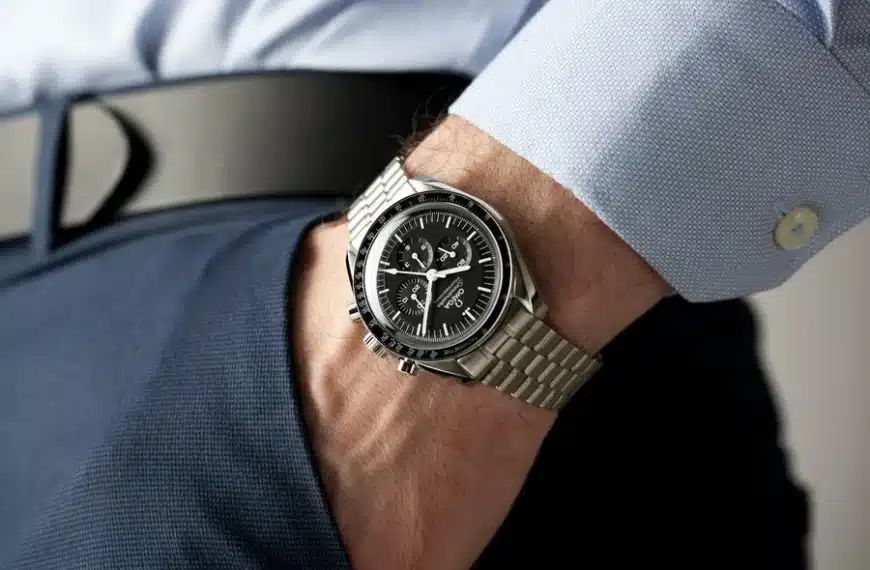
You haven’t said a word yet. You’re still reaching for your coffee, settling into your chair, maybe glancing at the agenda. But the person across the table has already made a judgement. It’s not about your resume or your title, but about your wrist. That’s how fast it happens, and that’s how much it matters.
Accessories Were a Language
Nobody tells you, but they are, and you’re already fluent, whether you realise it or not. Every watch you’ve ever worn to a meeting, a dinner, or a job interview sent a signal. The question isn’t whether those high-end luxury watches are communicating. The question is whether they’re communicating what you actually intend to.
Most people think about watches in terms of price. Spend enough and signal enough. But that’s a lazy shortcut, and people with real taste see straight through it. Price is one variable. What the watch says about your values, your attention to detail, and your sense of self is the actual message. Those things aren’t bought. They’re chosen.
The Room Reads You Faster Than You Think
Research consistently shows that people form stable judgements about others within seconds of meeting them. Not minutes but seconds. And those initial reads, however unfair, tend to anchor everything that follows. Your handshake, your opening line, your pitch: all of it gets filtered through the lens of that first split-second assessment.
A watch sits at the intersection of several signals simultaneously:
- Taste: the aesthetic choices you make when nobody’s forcing your hand
- Precision: whether you value accuracy and craft or treat them as optional
- Confidence: whether you wear something because it suits you, not because it impressed someone else
A well-chosen watch doesn’t shout. It confirms. It’s the punctuation at the end of a sentence that the rest of your presentation is based on.
What Luxury Actually Signals (And What It Doesn’t)
Let’s kill the myth that luxury equals loud.
The most powerful signals are usually the quietest ones. A watch that announces its price point in every design decision is insecure. It’s asking to be noticed. A watch that rewards attention, one that reveals more the longer you look at it – that’s a different conversation entirely.
The Citizen Attesa Satellite Wave is a useful case study here. The “Shades of Red” dial isn’t trying to fit in. It’s precise, technical, GPS-synced to atomic accuracy, and it wears that confidence without apology.
When someone who knows watches clocks on your wrist, the conversation shifts. Suddenly, you’re not just someone with a nice timepiece. You’re someone who made a considered, specific choice, and that makes you stand out.
Luxury communicates competence when the choice behind it is visible. It communicates insecurity when the price tag is the whole point.
The Details Nobody Mentions But Everyone Notices
The people whose opinions actually matter in most professional environments aren’t evaluating your watch on retail price. They’re evaluating fit.
Does this watch look like it belongs to this person? Is the case size proportional? Does the bracelet sit right? Is this someone who bought a watch or someone who chose one?
Those are two completely different things.
A watch that fits your wrist, your context, and your character reads as intentional. Intentional reads as capable, and capable is what you want walking into any room where something’s at stake.
The Victorinox Dive Pro makes this point cleanly. It’s a dive watch with an automatic movement, a unidirectional bezel, and a rubber strap that means business. In a creative or technical setting, that watch tells that precision matters to you, and you don’t need gold accents to feel dressed.
That’s a statement. Worn in the right context, it’s a compelling one.
Context Is the Variable Most People Ignore
A watch that’s perfect in one room is wrong in another. This isn’t complicated, but most people skip this step entirely.
Wearing a sport dive watch like a Ball Engineer Master II to a board presentation isn’t automatically a bad move. Wearing an ultra-formal dress watch to a startup pitch might signal that you don’t understand the culture you’re walking into. The watch isn’t the problem in either case. The mismatch is.
The best-dressed people aren’t the ones with the most expensive wardrobes. They’re the ones who understand context deeply enough to dress for the specific room they’re entering.
Watches are no different. Read the room before you strap anything on.
The Signal Is Already Being Sent
You don’t get to opt out of this. Every time you walk into a room with a watch on your wrist, the conversation has already started.
The only real question is whether you’re an active participant in it or an accidental one. Because the alternative to choosing deliberately is letting someone else fill in the blanks, and they will. Quickly, quietly, and with more confidence than you’d probably like.


