
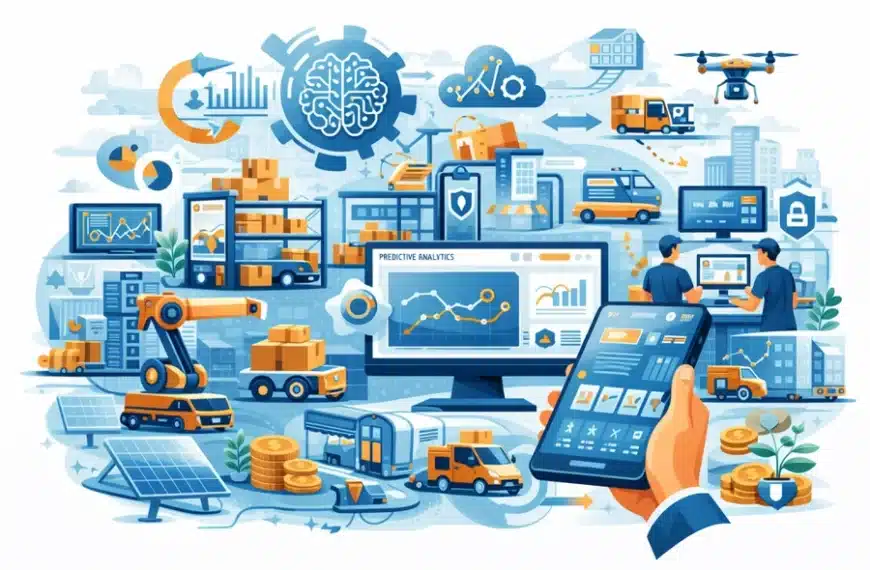
In 2025, global eCommerce sales are projected to surpass $7 trillion, with online orders increasing by over 20% year-on-year in many regions. Consumers now expect faster deliveries, real-time tracking, and seamless purchasing experiences, making fulfilment one of the most critical pillars of eCommerce success. What once was a back-end operation—focused merely on picking, packing, and shipping—has evolved into a highly sophisticated system powered by cutting-edge technology. Modern fulfilment tech is not just optimizing processes; it’s reshaping the very structure of eCommerce operations, transforming how businesses approach inventory, customer experience, sustainability, and competitive strategy.
This transformation has been driven by technological advancements, rising customer expectations, and unprecedented growth in online shopping. From artificial intelligence (AI) to autonomous robots, and from cloud systems to predictive analytics, fulfilment tech has become the backbone that supports the fast-moving world of digital commerce.
The Fulfilment Challenges of Traditional eCommerce
Before diving into the modern technologies reshaping fulfilment, it’s important to understand the challenges that traditional fulfilment systems faced:
- Inefficient warehouse operations: Manual picking and packing led to errors, delays, and higher labor costs.
- Lack of real-time inventory visibility: Online stores often oversold products or couldn’t accurately forecast stock needs.
- Slow delivery speeds: With customers expecting same-day or next-day delivery, traditional logistics struggled to keep up.
- High return rates: Poor fulfilment accuracy and packaging mistakes contributed to frequent returns.
- Poor data integration: Siloed systems made it difficult to align order data with supply chain operations.
As eCommerce scales globally, these challenges have only intensified. Addressing them requires smarter systems—systems that can learn, adapt, and automate.
AI and Machine Learning: The Brains Behind Fulfilment Optimization
Artificial intelligence (AI) and machine learning are at the forefront of fulfilment innovation. These systems analyze vast amounts of data to improve operational decisions and reduce inefficiencies.
Smart Demand Forecasting
Traditional forecasting was based on historical sales patterns alone. Today, AI models consider multiple data streams—seasonality, promotions, weather trends, and even social media sentiment—to predict future demand with much greater accuracy. This prevents overstocking (which ties up capital) and stockouts (which frustrate customers), leading to more cost-efficient inventory management.
Dynamic Order Routing
AI helps decide the best way to fulfil orders based on factors such as warehouse capacity, delivery costs, and customer location. It can automatically route orders to the nearest facility with stock, reducing delivery time and transportation expenses while minimizing environmental impact.
Warehouse Automation: Robots, Drones, and Collaborative Systems
One of the most visible impacts of technology on fulfilment is warehouse automation. Modern warehouses increasingly depend on robotics and machine automation to accelerate processes and reduce errors.
Autonomous Mobile Robots (AMRs)
Unlike traditional conveyor systems, AMRs navigate warehouses independently. These robots can carry shelves, guide pickers to product locations, or transport packages to packing stations. By handling repetitive tasks, AMRs free human workers for more complex roles and significantly increase throughput.
Automated Storage and Retrieval Systems (AS/RS)
AS/RS technologies use robotic shuttles and cranes to organize, store, and retrieve products with pinpoint accuracy. These systems maximize cubic space inside warehouses—essential in urban locations where real estate costs are high. In fact, many businesses across Europe are now investing heavily in eCommerce fulfilment solutions to handle the growing volume of online orders efficiently.
Drones and Automated Sorting
Drones are being piloted for inventory checks, scanning products at height without ladders or lifts. Automated sorting systems use high-speed scanners and conveyors to direct packages efficiently, cutting down manual labor and order cycle time.
Cloud and Integrated Platforms: Bringing It All Together
Modern fulfilment tech would not be as powerful without cloud computing and integrated software platforms.
Cloud-Based Order Management Systems (OMS)
Cloud OMS tools provide a unified view of orders across channels—from websites to marketplaces and physical stores. They consolidate sales data, track fulfilment statuses, and ensure that information flows seamlessly between front-end and back-end systems. This real-time visibility helps managers understand bottlenecks, improve response times, and keep customers informed.
Warehouse Management Systems (WMS)
Advanced WMS platforms serve as the operational heart of fulfilment, coordinating inventory movement, task assignment, and performance monitoring. When connected to AI and robotics, they become adaptive systems that can reassign work dynamically based on real-time conditions.
ERP Integration
Integrating fulfilment systems with enterprise resource planning (ERP) ensures that financial, purchasing, and HR data align with operational output. This integrative approach gives businesses a comprehensive picture of performance from order to delivery.
Last-Mile Delivery Innovation
Probably the most customer-facing element of fulfilment, last-mile delivery has seen its own wave of technological disruption.
Delivery Management Platforms
These tools allow retailers and carriers to optimize delivery routes, predict arrival times, and adjust plans based on traffic or weather. They often include customer communication features—such as delivery windows and tracking links—that enhance transparency and satisfaction.
Crowdsourced Delivery Models
Some eCommerce businesses now leverage crowdsourced drivers (similar to ride-hailing services) to fulfil same-day orders. This flexible model helps scale delivery capacity without the full cost of managing a dedicated fleet.
Autonomous Vehicles and Drones
While still in early adoption phases, autonomous delivery vehicles and drones are being tested in select regions. These technologies promise to reduce delivery time and cost while increasing delivery frequency and sustainability.
Sustainability Through Tech
Modern fulfilment tech isn’t only about speed and efficiency; it’s increasingly focused on sustainability.
- Optimized routing reduces fuel consumption and emissions.
- Precision packaging systems cut down on material waste.
- Smart inventory forecasting reduces expired stock and returns.
- Energy-efficient warehouses use IoT sensors to manage lighting, heating, and cooling effectively.
Consumers care about sustainability, and companies that can demonstrate environmentally responsible fulfilment practices gain a competitive edge.
Enhanced Customer Experience
Technology doesn’t only streamline backend operations—it directly affects customer satisfaction.
Real-Time Tracking and Transparency
Customers now expect real-time updates from warehouse to doorstep. Modern fulfilment systems deliver this through tracking dashboards, notification alerts, and predictive ETAs, which reduces anxiety around deliveries and builds customer trust.
Flexible Delivery and Pickup Options
Buy online, pick up in store (BOPIS), curbside pickup, and locker deliveries are enabled by smart fulfilment systems. These options increase convenience and can boost sales by capturing customers who need flexibility.
Lower Return Friction
Advanced fulfilment workflows reduce shipping errors and ensure orders are packed correctly the first time. When returns do occur, streamlined reverse logistics systems simplify the process for customers—leading to improved brand loyalty.
The Future of Fulfilment Tech
The last decade has already delivered tremendous innovation, but the future holds even deeper transformation:
- Augmented Reality (AR) for warehouse workers to optimize picking accuracy.
- Nanotechnology and smart packaging that updates customers on product condition.
- Blockchain for traceability and secure supply chain authentication.
- Predictive analytics capable of not just forecasting demand but automatically executing supply decisions.
As technology evolves, fulfilment operations will become increasingly autonomous, intelligent, and customer-centric—bridging the gap between a shopper’s desire for immediacy and a retailer’s need for efficiency.
Conclusion
Modern fulfilment technology is no longer a luxury—it’s a necessity for eCommerce businesses aiming to thrive in an intensely competitive marketplace. By harnessing AI, robotics, cloud systems, and data insights, companies can deliver faster, more accurately, and more sustainably than ever before. These technologies are reshaping fulfilment operations from a cost center into a strategic advantage, enabling brands to exceed customer expectations, increase operational resilience, and drive long-term growth.
In the future, fulfilment will continue to evolve toward even more intelligent, automated, and responsive systems—reinforcing its role as a key differentiator in the eCommerce ecosystem.


