
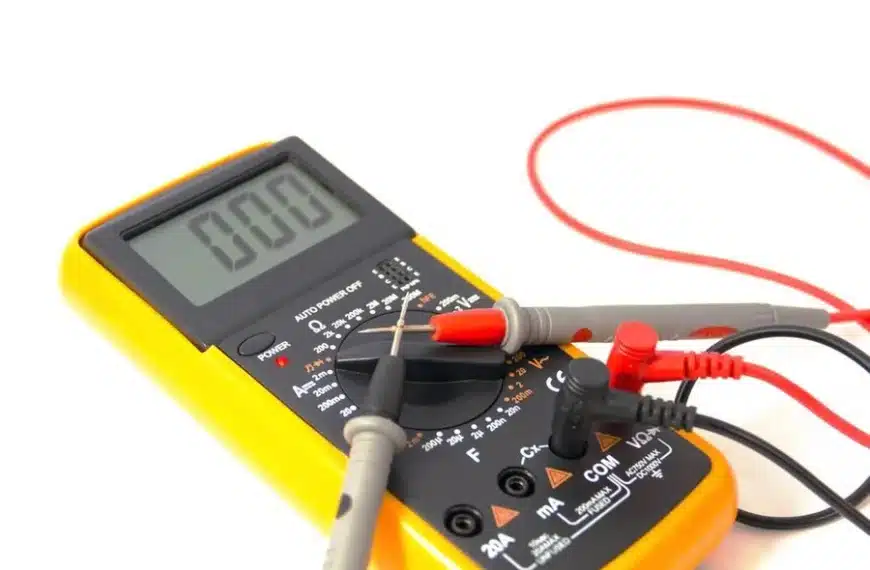
Electrical systems power modern living, from household appliances to complex industrial equipment. Accurately checking electrical values helps prevent faults, supports maintenance, and improves safety. A multimeter serves as a dependable tool for diagnosing and verifying electrical conditions, offering users direct insight into circuit behavior.
What Is a Multimeter?
Definition of a Multimeter
A multimeter is a measuring instrument designed to read electrical values such as voltage, current, and resistance. It allows users to assess circuit performance, locate faults, and verify electrical continuity through a single handheld device. For both professionals and hobbyists, taking time to find the right multimeter for your needs ensures accurate measurements, safe operation, and reliable troubleshooting.
Background and Development
Early electrical measurement relied on individual tools for separate readings. Over time, engineers combined these functions into a single unit, leading to the modern multimeter. Advancements in electronics introduced digital displays, improved sensors, and protective features, expanding usability across technical and domestic settings.
Why Multimeters Matter
Everyday Applications
From checking household outlets to testing batteries, multimeters assist with routine electrical checks. They support safer handling of wiring, appliances, and power sources by providing accurate readings before repairs or replacements begin.
Industry Applications
Multiple sectors rely on multimeters for operational accuracy. Manufacturing facilities use them to verify machinery output, telecommunications teams apply them to signal testing, and automotive technicians depend on them for diagnosing vehicle electronics. These tools support precision, efficiency, and system reliability across diverse work environments.
Types of Multimeters
Analog Multimeters
Analog models display readings through a needle moving across a calibrated scale. These units provide smooth visual tracking of changing values, which proves helpful when observing fluctuations in voltage or current. Many technicians appreciate their straightforward construction and durability.
Digital Multimeters
Digital multimeters present numerical readings on a screen, offering clarity and ease of interpretation. Their higher measurement resolution and additional functions, such as continuity testing and diode checks, make them popular for both learning and advanced diagnostics.
Comparing Analog and Digital Models
Analog devices offer real-time movement that highlights variations, though reading precision depends on user interpretation. Digital units provide clearer numeric values and often include safety protections and expanded measurement ranges. Each format suits different preferences and working styles.
Key Parts of a Multimeter
Display Screen
The display shows measured values in numeric or graphical form. Digital screens present exact figures, making results easy to interpret during testing.
Selection Dial
A rotating dial allows users to choose measurement modes such as voltage, current, or resistance. Clear labeling supports quick adjustments during testing tasks.
Input Ports
Ports accept test leads and adapt to different measurement ranges. Proper lead placement prevents incorrect readings and protects internal components.
Test Probes
Probes connect the device to the circuit under examination. One probe connects to the reference point, while the other touches the test location, completing the measurement path.
Electrical Units Measured by a Multimeter
Voltage (Volt)
Voltage reflects electrical pressure within a circuit. Measuring voltage helps determine whether power is reaching components correctly.
Resistance (Ohm)
Resistance indicates how much a material restricts current flow. Resistance testing helps identify broken wires, faulty components, or connection issues.
Current (Ampere)
Current measures the flow of electric charge. Monitoring current supports load analysis and prevents overheating or component failure.
Additional Units
Some multimeters read capacitance in farads and frequency in hertz. These measurements assist with testing capacitors, oscillators, and signal sources in electronic systems.
Proper Use of a Multimeter
Safety Practices Before Testing
Before taking readings, confirm that the dial matches the intended measurement and that probes show no visible damage. Dry hands and insulated footwear reduce risk during live testing.
Basic Measurement Steps
Select the correct function, connect probes to the appropriate ports, and place probes across the test points. Read the displayed value once it stabilizes.
Common Uses of Multimeters
Automotive Diagnostics
Vehicle electrical systems rely on sensors, wiring, and control units. Multimeters help locate faulty alternators, weak batteries, and damaged wiring within automotive circuits.
Home Electrical Repairs
Homeowners use multimeters to test outlets, switches, and extension cords. This approach identifies power interruptions and confirms proper wiring connections.
Electronics Troubleshooting
Technicians working with circuit boards use multimeters to verify component behavior. Resistance and continuity checks help isolate defective resistors, capacitors, or solder joints.
Industrial Maintenance
Factories rely on multimeters for preventive maintenance. Regular checks on motors, panels, and power supplies help reduce downtime and maintain operational stability.
Advantages of Using a Multimeter
Measurement Precision and Consistency
Multimeters provide dependable readings that support informed decision-making. Consistent output builds confidence during repeated testing tasks.
Flexible Applications
A single device covers multiple testing needs, reducing the requirement for separate instruments. This flexibility suits both compact toolkits and professional workbenches.
Component Evaluation
Testing individual parts helps confirm whether a component functions correctly or requires replacement. This process saves time and reduces the need for unnecessary repairs.
Built-In Protective Features
Modern models include overload protection, insulated casing, and auto-range settings. These features reduce the likelihood of device damage or user injury during testing.

Tips for Better Multimeter Performance
Achieving Accurate Readings
Stable probe contact and correct range selection improve measurement accuracy. Allow readings to settle before recording values.
Maintenance for Extended Use
Keep probes clean, store the device in a dry location, and replace batteries when the voltage weakens. Periodic inspection preserves reliability.
Mistakes to Avoid
Incorrect port usage, touching probe tips during testing, and selecting the wrong measurement mode often lead to faulty readings or blown fuses.
Conclusion
A multimeter remains a trusted instrument for understanding electrical behavior across home, automotive, electronic, and industrial applications. Its ability to measure multiple electrical values through a single device supports accuracy, safety, and efficiency. By learning its functions, components, and best practices, users gain confidence in diagnosing issues and maintaining reliable electrical systems. Whether used for routine checks or technical troubleshooting, a multimeter stands as a dependable companion in electrical work.
FAQs
What is a multimeter used for?
A multimeter measures voltage, current, and resistance to evaluate electrical circuits and electronic components.
What types of multimeters are available?
Common categories include digital, analog, clamp, and bench-mounted units, each suited to different testing environments.
Can a multimeter measure current?
Yes, when set to the appropriate range and connected correctly, a multimeter reads electrical current accurately.
How can power be checked using a multimeter?
Set the device to voltage mode, place probes across the power source, and observe the displayed reading.


