
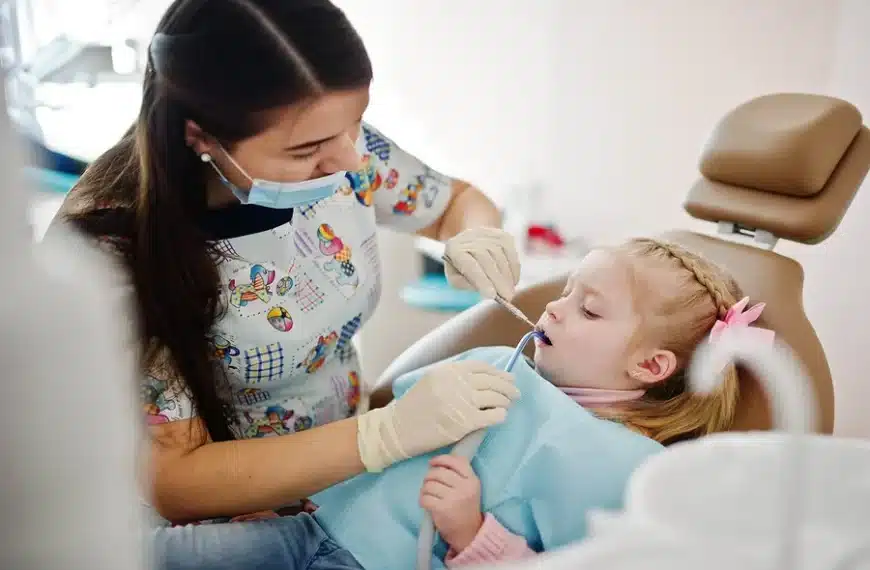
One of the most important things a parent can do is make sure their child’s journey to a healthy smile starts off on the right foot. Pediatric specialists work with experts who do complicated adult restorations in many modern family-oriented practices. For example, while a child is learning how important it is to brush their teeth, a parent might be in a consultation room learning about all-on-4 dental implants step by step to get their own teeth back to normal and feel better about themselves. This all-in-one approach makes sure that everyone’s dental needs are met in one place, creating a space where everyone cares about their oral health. Children learn that going to the dentist is a normal and necessary part of a healthy life when they see their parents take care of their own teeth.
The Significance of the “Dental Home”
The idea of a “dental home” is important for children’s health care. It means that the dentist and the patient have a long-term relationship that is easy to understand and focused on the family. After dental school, pediatric dentists get two to three more years of specialized training. This training focuses on child psychology, growth and development, and the special needs of kids with health problems.
Early visits aren’t just to look for cavities; they’re also to keep an eye on how the jaw is growing and how the primary teeth are coming in. “Baby teeth,” or primary teeth, are important because they hold space for permanent teeth. If a baby tooth falls out too soon because it is rotting, the teeth around it can move, which can cause big orthodontic problems later in life.
The “Tell-Show-Do” Method for Making Visits Fun
One of the hardest things about working with kids in dentistry is dealing with their natural anxiety. “Tell-Show-Do” is a behavioral management strategy that experts use. First, the dentist tells the patient what will happen in simple, non-threatening terms (the “Tell”). Then, they show the child how to do it on a doll or their own finger (the “Show”). Finally, they do the procedure exactly as shown (the “Do”).
This kind of predictability makes people trust you a lot. For instance, a “polishing tool” could be called a “special spinning toothbrush,” and the “suction” could be called a “thirsty straw.” Dentists can do the necessary work on a child while keeping them calm and cooperative by taking away the fear and mystery of the unknown.
The Science of Enamel and Preventive Care
The enamel on children’s teeth is much thinner than that on adults’ teeth, which makes it more likely to lose minerals. When sugars and starches mix with bacteria in the mouth, they make acids that lower the pH level. If the pH goes below 5.5, the acidic environment starts to break down the minerals in the tooth structure.
To fight this, pediatric dentists often suggest two main ways to stop it from happening:
1. Dental Sealants: These are thin, protective layers that are put on the chewing surfaces of the back molars. They work as a physical barrier to keep food and bacteria from getting stuck in deep grooves that a toothbrush can’t reach.
2. Fluoride Varnish: This is a concentrated mineral treatment that “re-mineralizes” enamel that has been weakened, making it stronger against future acid attacks.
A healthy future begins at home
Professional cleanings are very important, but the most important work happens at home. Before the first tooth comes in, parents should start cleaning their baby’s gums with a soft cloth. When teeth come in, kids under three should use a fluoride toothpaste the size of a grain of rice. For older kids, the amount should be the size of a pea.
Nutrition is a huge part of dental health, in addition to brushing. Eating “sticky” carbs like fruit snacks or crackers all the time gives cavity-causing bacteria a steady supply of energy. Pushing kids to drink water instead of juice and only letting them have sugary treats at meals, when saliva production is highest, can greatly lower the risk of tooth decay in kids.
You can help your child have healthy, happy smiles for the rest of their life by starting early and picking a pediatric environment that is good for them.


