
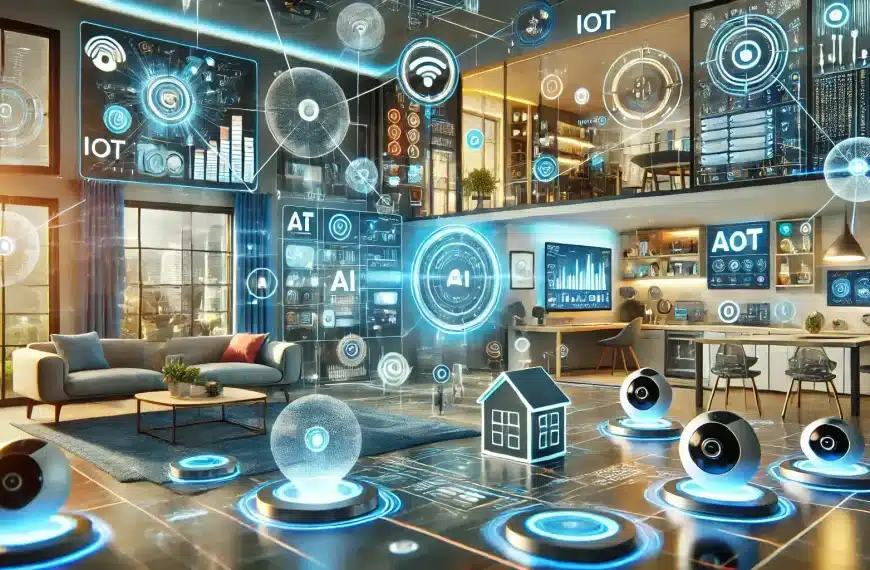
In the ever-evolving world of technology, the concept of the smart home has moved from a futuristic idea to a reality in many households. Smart home apps, powered by artificial intelligence (AI), are at the forefront of transforming the way we live, making our homes more connected, efficient, and personalized. From intelligent lighting systems to voice-controlled assistants, AI is revolutionizing home automation, offering a level of convenience and control that was once unimaginable. This article explores how AI app development is shaping the future of smart homes and enhancing the connected living experience.
The Rise of AI in Smart Homes
Smart home technology has grown significantly over the past decade, with AI playing a pivotal role in its development. At its core, AI enables devices within a smart home to learn from user behavior, predict needs, and make decisions autonomously. For example, a smart thermostat can adjust the temperature based on your preferences and daily schedule, while AI-powered security systems can detect unusual activity and alert homeowners in real-time. These innovations are pushing the boundaries of home automation, allowing users to experience a higher level of control and comfort.
Enhancing Efficiency with AI Integration
One of the most compelling reasons to integrate AI into smart home apps is the efficiency it brings to daily tasks. With AI, devices can communicate with one another, creating a seamless experience for users. Imagine your lights turning off automatically when you leave the house, your coffee machine brewing your favorite drink as you wake up, or your home security system locking all doors when you go to bed—all powered by intelligent AI algorithms. These systems are designed to make life easier by reducing the need for manual interventions and improving energy efficiency, saving both time and money.
Using an AI app builder like dyad.sh makes creating these smart home experiences easier than ever. Such platforms integrate automation and machine learning features, helping reduce manual interventions, improve energy efficiency, and save both time and money.
Personalized Experiences for Every Home
AI is not just about automation; it’s also about personalization. Smart home apps can learn your preferences and adapt to your lifestyle over time. For example, AI can analyze your routine and adjust home settings to suit your specific needs, whether it’s adjusting the lighting to match the time of day or creating the perfect ambiance for relaxation. Voice assistants, such as Amazon Alexa or Google Assistant, have also become more sophisticated, enabling users to interact with their homes in a natural, intuitive way. The more you use these apps, the smarter they become, offering a truly personalized home experience.
Voice Control: The Heart of Smart Home Interaction
Voice control has become a cornerstone of smart home technology, and AI is at the heart of this transformation. Through natural language processing (NLP) algorithms, smart home apps can understand and respond to voice commands, making it easier than ever to control various devices in your home. Whether you want to adjust the thermostat, play music, or check the security cameras, voice-controlled assistants allow you to do it all hands-free. This hands-free interaction enhances convenience and accessibility, particularly for individuals with disabilities or those who prefer to multitask.
AI-Powered Home Security
Home security is one of the most important aspects of a smart home, and AI is playing a crucial role in enhancing safety measures. AI-powered cameras, motion detectors, and smart locks offer a level of security that goes beyond traditional systems. With machine learning capabilities, these devices can recognize faces, identify potential threats, and send alerts in real-time. Additionally, AI can predict unusual patterns of behavior and proactively intervene before an issue arises. This proactive approach makes AI-powered security systems more reliable, ensuring peace of mind for homeowners.
The Role of IoT in AI-Driven Smart Homes
The Internet of Things (IoT) is another key player in the rise of smart home technology. IoT devices, from smart refrigerators to voice assistants, are all interconnected, forming a network that communicates and shares data with each other. AI leverages this network to create a cohesive ecosystem where devices can work together to optimize the home environment. For instance, an AI-driven smart home app can adjust the lighting based on the weather forecast or monitor energy consumption patterns to suggest ways to reduce waste. The synergy between AI and IoT creates a highly efficient, intelligent home.
Looking Ahead: The Future of AI in Smart Homes
As AI technology continues to advance, the possibilities for smart homes are virtually limitless. In the future, we can expect even more intelligent systems that anticipate our needs and enhance our quality of life. For instance, AI could help detect health issues by monitoring vital signs through wearable devices or adapting home environments for greater comfort and sustainability. Additionally, advancements in AI and machine learning could lead to more seamless integrations between smart home apps and other technologies, creating homes that are not only smarter but also more responsive and aware of our needs.
Embracing the Smart Home Revolution
AI is undeniably at the forefront of transforming our homes into connected living spaces that offer more convenience, efficiency, and security. With personalized experiences, seamless automation, and advanced security features, AI-driven smart home apps are changing the way we interact with our surroundings. As technology continues to evolve, the future of smart homes looks incredibly promising, offering exciting opportunities to further enhance our daily lives. Embracing AI in smart home apps is not just about keeping up with trends; it’s about shaping a future where our homes are more responsive, intuitive, and better suited to our needs.


