
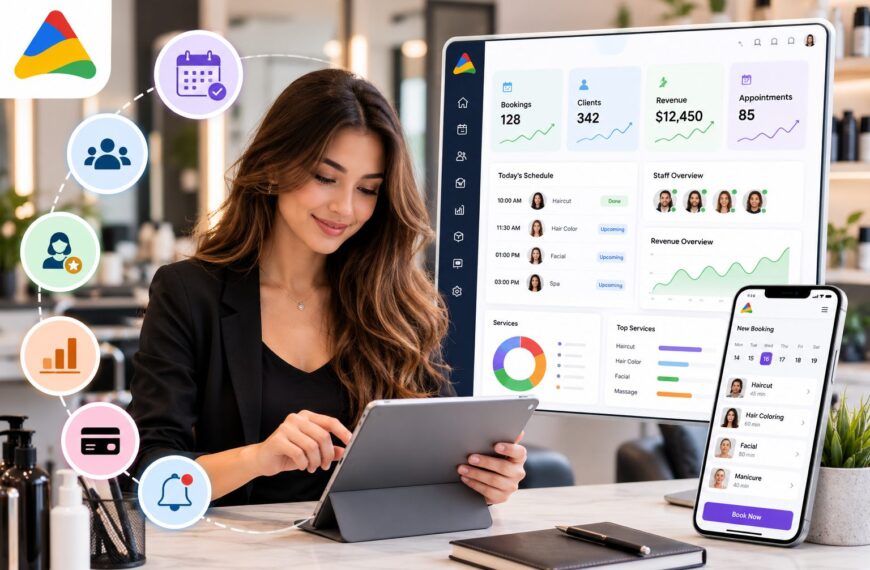
If you schedule 5 appointments a day, using memory or a notebook is enough. However, if you schedule many salons in different branches with almost 50 appointments in every branch and a rotating staff shift, the very same notebook will make things difficult for you. Bookings overlap. A stylist ends up double-booked.
None of that means the salon is poorly managed. It usually just means growth outpaced the tools holding things together. Paper diaries and group chats work fine at a small scale. They were never built to juggle bookings, staff availability, and client history at once, and past a certain size, something has to give.
That’s really the gap salon management software fills. Below are seven ways a salon can put attention from the first booking through checkout for ongoing business profits.
Ways to Improve Salon Management and Customer Experience
A contemporary salon requires a lot more than having an appointment list that is filled. An appropriate management style will make salon activities easier.
1. Streamline Booking Process for Both Clients and Staff
-
Allow Clients to Schedule Appointments 24/7
In this day and age, people do not schedule an appointment only during office hours. This will save front desk employees from dealing with too many calls, and bookings will not go missing.
-
No Overbooking and Scheduling Errors
Since the system reflects real-time availability, there won’t be any booking issues. Only when the stylist, service, and time slot agree can the appointment be booked.
-
Let Customers Change or Cancel Their Appointments on Their Own
Since the clients would be able to change or cancel their appointments on their own, there would be no phone tag wasting time of the staff anymore.
2. Keep Client Information Organized in One Place
Scattered notes about a client tend to lead to generic service, even when the intention was to remember everything.
-
Build a Complete Client Profile
Contact info, appointment history, preferred stylist, service notes; keep all in one place instead of a mental note or a sticky pad by the register.
-
Understand Client Habits and Preferences
Once booking patterns are visible, it’s easier to see who’s coming back for what and how often. That context turns a routine visit into a personalized one.
-
Reduce Time Spent Searching for Client Information
Any authorized staff member should pull up a client’s history in seconds, not by flipping through binders or asking around.
3. Manage Staff Schedules Without the Spreadsheet Chaos
Every new hire and shift swap makes the schedule a little harder to hold in your head.
-
Create Smarter Staff Rosters
Working hours, days off, leave, and which services each person is qualified for are mapped in one system instead of rebuilt from scratch every week.
-
Match Staff Skills With Client Appointments
The booking is automatically assigned to the correct stylist based on his/her skills and availability to avoid reshuffling at the very last minute due to a wrong booking.
-
Balance Workloads among Staff Members
Understanding what times are busy and what times are not makes it possible not to overbook one stylist while the other stylist is idle.
4. Minimize No-Shows and Late Cancellations
No-shows are an avoidable waste of effort and money for the stylist.
-
Send Automated Reminder for Appointments
A quick reminder via SMS, email, or WhatsApp avoids the “I totally forgot” cancelations even before they can occur. It is far more frequent than many owners realize.
-
Reschedule Instead of Canceling
Letting the client schedule another appointment rather than cancel the current one increases the likelihood that the appointment will be filled.
-
Create Income from Unfilled Appointment Slots
A canceled slot refilled fast is revenue saved. One that sits empty for the day is revenue gone.
5. Manage Walk-Ins Alongside Appointments
A busy day of bookings shouldn’t fall apart the moment a few walk-ins show up.
-
Create a Better System for Walk-In Customers
A digital queue gives walk-in clients an actual idea of how long they’ll wait, instead of an awkward guess and a seat by the door.
-
Schedule Walk-In Patients Within Existing Appointments
With real-time information regarding available resources, front desk personnel can schedule walk-ins without disrupting the existing appointments.
-
Eliminate Crowding in the Waiting Room
Virtual queuing lets people wait somewhere other than a crowded bench and come back when it’s actually their turn.
6. Enhance the Client’s Experience from Booking Until Checkout
A lot of what feels like good service is really just good coordination behind the scenes.
-
Inform Clients at Every Step of the Way
From confirmations to queue updates, eliminate the “Was my booking really put through?” uncertainty that is not often expressed by clients but that clients do feel.
-
Eliminate Wait Times and Uncertainty
Clients who know how long their wait is going to be will not be left to wonder and will enjoy their visit more when everything seems to run smoothly.
-
Motivate Repeat Visits
From follow-up emails to rebooking incentives and offers related to prior visits.
7. Use Salon Data to Make Better Business Decisions
Every booking leaves a trail of data. Most salons never look at it twice.
-
Track Your Most Popular Services
Knowing what clients are actually asking for and what’s fading makes staffing, pricing, and promotions less of a guessing game.
-
Measure Staff Performance and Utilization
Appointments handled, services in demand, hours worked versus hours available; this shows where a team is thriving and where it needs support.
-
Determine Revenue and Operations Leakages
High no-shows, cancellations, peak times, and unbooked slots can clearly indicate where cash is literally falling through the cracks.
Why Salon Management Software is Absolutely Essential for Modern Salons
This isn’t a quick fix. It’s a shift in how the whole operation runs, day after day.
One Platform for Bookings, Clients, Staff, and Customer Flow
When these functions live in separate tools, someone ends up manually stitching them together. A connected system removes that job entirely.
From Reactive Scheduling to Proactive Salon Management
Instead of putting out scheduling fires as they happen, owners can plan staffing and bookings around demand they can see coming.
Scale Operations Without Scaling Administrative Work
This matters most for salons adding chairs or locations. Growth shouldn’t automatically mean more hours lost to admin.
What Should You Look for in Salon Management Software?
Not every tool covers the same ground:
- Online scheduling features available beyond business hours.
- Client profiles that hold real history, not scattered notes.
- Scheduling staff based on real hours worked, leave, and skills.
- Notifications automatically sent via SMS, WhatsApp, and e-mail.
- Virtual queue management for a calmer front desk.
- Reporting and analytics that surface where revenue is lost.
- Multi-location support for salons planning to grow.
Platforms such as Salonist bring a lot of these pieces together instead of a stack of tools that don’t talk to each other. Salonist blog goes deeper into a few of these topics.
Final Thoughts: Run a More Efficient Salon Without Making the Client Experience Feel Complicated
Booking chaos, scattered records, uneven schedules, no-shows. All these trace back to one issue: too many moving parts managed separately by people already stretched thin. It is not only going to reduce the paperwork. It is going to make things easier for the clients and staff as well.
Salon management systems, such as Salonist, offer salon owners an opportunity to combine booking, client information, staff management, and report generation under one roof.
Now here’s the real question for you: How much time and money are you actually losing by not having a system that will handle your salon’s booking and scheduling process? Discover how Salonist could be the answer to your problem.


